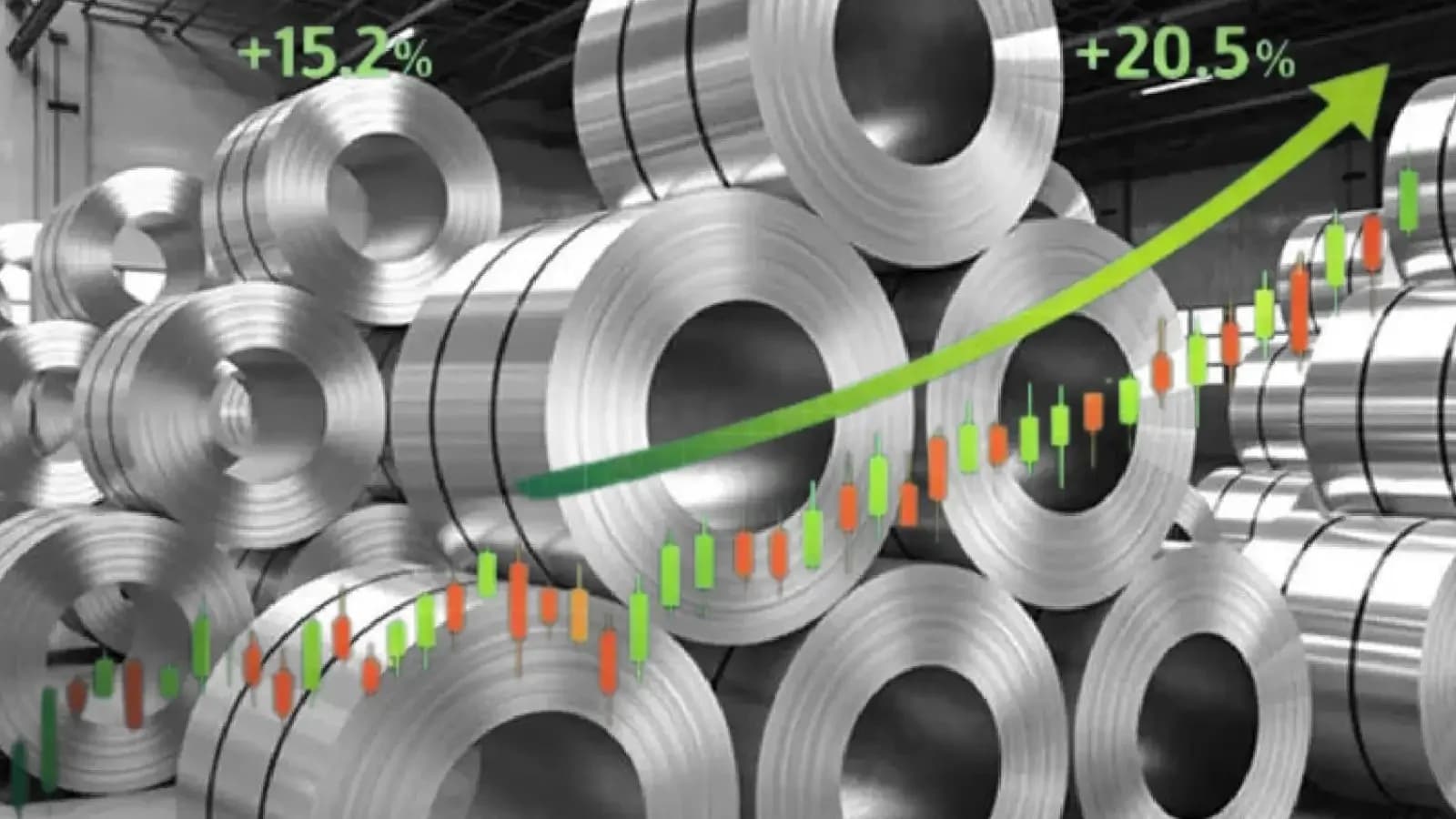
Metal stocks are now performing like all-weather investments, outpacing defensive sectors traditionally viewed as safe havens. According to The Economic Times, the Nifty Metal index has delivered an average 5-year return of about 19%, comfortably ahead of the 12% returns from Nifty Pharma and Nifty Healthcare, while broadly matching the returns (19.4%) of the BSE Power index over the same period. The sector has maintained robust post-Covid performance with double-digit annual returns in most years, barring 2024 which saw 8% returns. The standout year was 2021 with a 70% surge, followed by 2025, while 2022 saw gains of 22%. In 2020, the index rose 16%, slightly outperforming the broader Nifty 50.
With over 50% one-year returns, the Nifty Metal index has outpaced all other sectoral peers in 2026. As reported by The Economic Times, Nifty Capital Markets (40%), Nifty PSU Bank (35%) and Nifty Defence (33%) are the other top performers. At the stock level, National Aluminium Company has led the rally with returns of about 180%, followed by Hindustan Copper at 160%. Other notable performers include Vedanta, Hindalco Industries, Welspun Corp, Steel Authority of India, Tata Steel, Jindal Steel and Power, NMDC, Hindustan Zinc, Jindal Stainless, Lloyds Metals and Energy, JSW Energy and APL Apollo Tubes with returns ranging from 79% to 23%. The only laggard has been Adani Enterprises with a modest 2% gain over the same period.

Supply-side problems amid a strong demand scenario have led to a spike in prices in most metal counters, inviting investor attention and benefiting the stocks. According to The Economic Times, demand for copper has accelerated due to demand from electric vehicles, robotics, and wires & cables for electrification. Consumption-driven demand for aluminium from beverage cans, lightweighting solutions in automobiles has kept prices firm for this base metal as well. From the onset of 2025, metals have enjoyed a strong run on the D-Street and that phase has now extended to this year as well. The narrative around metals being purely cyclical is genuinely changing, with structural demand composition creating new, durable layers of demand for copper, aluminium, and other industrial metals.
While foreign institutional investors have been bearish on Indian equities with a selloff worth ₹1.75 lakh crore in 2026 so far after a 2025 washout, they have reposed their faith on the metal sector. As reported by The Economic Times, FIIs have invested ₹19,100 crore between April 16, 2025 and April 15, 2026 in the metal sector. Capital Goods (₹25,595 crore) and telecommunication (₹22,254 crore) are the only sectors that have seen higher interest. The risk-reward profile has structurally improved with implementation of safeguard duties (December 2025) that have curtailed cheaper imports, sharp rise in domestic steel prices (India HRC prices up 25%+ since November 2025), and capacity additions with higher utilisation rates at large mills.
According to The Economic Times, experts see this as global repositioning with notable shift away from traditional heavyweights like BFSI and oil & gas. Sunny Agrawal from SBI Securities expects FIIs to likely remain net positive on the metal sector, albeit selectively rather than being broad-based buying. Rajesh Singla from Alpha AMC notes that metals have emerged as one of the top-performing sectors alongside autos, while defensives like FMCG have struggled to keep pace. Agrawal calls valuations broadly fair across the market, with both NALCO and Hindustan Copper being fairly valued, while future upside or downside largely depends on movements in global metal prices. The sector has become more stock-specific, where select companies have valuation support, while others are driven more by narrative and commodity cycles.