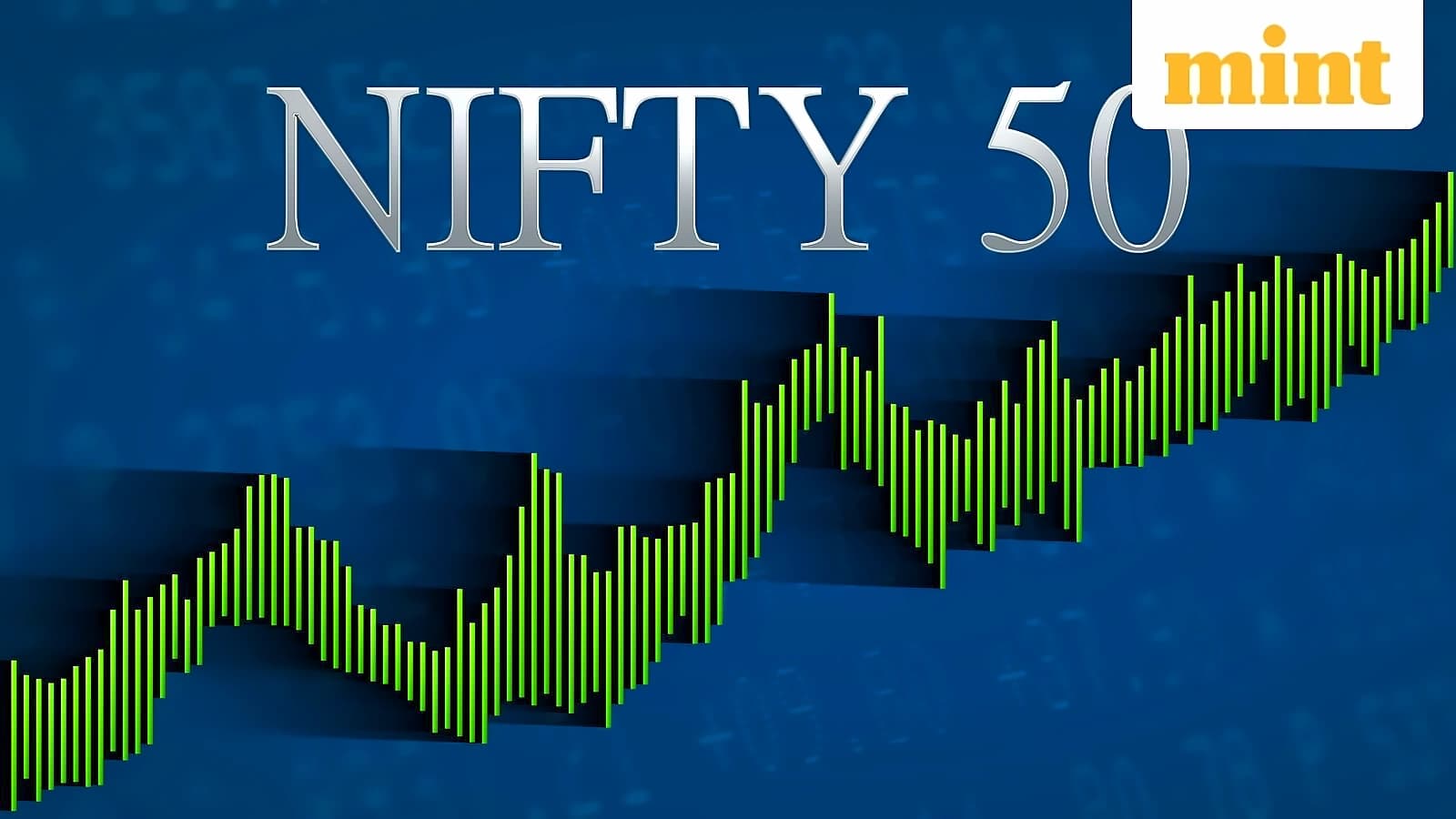
The Nifty May 2026 futures closed at 23,673.40, trading at a premium of 29.9 points compared to the Nifty's cash market closing at 23,643.50. In the cash market, the Nifty 50 index lost 46.10 points or 0.19% to 23,643.50. The NSE's India VIX, a gauge of the market's expectation of volatility over the near term, rose 0.95% to 18.79, indicating increased market uncertainty. The May 2026 F&O contracts will expire on 26 May 2026, with Tata Motors Passenger Vehicles, HDFC Bank and Infosys being the top-traded individual stock futures contracts in the F&O segment of the NSE.
Indian equity markets staged a sharp recovery after early-week volatility, aided by fuel price hikes finally being passed on to consumers and easing concerns around the Adani group overhang. According to market expert Sandip Sabharwal, speaking to ET Now, the market's direction will increasingly depend on developments surrounding global commodities, inflation, and geopolitical tensions in the Middle East. Despite concerns around inflation, Sabharwal disagreed with the view that earnings growth has disappointed markets, maintaining that corporate India has delivered resilient numbers even amid elevated input costs and supply disruptions. "Like we were discussing the last time, it is all a question now of the macros because if we look at the company results which have been coming out, they have been decent despite the kind of raw material spike and disruptions we saw in March and many of the companies are indicating steady demand trends in April, May, etc, so that is the critical part," he said.
Sabharwal pointed out that investors are closely monitoring developments after President Donald Trump's China visit, especially regarding Iran and the broader Middle East situation. As reported by The Economic Times, he noted that the key factor to watch is once the China trip ends for President Trump and he goes back, what happens at the Iran and how the entire issue gets resolved. The main thing which can put a break to the very strong bull market is that the commodity price upswing has to stall, and for that we need more clarity on what is happening in the Middle East. "Now, the key for all of us to watch post today is once the China trip ends for President Trump and he goes back, what happens at the Iran and how is this entire issue going to get resolved because the main thing which can put a break to the very strong bull market on globally, and in India obviously it has not been there, but whatever stabilisation we are seeing is that the commodity price upswing has to stall and for that we need more clarity on what is happening in the Middle East," he noted.
According to Sabharwal, inflationary pressures are more linked to logistics and geopolitical disruptions than structural demand-supply imbalances. As reported by The Economic Times, he explained that this is more episodical rather than something which is because of high demand-supply gap. He noted that demand trends remain stable across sectors, based on management commentary and post-results conference calls. On crude oil, he argued that global supply remains sufficient under normal circumstances and prices could cool rapidly if geopolitical tensions ease. "Otherwise, even for crude oil if you see, global supply on a normalised basis is more than the global demand today. So, there is no reason why crude prices will remain so high once things normalise," he added, though he cautioned that the duration of the conflict remains uncertain.
On the automobile sector, Sabharwal acknowledged that automakers continue to face margin stress from rising raw material prices, though demand remains healthy. He noted that several auto stocks could have traded significantly higher based on earnings performance alone, but concerns over commodity inflation have kept valuations under pressure. "Yes, you summarised it pretty well, like demand trends are still strong, raw material price pressures are severe and to that extent there will be near-term margin impact and that is already reflected in the stock prices," he said. He added that if demand trends hold up, then the sector could do much better over the next year or so. Regarding JSW Steel, he said the sector has become more difficult to assess after the sharp rally in metal stocks, explaining that much of the profit spike depends on the continuation of safeguard duties.
Sabharwal indicated limited interest in the Adani group from an investment perspective, stating that he does not invest largely into the group. On oil marketing companies, he remained cautious despite the recent fuel price adjustments, citing too much government control as a limiting factor for long-term valuation potential. "The main issue is that it is too much control by the government. So, how do investors play a business where there is no freedom at all with the companies themselves," he said. He added that government intervention limits long-term valuation potential for such businesses. He concluded that commodity spikes only become a major threat when they trigger aggressive interest rate hikes and broader inflationary instability, while noting that elevated commodity prices can support economic growth by encouraging large-scale capital expenditure from commodity producers.