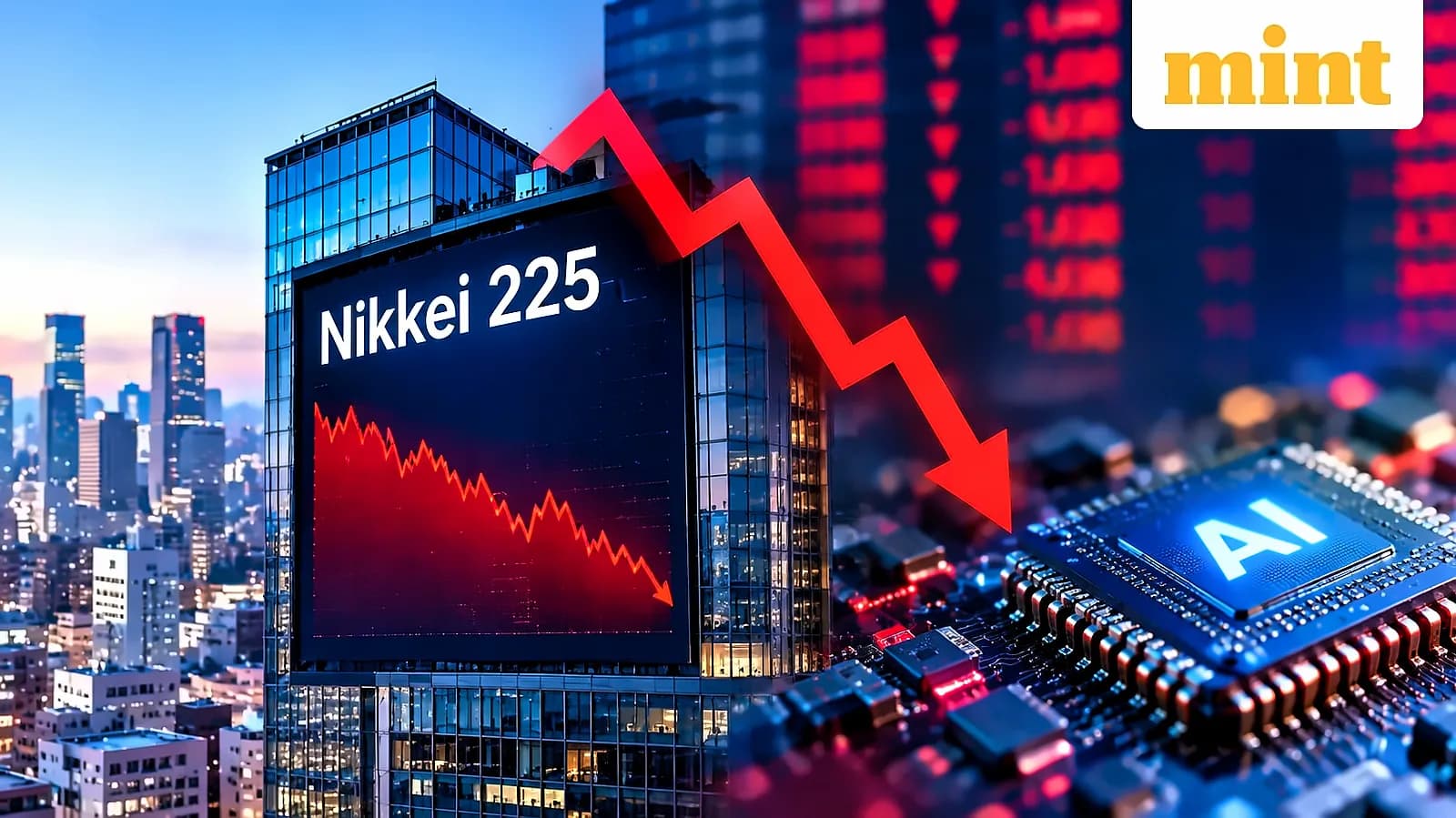
Indian IT exporters have experienced a dramatic valuation collapse, with stocks trading at 15-18 P/E multiples - levels not seen since the 2008-09 subprime crisis. According to The Economic Times, this represents a nearly 30% decline in stock prices for major IT companies in 2026 alone. The current valuations have halved from peak levels seen four years ago when Covid-related disruptions boosted enterprise IT demand, with TCS trading at 16.7 P/E and Infosys at 15.7 P/E.
The sharp decline is primarily attributed to rising concerns over artificial intelligence technology's impact on client servicing and IT solution deployment. As reported by The Economic Times, improving AI capabilities in coding, testing and debugging are expected to affect the revenue potential of Indian IT service providers, which have traditionally relied on headcount-based execution. Additionally, OpenAI's recent announcement to establish a subsidiary OpenAI Deployment Company will facilitate direct entry into enterprise process management, traditionally a strong forte of Indian IT companies. Recent analysis from Goldman Sachs supports this trend, noting that new technologies tend to involve high fixed deployment costs and low marginal costs of scaling, allowing firms with capital capacity to spread costs across larger output bases and gain market share over smaller rivals.

The current retreat represents significantly steep declines compared to previous IT stock corrections over the past 15 years. According to The Economic Times, TCS and Infosys P/E ratios had previously fallen below 20 during the Taper Tantrum phase in 2013 and in 2017 when US administration tightened H1B visa norms. However, the current P/E levels of 16.7 and 15.7 have breached these previous lows and are approaching the 12-15 range seen during 2008-09 before briefly diving to high single-digit levels. Goldman Sachs research adds historical context, showing that corporate concentration in the US has steadily climbed since the 1930s, rising more rapidly during periods of faster technological change.
Despite recent optimism driven by weakening rupee expectations supporting export realisations, the AI overhang is expected to remain in the medium term and cap upside potential for IT stocks. As reported by The Economic Times, while IT stocks have experienced some buoyancy over the past two trading sessions, the fundamental AI disruption is likely to continue impacting the sector's traditional business models and revenue streams. The current economic uncertainty is characterized as a convergence of pressures that gradually reshape financial stability, making the AI impact particularly challenging for IT service providers. Goldman Sachs analysis suggests this trend may widen the gap between corporate giants and everyone else, as companies with bigger scales have historically had the means to ride technological waves during periods of rapid advancement.