Markets opened the week on a strong note with Sensex beginning the session with a surge of around 1,200 points or 1.6% at 76,725.27 and Nifty opening around 360 points or 1.53% higher at 23,984.85. The rally came after US President Donald Trump announced that a deal with Iran had been finalised and the Strait of Hormuz would be reopened, with Trump saying on Truth Social that the deal would bring "peace and security" to the region. The comments fuelled optimism in global markets, with investors betting that easing geopolitical tensions could stabilise energy supplies and reduce uncertainty. According to reports citing Iran's Mehr News Agency, a proposed memorandum of understanding between the US and Iran could pave the way for the reopening of the Strait of Hormuz within 30 days and the lifting of sanctions on Iran's oil exports. The surge in equities added over ₹9.7 lakh crore to investor wealth, taking the combined market capitalisation of BSE-listed firms close to ₹461.5 lakh crore. The rally marked the Nifty 50's biggest single-day surge in 2026, with the index turning its weekly return positive at 1.14%. For the week, BSE Sensex jumped 1.7% and Nifty added 1%, demonstrating sustained momentum in the market.
Sectorally, Nifty Realty surged 4%, followed by Nifty Consumer Durables which gained 2.9%, while Nifty Auto advanced 2.6%. Other major gainers included Nifty Oil & Gas (up 1.83%), and Nifty PSU Bank (up 1.77%). However, healthcare stocks underperformed, with Nifty Pharma declining 0.17% and Nifty Healthcare slipping 0.05%. According to market experts, easing tensions in West Asia and the sharp correction in crude oil prices have improved the outlook for the Indian economy and equities. The experts noted that with the dawn of peace in West Asia, hopefully, and the consequent sharp correction in Brent crude to below $84 in early trade, the prospects for the Indian economy and stock market have turned for the better. They suggested that the GDP growth rate and CPI inflation projections for FY27 can be revised in this changed scenario to 6.9% and 4.6% respectively, which will have positive implications for the stock market.
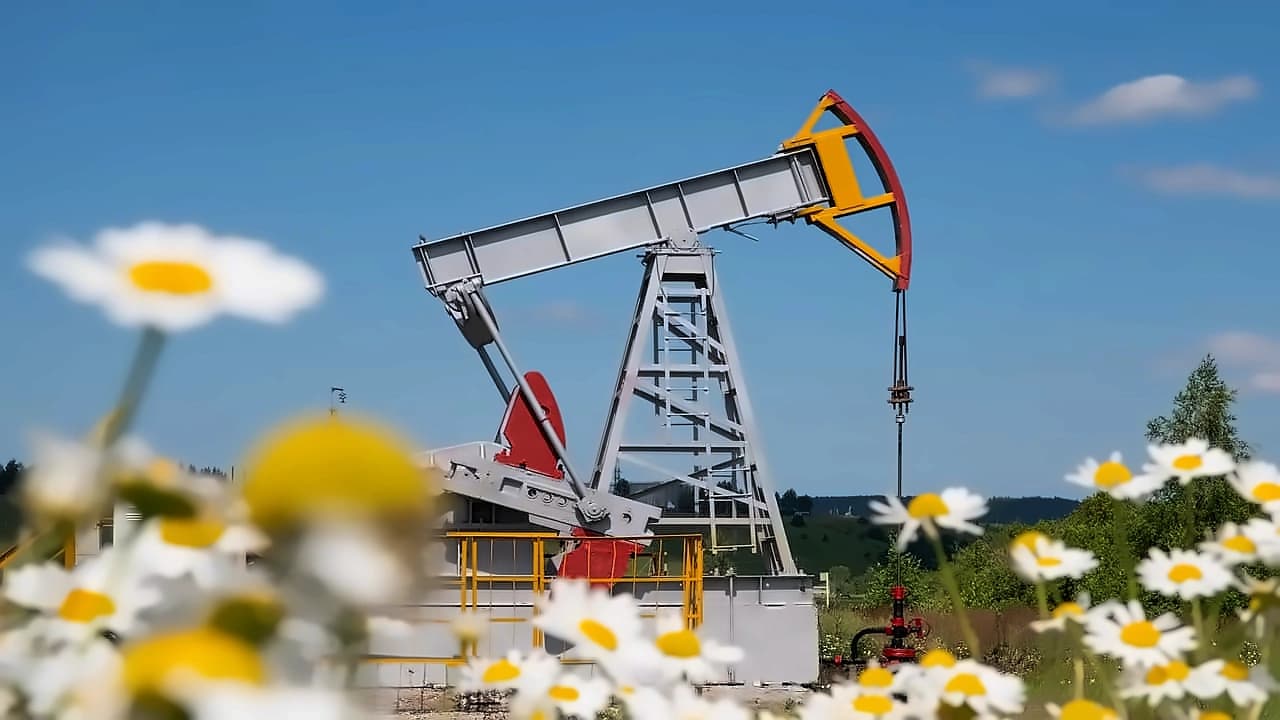
Oil prices fell sharply following the US-Iran peace deal announcement, with international benchmark Brent crude declining nearly 5% to $85.8 per barrel on Monday. The agreement comes after Trump earlier claimed that the peace deal will be signed on Sunday, June 14, on his 80th birthday. However, Iran did not confirm the timeline for signing the pact. Oil prices came under pressure as some crude shipments through Hormuz resumed, developed economies released emergency oil reserves and major importers, including China, reduced purchases. The fall in crude oil prices triggered a rally across oil marketing companies, with HPCL jumping 7%, peers IOCL and BPCL also surging more than 5%. Oil prices fell on the news, with Brent crude futures falling over 5% to trade around $85.8 per barrel, which is also positive for global trade flows and shall also result in easing supply chain and global shipping freight rates. "The reaction in oil prices after the peace deal was announced reassured investors that crude prices are not expected to sustain at elevated levels for longer and triggered a rally," said Vaiibhavv Chugh, chief executive officer, Abakkus Mutual Fund.
Larsen & Toubro emerged as the strongest performer, surging 4.97% during the session, marking its biggest single-day gain on record. HDFC Bank gained 3.7% and Reliance Industries rose 2.64%, boosting the Nifty significantly. Ashok Leyland emerged as the strongest performer, surging 10% to ₹152.2 during the session, marking its biggest single-day gain on record, benefiting from the fall in crude oil prices as aviation turbine fuel is the single-largest cost item for airlines. Tube Investments of India jumped 5.3% to ₹3,133, while Bosch, Tata Motors, Hero MotoCorp, Maruti Suzuki India, and Eicher Motors all gained over 2%. Vodafone Idea surged over 5% to the day's high of ₹14.99 after non-executive chairman Kumar Mangalam Birla sought to reassure investors about the company's turnaround prospects and outlined fresh promoter funding plans. The company's shareholders approved a ₹4,730-crore investment from the Aditya Birla Group through a preferential allotment of warrants at an extraordinary general meeting.
The Indian rupee appreciated significantly to ₹94.6 per dollar as of June 15 from ₹95.18 in the previous session, going by CCIL data, as clarity emerged regarding the US-Iran deal. The rupee appreciated by 40 paise to 94.71 against the US dollar, reflecting improved investor sentiment and reduced geopolitical uncertainty following the deal announcement. According to The Hindu, Brent crude oil dropped more than 2% to $80.19 a barrel in the first few hours since market open. "The deal's priority is to extend the 8 April ceasefire in time and scope — another 60 days pledging no hostilities, lifting the US blockade in return for Iran relinquishing its grip on the Strait of Hormuz. The rupee too has now come back to Rs 84.60/$ level as of now," said Madan Sabnavis, Chief Economist Bank of Baroda. The rupee's strengthening reflects improved investor sentiment and reduced geopolitical uncertainty following the deal announcement. Global safe-haven assets gained ground, with gold rising over 3% and silver climbing over 5%, while India VIX, the market's volatility gauge, came back close to pre-conflict levels of around 14, indicating reduced fear among investors.
Foreign portfolio investors bought shares worth a net ₹200 crore on Monday - after 11 consecutive sessions of selling, while domestic institutional investors bought shares worth ₹3,189.3 crore. So far in June, foreign investors have sold shares worth ₹41,967 crore. "Foreign investors have pared some of their short positions, which contributed to the rally. However, towards the latter part of the session, participants booked some profits in the derivatives market," said Abhilash Pagaria, Head of Alternative & Quantitative Research at Nuvama Wealth. If the deal is finalised, a significant source of uncertainty could be removed, potentially encouraging foreign investors to increase allocations to Indian equities. "For the gains to be sustainable, Nifty must decisively close above 24,000," said Nilesh Jain, VP-Head of Technical and Derivative Research, Centrum Finverse. He said intermittent declines could not be ruled out, but the Nifty could gradually move towards 24,500 during the June series if it breaks above the 24,000 mark. Market experts noted that the deal's framework could pave the way for the reopening of the Strait of Hormuz within 30 days and the lifting of sanctions on Iran's oil exports, with the agreement being seen as a major step towards regional stability.