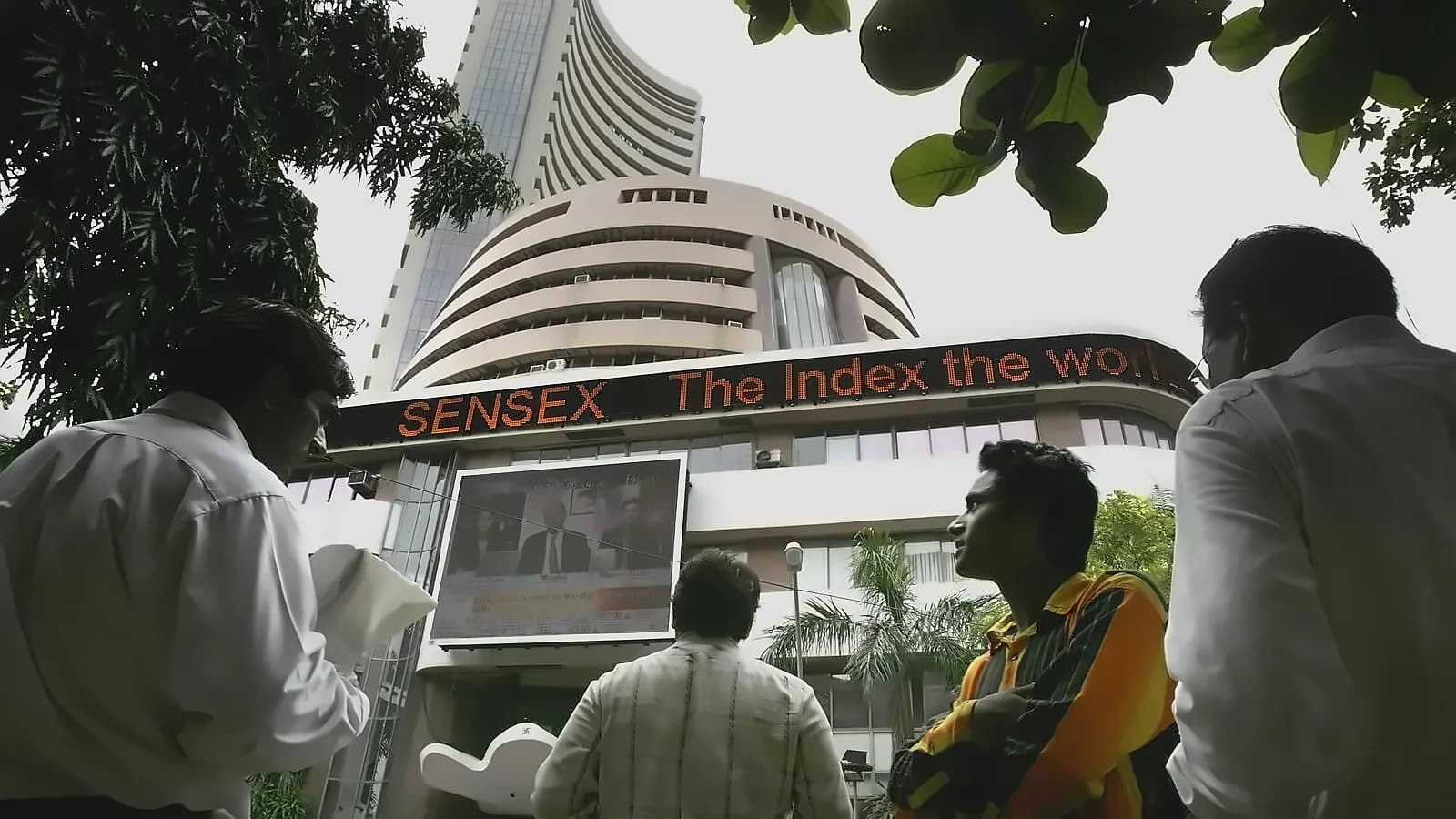
India's benchmark equity indices snapped their five-day winning streak on Friday, with the Sensex falling 607 points (0.78%) to close at 76,802.90 and the Nifty 50 declining 154.90 points (0.64%) to end at 24,013.10. According to reports from Mint, during intraday trading, the Sensex tumbled over 900 points, breaching the 76,500 level, while the Nifty 50 fell more than 200 points to slip below 23,950. The sharp sell-off followed a strong rally in the benchmark indices, which had gained nearly 5% over the preceding five trading sessions. As per ET Now, the decline came after global IT services major Accenture lowered its revenue growth outlook, triggering concerns across the sector, with weak global cues, renewed foreign investor selling and lingering geopolitical uncertainty further adding to the pressure.
The market decline was primarily driven by a steep fall in information technology stocks following Accenture's downward revision of its revenue growth forecast*, as reported by Mint. This development significantly impacted investor sentiment across the technology sector, contributing to the broader market weakness. The IT sector's poor performance weighed heavily on the overall market indices during Friday's trading session. On Tuesday, IT stocks such as Infosys, Tata Consultancy Services, HCL Technologies, Wipro are under pressure during trading hours, with Infosys emerging as the top laggard, falling 2.22% to a current trading price of ₹1,041.80. TCS declined 1.39% to ₹2,098.20, while HCL Technologies slipped 1.24% to ₹1,116.50. Wipro was down 0.75% at ₹178.82, followed by Tech Mahindra, which fell 0.62% to ₹1,426.30, and Mphasis, down 0.59% at ₹2,266.70.
The pressure on Indian IT stocks intensified after U.S. markets ended lower, with S&P 500 and Nasdaq weighed down by losses in megacap technology stocks as investors monitored developments in U.S.-Iran negotiations. According to NDTV Profit, Alphabet led the decline, tumbling 5%, while Meta Platforms, Amazon and Microsoft fell between 2.3% and 4.7%, adding pressure on the broader indices. This crash comes after IT stocks had rallied yesterday, with Coforge leading the rally with shares rising 2.85% intraday to ₹1,505 apiece, followed by Oracle Financial Services Software with a 2.09% surge at ₹9,840 per share, while Infosys gained 1.95% trading at ₹1,071.9. The weakness reflects investor scrutiny of massive infrastructure spending plans of hyperscalers, with the next key read on AI demand when Micron Technology reports quarterly earnings on Wednesday.
According to Ponmudi R, CEO at Enrich Money, reports suggesting that US and Iranian officials are preparing to resume discussions in Switzerland have rekindled hopes of a broader peace agreement in the Middle East. As reported by Mint, the implementation of the Israel-Lebanon ceasefire has further improved sentiment. Markets are likely to remain highly sensitive to developments on the geopolitical front, with any positive progress on the diplomatic front expected to support global risk appetite and influence market direction. Talks between the US and Iran aimed at securing a permanent ceasefire were scheduled to begin on Sunday in Switzerland, with senior officials, including US Vice President JD Vance, expected to participate, according to Mint reports.
The June 17 agreement is not a formal treaty but a 14-point memorandum of understanding that shows a path toward permanent settlement but does not legally bind either side. As reported by Bloomberg, oil markets have responded positively with Brent crude falling to around $79-$82 per barrel by June 19, erasing most of the gains made during the conflict. According to ET Now, Brent crude edged higher on Friday but was still set for a weekly decline of nearly 8% as fears of supply disruptions eased following the ceasefire between Israel and Hezbollah. Brent crude futures rose 66 cents to $80.38 per barrel, while US West Texas Intermediate crude gained 94 cents to USD 77.54 per barrel. However, analysts warn that the geopolitical risk premium is disappearing faster than actual physical supplies are returning, leaving markets vulnerable to sudden swings if the ceasefire weakens.
According to Ponmudi R, CEO at Enrich Money, investor focus in the coming week is expected to stay firmly on developments related to the US–Iran peace efforts. He noted that renewed reports that US and Iranian negotiators are set to reconvene in Switzerland for fresh discussions—just a day after previously scheduled talks were cancelled—along with the implementation of the Israel–Lebanon ceasefire, have strengthened expectations of a wider diplomatic resolution in the region. For the Sensex, the 77,500–77,300 zone remains the immediate resistance area, with a sustained move above this level potentially strengthening bullish momentum toward 78,000–79,000. On the downside, 76,500–76,400 zone acts as immediate support, while for Nifty 50, immediate resistance levels are placed at 24,200 and 24,400, with support seen at 23,800 and 23,600. As per Choice Broking, Bank Nifty formed a Doji candlestick pattern on the weekly chart but continues to trade above key moving averages, with immediate support in the 57,000–56,800 zone.