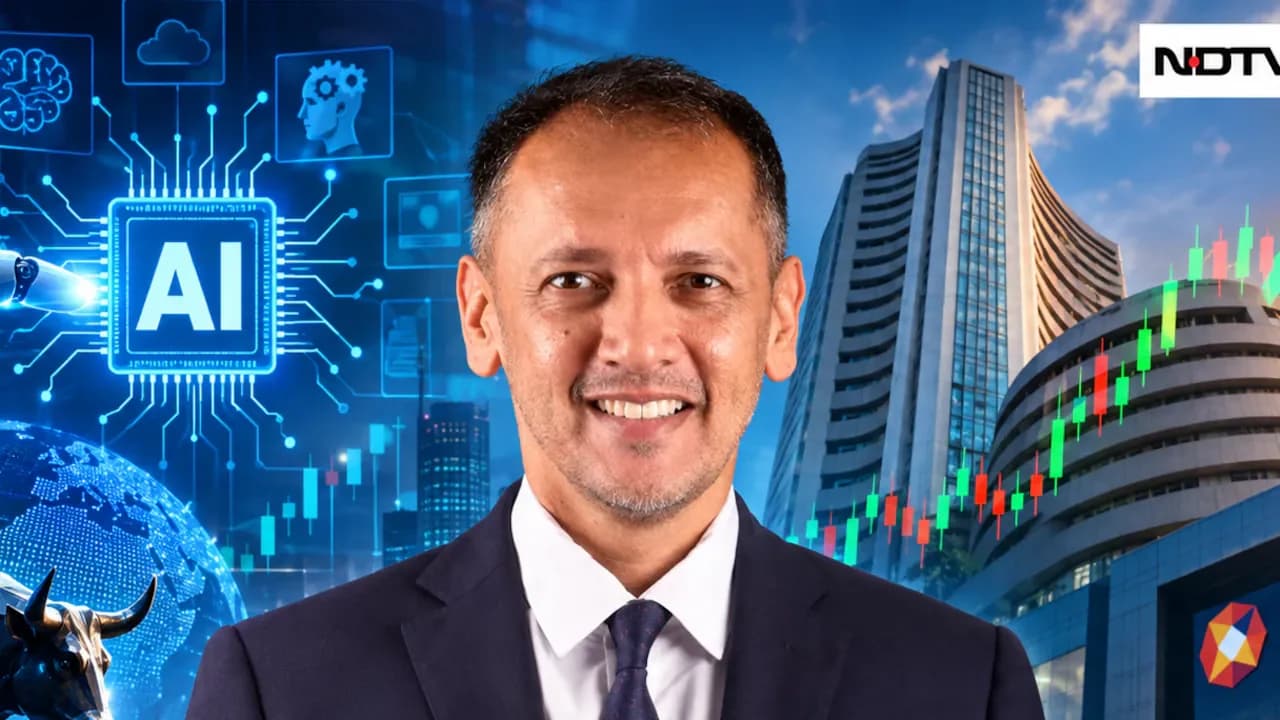
According to CNBC TV18 reports, Richard Harris, Executive Director of Port Shelter Investment Management, believes the recent correction in semiconductor and AI stocks represents a technical pullback rather than the start of a deep bear market. The Philadelphia Semiconductor Index has entered a bear market, down nearly 20% from recent highs, while Micron is down 20% and Broadcom is down 25%. However, Harris notes that the Nasdaq is down only 6% and the S&P 500 about 3%, suggesting this is more of a reversal of enormous gains seen earlier this year than a fundamental shift. He describes it as 'difficult to call this a real bear market' and notes that 'investors don't like share prices falling, usually because they buy at the top' but prices have come back to slightly more realistic levels.

As reported by CNBC TV18, Harris characterizes India's current market view as 'neutral at the moment, whereas previously it was more of a growth story'. He acknowledges that India has had a fantastic run over many years from a foreign institutional investor (FII) perspective and notes that 'it's not surprising that India is treading water while other themes are attracting attention'. The analyst points out that India used to represent the new economy through outsourcing, call centres and similar industries, but AI is now affecting call centres and parts of the Indian economy that are no longer seen as new. Harris emphasizes that 'India has one slight concern' regarding this shift in the new economy landscape.
According to the CNBC TV18 interview, Harris suggests there will be 'always some rotation in markets' as investor interest has been focused on AI and chip stocks while other markets have lagged. He notes that 'there is always some rotation in markets' and believes 'it's too early to say whether we are about to see a major shift from one theme to another'. The analyst observes that 'investors are beginning to ask where the revenues are going to come from' in the AI sector but suggests 'maybe they'll have more clarity in a couple of months, after the summer'. He emphasizes that 'it will be interesting to see how India develops from here' and stresses the need to 'identify new industries that can excite markets'.
As reported by CNBC TV18, Harris suggests that 'if you do have a large bubble, as we've seen in AI, investors tend to sell those markets first' and 'markets that haven't risen as much can be relatively defensive'. He notes that 'there is still some defensiveness in staying invested in stocks and markets you like, even if they haven't delivered the spectacular gains seen in the AI sector'. The analyst warns that 'even so, there is still some defensiveness in staying invested in stocks and markets you like, even if they haven't delivered the spectacular gains seen in the AI sector' but acknowledges that 'if global markets fall, India will also come under pressure'. Harris concludes that 'it will be interesting to see how India develops from here' and stresses the importance of identifying new industries that can excite markets.