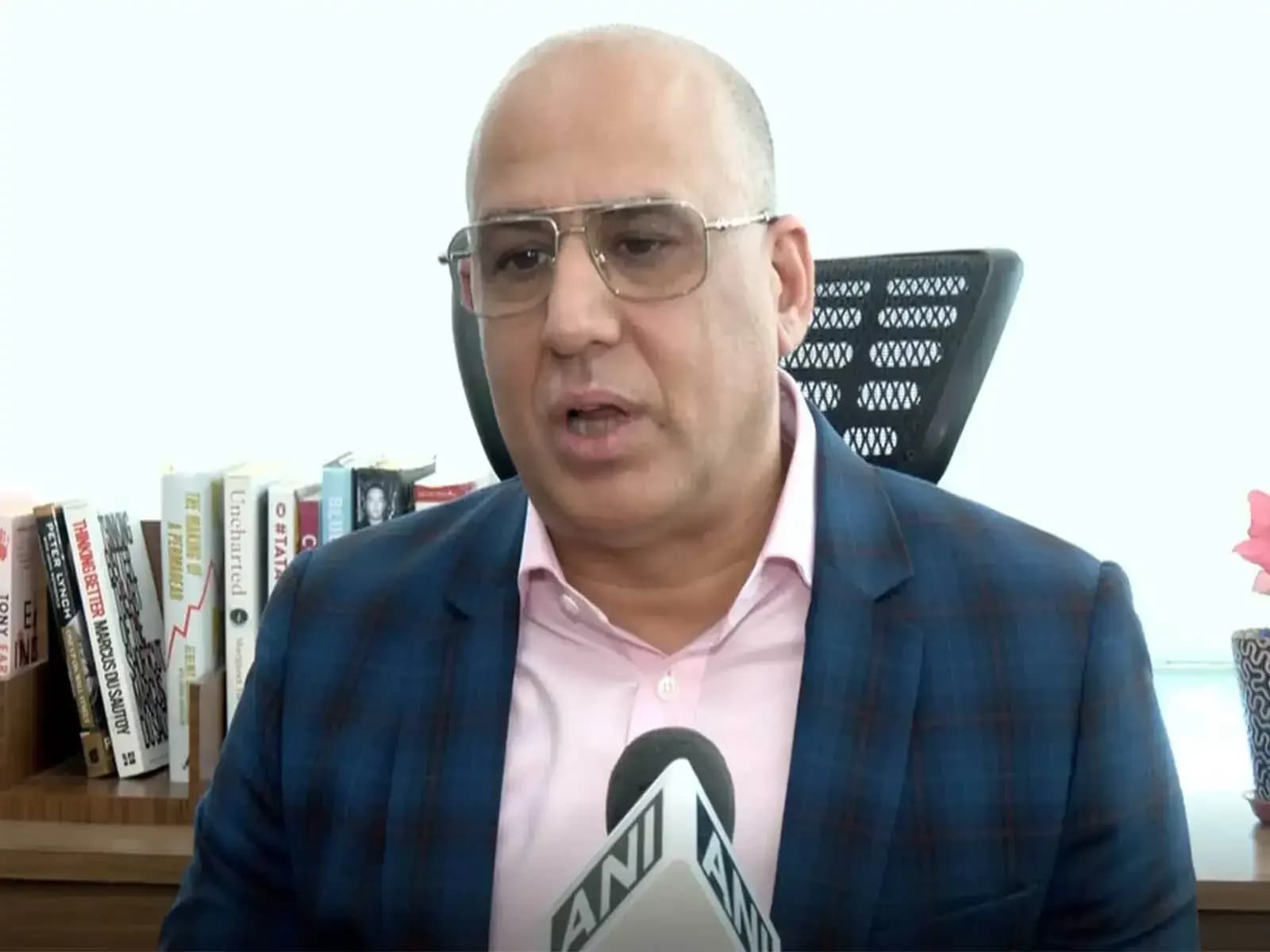
India faces mounting economic challenges as elevated global bond yields and persistent crude oil price risks are bringing imported inflationary pressures to the country, according to Dhiraj Relli, MD and CEO of HDFC Securities. Speaking in an exclusive interview with ANI News in Mumbai on Wednesday, Relli noted that while underlying macroeconomic growth remains strong with a 7.8 per cent GDP print, higher global bond yields and elevated commodity prices could compress corporate profitability if sustained over coming quarters. As reported by ANI News, these economic challenges pose a threat to sustained corporate profits amid the current macroeconomic backdrop.
SEBI's introduction of the Closing Auction Session (CAS) to curb end-of-day Volume-Weighted Average Price (VWAP) manipulation has received support from market experts. According to Relli, the call auction mechanism is a global best practice brought in to align price discovery with international standards. He highlighted that domestic mutual funds have increased their volume share from under 5 per cent to nearly 25 per cent following these reforms. The changes represent a significant shift in market microstructure aimed at enhancing price discovery and market integrity. When asked about brokerage adaptation to regulatory cooling in derivatives, Relli stated that focus has shifted heavily toward the cash market through Margin Trading Facility (MTF) and Securities Lending and Borrowing (SLB).
The RBI's easing of FCNR(B) deposit norms represents a tactical measure to cushion forex reserves and arrest Rupee depreciation, as noted by Relli. However, he emphasized that this provides temporary comfort to forex reserves and stabilises the Rupee in the short term, but is not a structural solution. Looking ahead, if CPI inflation stays near or above the 6 per cent upper limit, RBI could test its long pause and shift stance to one or two rate hikes over the next 12 to 18 months. The central bank's actions reflect efforts to balance currency stability with broader macroeconomic considerations, with Relli noting that long-term currency stability requires broader macroeconomic and central bank policy actions.
FCNR-led liquidity keeps banks flush with funds, temporarily impacting margins before lower funding costs take effect, according to Relli's assessment. In the IT sector, proposed US H-1B visa fee hikes pose a 100 to 150 basis point margin drag on Indian IT firms, though navigating Generative AI disruption remains their primary strategic priority. Foreign portfolio flows face challenges as FPIs face attractive global alternatives, elevated US Treasury yields, and Rupee depreciation, requiring valuation comfort and decisive visibility of double-digit or high-teens earnings growth to attract foreign investment. Relli stressed that to bring FIIs back, we need valuation comfort and decisive visibility of double-digit or high-teens earnings growth over the next few quarters.
Relli advocates for a multi-asset allocation incorporating equity, gold, silver, debt, REITs, and InvITs deployed via a 12-to-24-month staggered approach. He advises investors to target a realistic, risk-adjusted 12% to 15% CAGR over a 3-to-5-year horizon. Expressing views on market valuations, he discounted a sharp market-wide crash, pointing to two years of ongoing corrections. His recommended strategy favours mid-caps backed by strong earnings alongside specific sectors: BFSI (especially Public Sector Banks), discretionary consumption, pharma, capital markets, and AMCs. Relli emphasized a bottom-up approach, stating that investors should target a realistic, risk-adjusted 12% to 15% CAGR over a 3-to-5-year horizon.