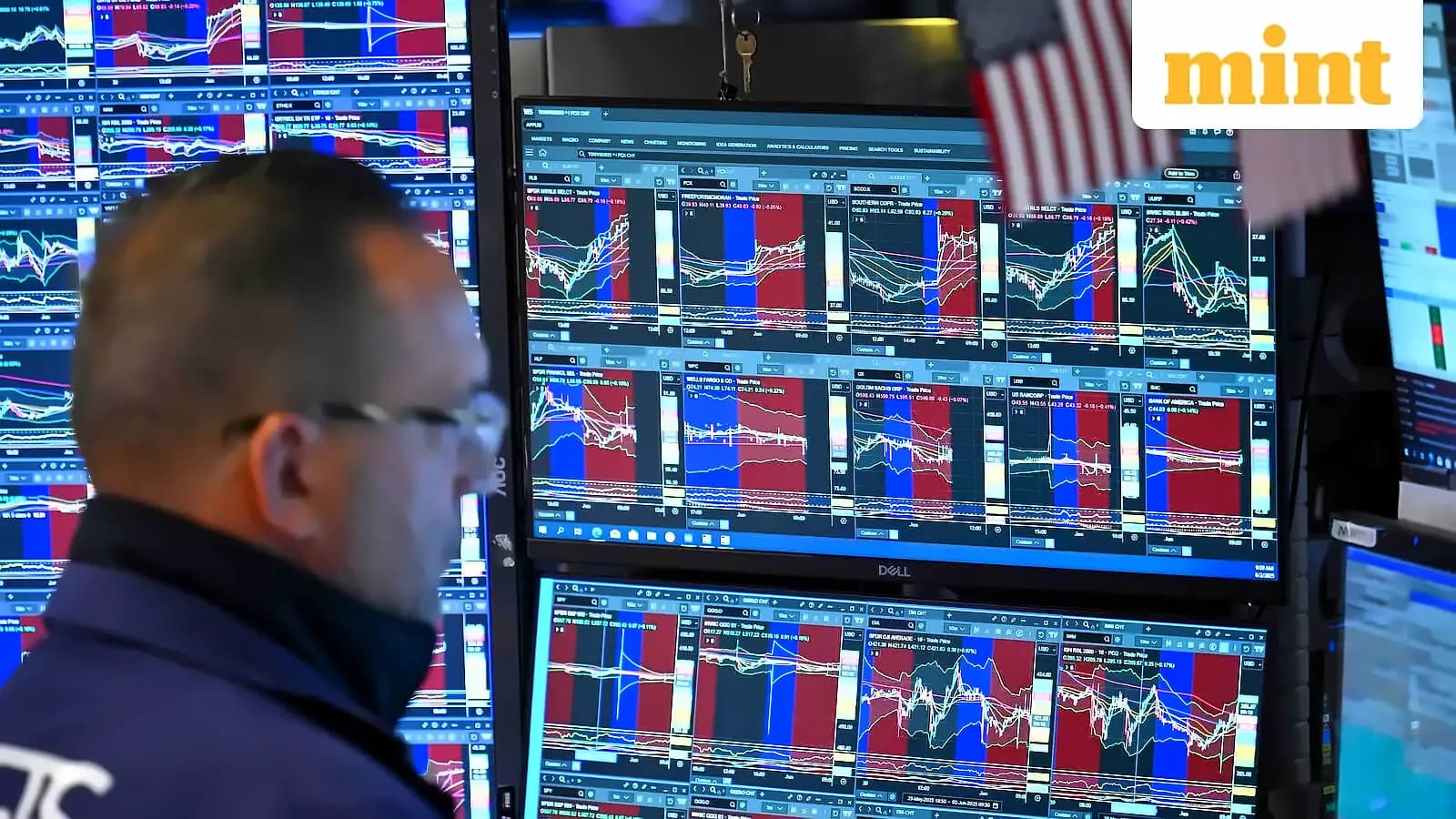
Benchmark indices opened on a cautious note on Tuesday, with Sensex slipping 59 points to 76,429.91 against its previous close of 76,488.96, having opened at 76,224.14. Nifty 50, which had closed at 24,031.70 on Monday, opened at 24,004.10 and was trading at 24,019.15, down 12.55 points or 0.05% as of 9:25 a.m. IST. The muted open comes a day after the Sensex surged 1,073 points and the Nifty gained 312 points, or 1.32%, to close decisively above the key 24,000 mark. The session carries elevated risk as markets face a monthly Nifty F&O expiry today, with the BSE expiry following on Wednesday and exchanges shut on Thursday, with expiry-driven positioning expected to dominate intraday trade far more than fundamentals.
Market sentiment came under pressure after reports emerged that the United States launched fresh strikes in southern Iran on Monday morning, despite ongoing diplomatic engagement between Washington and Tehran. According to reports citing US Central Command, the military action was carried out to protect American troops from Iranian forces operating in the region. The latest escalation has once again raised concerns over the stability of the West Asia region and the future of negotiations linked to reopening the Strait of Hormuz, a critical global energy corridor through which roughly one-fifth of global oil shipments normally pass. As per The Hindu BusinessLine, Dr. VK Vijayakumar, Chief Investment Strategist at Geojit Investments, noted that "even though negotiations are continuing for an end to the West Asia crisis there are no indications of an imminent end to the conflict." The 'self defence strikes' by the US in Southern Iran has come as a dampener to the ongoing negotiations, clouding the diplomatic mood.
Crude oil prices reversed Monday's sharp fall, with August Brent futures rising 1.70% to $95.01 per barrel and July WTI climbing 1.35% to $91.53 at 9:16 am on Tuesday. On the Multi Commodity Exchange, June crude oil futures were up 1.51% at ₹8,756, while July futures gained 1.29% to ₹8,535. The rise in oil prices is likely to keep inflationary concerns alive for import-dependent economies such as India, while also influencing currency movements and corporate margins. VK Vijayakumar from Geojit Investments noted that "Every time a positive development emerges, indicating an end to the conflict and followed by a dip in crude prices, the market has been rallying. A resolution to the conflict and significant dip in crude prices has the potential to largely address the macro headwinds which the economy is facing now."
Foreign Institutional Investors turned net buyers on Monday, purchasing equities worth ₹821.80 crore, while Domestic Institutional Investors bought equities worth ₹3,856.90 crore, as reported by The Hindu BusinessLine. This positive institutional flow contrasts with the cautious sentiment driven by renewed geopolitical developments in the Middle East. The strong institutional support continues to provide market stability despite the current geopolitical uncertainties.
Despite the initial market decline, Nifty Midcap 100 and Smallcap 100 outperformed, gaining 0.14% and 0.70% respectively, showing resilience in mid and small-cap segments, according to The Economic Times. Among Nifty 50 gainers in early trade, Coal India led with a gain of 1.55% at ₹465.10, ONGC rose 0.97% to ₹287.70, Infosys added 0.90% to ₹1,179.00, Hindalco climbed 0.85% to ₹1,109.00, and Tech Mahindra was up 0.74% at ₹1,446.10. On the losing side, healthcare stocks bore the brunt with Max Healthcare falling 1.08% to ₹990.05, Apollo Hospitals dropping 1.00% to ₹8,320.00, and Sun Pharma declining 0.89% to ₹1,824.20. The Indian rupee rebounded from a historic intraday low of 96.60 against the dollar, with USD/INR stabilising near 95.20, reflecting the impact of geopolitical tensions on currency markets.