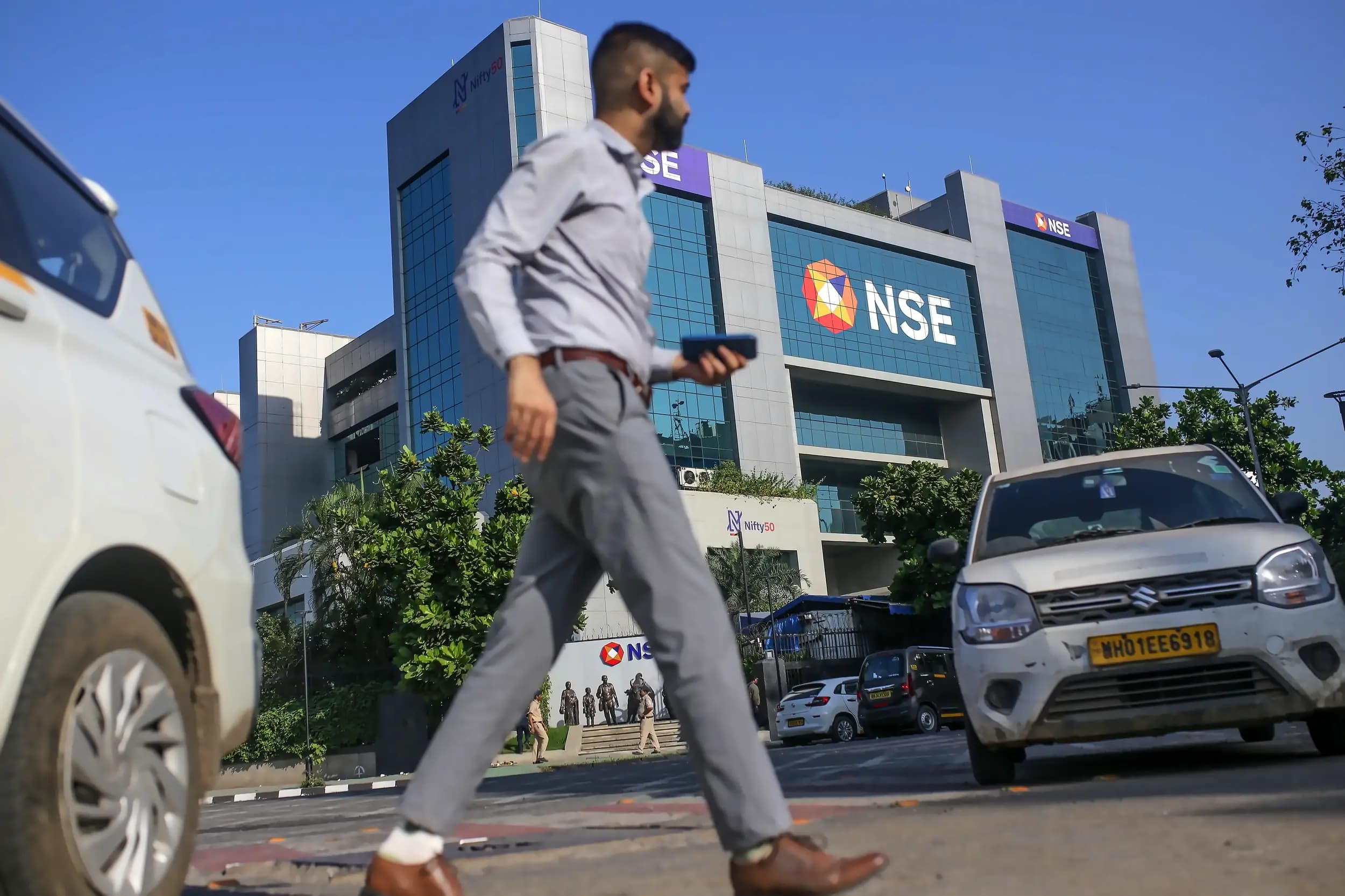
Foreign Portfolio Investors (FPIs) continued their selling spree in April, recording net outflows of ₹19,837 crore in just the first two trading sessions of the month. According to CNBC TV18, this latest withdrawal came after FPIs recorded net outflows of ₹24,743.74 crore during the truncated trading week ending April 3, 2026. The week comprised only three trading sessions — March 30, April 1, and April 2 — with markets shut on March 31 for Mahavir Jayanti and on April 3 for Good Friday. Equities remained the hardest hit asset class, with FPIs recording a combined net equity outflow of ₹23,801.94 crore through stock exchanges and the primary market route.
These latest outflows come amid a record monthly performance, with NSDL data showing FPIs recorded total net outflows of ₹1,25,736.40 crore from all asset classes in March 2026. Within this, combined equity outflows through stock exchanges and the primary market stood at ₹1,17,774.65 crore — the steepest monthly equity sell-off by foreign investors in Indian market history. Dr VK Vijayakumar, Chief Investment Strategist at Geojit Investments Limited, confirmed the scale, noting that "March witnessed massive selling by FPIs to the tune of ₹1,22,182 crore. This is the biggest ever monthly selling by FPIs."

The selling has been driven by a confluence of global headwinds, according to market experts. Dr Vijayakumar pointed to "continuation of the war, crude again spiking to above $100 level, the steady decline in the rupee and appreciation of the dollar" as key factors. Himanshu Srivastava, Principal Manager Research at Morningstar Investment Research India, attributed the outflows to broader macro forces, noting that "the sharp rise in geopolitical tensions in the Middle East has pushed up crude prices, revived inflation concerns, and reduced the probability of near-term rate cuts globally." He added that elevated US bond yields had improved the relative attractiveness of fixed-income assets, prompting global investors to rebalance away from equities.
The Indian rupee remained under pressure, with the currency standing at ₹94.6543 to the US dollar on April 2. Dr Vijayakumar noted that "rupee depreciated by about 4 per cent since the war began and fears of further depreciation have added to the weakness of the rupee, which, in turn, is triggering further selling by FPIs." However, the Reserve Bank of India stepped in to arrest the rupee's slide, with Dr Vijayakumar noting that RBI's directive capping daily rupee positions of banks and requiring short positions to be covered before April 10 "triggered a short-squeeze which enabled the rupee to rise to 93.20 to the dollar from the 95.30 level on March 30th."
With the latest withdrawals, total Foreign Portfolio Investors (FPIs) outflow has reached ₹1.5 lakh crore so far in 2026, according to NSDL data. This follows a record withdrawal of ₹1.17 lakh crore from domestic equities in March, making it the worst monthly outflow. Before this, FPIs had pumped in ₹22,615 crore in February, the highest monthly inflow in 17 months. Despite the FPI outflows, domestic investors have provided significant support to Indian markets, with corresponding domestic buying of ₹1.28 lakh crore giving support to the markets. Dr Vijayakumar noted that sustained selling by FPIs has made Indian market valuations fair and attractive, though FPI inflows can only happen when there is de-escalation on the war front, leading to a decline in crude oil prices.