According to ICICI Securities research, the defence sector is expected to face a seasonally muted quarter with most companies seeing low-double-digit to high-single-digit growth rates in Q1. The brokerage notes that traditionally, Q1 is a weak quarter in terms of execution, and this trend is expected to continue this year. Margins on a year-on-year basis could be rangebound, with the sector facing challenges from slower pace of order awards in FY26 and impact on exports amidst the Iran conflict. However, Solar Industries India Ltd. and Hindustan Aeronautics Ltd. are expected to be exceptions among the pack, with ICICI Securities identifying them as preferred picks from an FY27 perspective. Nuvama takes a different approach, believing the next phase of wealth creation may not necessarily come from companies with the biggest order books, instead favouring companies that can execute projects faster, localise production and convert orders into earnings more efficiently.
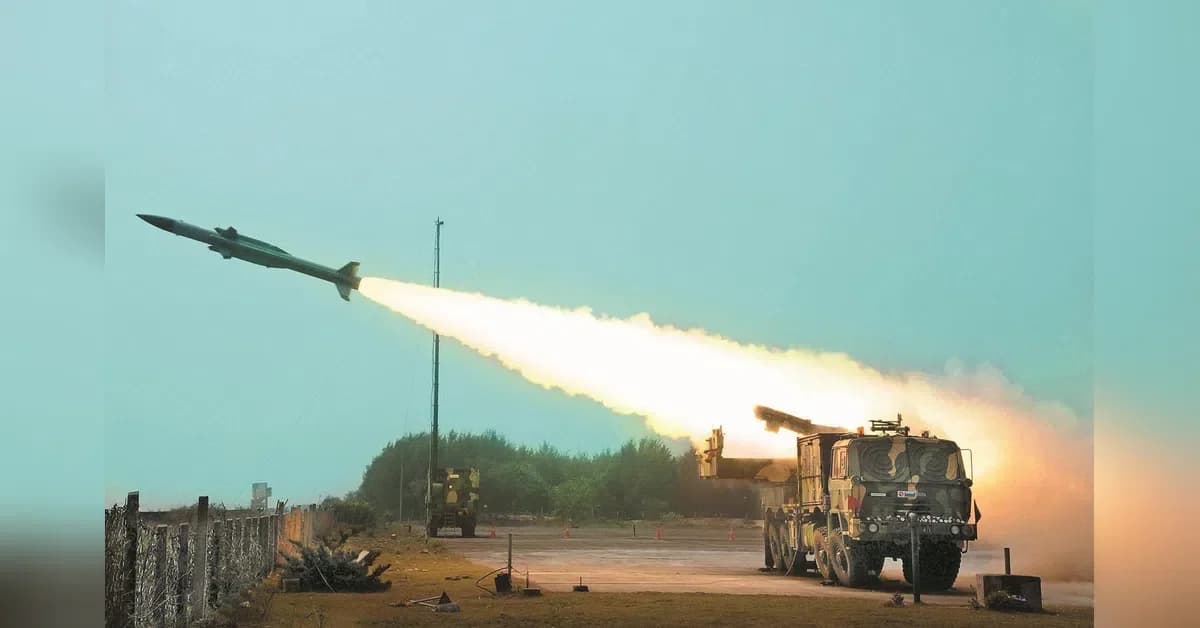
India's defence sector has achieved unprecedented milestones with production reaching a record ₹1.78 lakh crore in FY26, representing a 15.6% year-on-year growth and 110% increase versus FY21. According to NSE data, the NIFTY India Defence index has rallied 25.2% between April and June 2026, while on a year-on-year basis, the sector has jumped 9.3%. According to Nuvama, exports have climbed to an all-time high of ₹384 billion, while private sector contribution expanded to 24% (₹42,000 crore). The brokerage notes that India's defence ecosystem continues to scale, with the sector transitioning from building domestic manufacturing capability to accelerating deployment of advanced defence systems. The focus is gradually shifting towards missiles, air defence systems, electronic warfare, radars, unmanned platforms and precision ammunition, with the government's push towards self-reliance continuing to gather pace. The recent ₹520 billion AoN approvals further validate this shift towards operational readiness and technology-intensive procurement.
According to Quantace Research and Capital, Q1 defence margins are likely to see a downside of 75-175 basis points due to supply chain disruptions and input cost pressures. Karthick Jonagadla, Co-Founder & CEO of Quantace Research and Capital, explains that using a 3-5% logistics inflation assumption and a 5-8% imported-component cost sensitivity, the likely EBITDA impact is in the 80-180 bps range for companies with 20-30% import-linked input exposure. For defence electronics companies operating at 18-22% EBITDA margins, the pressures could bring quarterly margins down to 16.5-20.5%, which while significant, remains manageable. The impact would be more pronounced for companies with over 25% imported content, fixed-price contracts and delayed pass-through mechanisms. On quarterly revenue of ₹1,000 crore, a business operating at a 20% EBITDA margin could see a ₹7.5-17.5 crore impact on EBITDA due to higher costs related to imported subsystems, freight and delivery-related frictions.
While large defence companies continue to enjoy strong order pipelines, Nuvama believes stock-level differentiation will be driven by execution and localisation. The brokerage prefers players with faster execution cycles, higher localisation and superior margin profile, favouring consumable-led plays (Solar Industries India) and defence electronics/subsystems (Bharat Electronics, Data Patterns). According to Nuvama, companies with shorter execution cycles are likely to convert orders into revenue and profits much faster than those handling large, complex defence platforms that require longer delivery timelines. The brokerage identifies BEL, DPIL and SOIL as preferred picks, given higher localisation, shorter execution cycles and superior margin profile, while HAL and BDL remain relatively more exposed to complex programme execution and supply-chain dependencies. ICRA Senior Vice President Kinjal Shah notes that while balance sheets remain resilient, the operating environment is turning less conducive for investments amid the ongoing West Asia crisis, with private capex continuing to hold up only in select manufacturing segments such as defence.
In Q1, Bharat Heavy Electricals announced order inflows worth ₹3,500 crore while Bharat Dynamics Ltd (BDL) announced orders worth ₹1,400 crore, according to Business Standard reports. BDL is well positioned to benefit from acquisition of MPATGM systems as the primary manufacturer of ATGMs and lead integrator in medium range surface-to-air missile systems. The company is executing an MRSAM order for ₹2,960 crore and may see sales rise rise more than 2x year-on-year in Q1 if it accelerates execution. Nuvama expects BEL to deliver steady execution with sustained 27%+ margin, supported by operational efficiencies and localisation benefits, while SOIL and DPIL should continue to benefit from the favourable defence mix, operating leverage and shorter-cycle opportunities. The defence ministry's FY27 Budget (₹7.85 trillion) and capital outlay (₹2.19 trillion) are supportive of sector growth, though near-term revenue visibility is constrained by bottlenecks like delayed clearances and milestone-based billing.
Nuvama identifies Solar Industries India (SOIL) as its top pick, with earnings expected to grow at around 39% annually between FY26 and FY28. Bharat Electronics (BEL) is also among its preferred stocks, with earnings expected to grow by around 14% annually over the same period. According to Nuvama, BEL is expected to continue benefiting from operational efficiencies and localisation, while Solar Industries and Data Patterns could gain from favourable product mix, operating leverage and relatively shorter execution cycles. ICICI Securities had previously identified Solar Industries could be looking at 25% revenue growth or better, while GardenReach Shipbuilders & Engineers may see revenue growth of 22% year-on-year. Nuvama notes that BEL and HAL could see low teens or high single-digit revenue growth in Q1, with other beneficiaries including Zen Technologies, PTC Industries, Astra Microwave, Data Patterns, Paras Defence & Space Technologies and Premier Explosives. The rising global tensions are expected to support order inflows and export opportunities, with local defence manufacturers seeing stronger long-term opportunities in electronic warfare systems, missiles, combat drones, and ammunition.