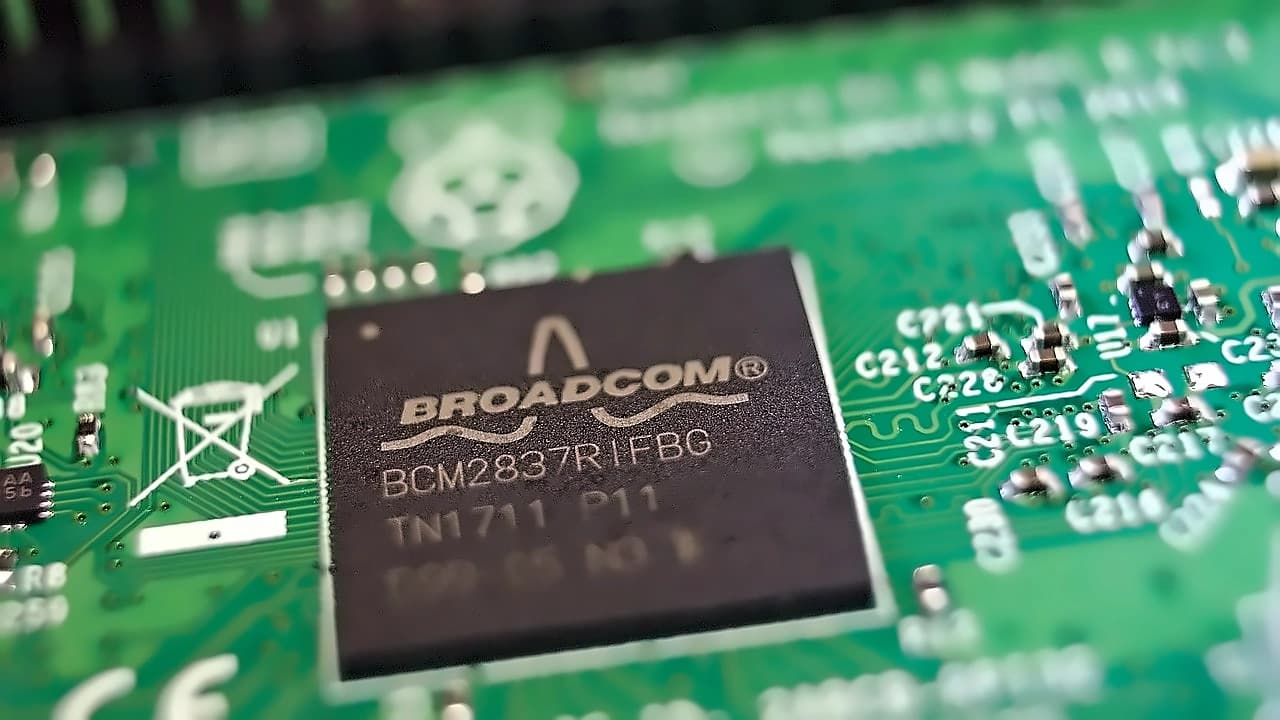
Broadcom shares fell approximately 4.65% on August 19, trading at $359.66 as of the latest data, as reported by multiple sources. This decline follows Tuesday's 4.65% drop and leaves the stock roughly 27.5% below its 52-week record high of $495. The Technology Equipment sector underperformed with a 1.02% decline, while Marvell Technology surged 7.87% following its expanded custom-chip deal with Google. The selling pressure was amplified by broader macroeconomic headwinds, including elevated U.S. Treasury yields driven by persistent inflationary pressures and geopolitical tensions in energy markets. Technical indicators show neutral conditions with the MACD at -5.278 and RSI at 41.196, while the Williams %R suggests oversold levels at 90.726.
Marvell shares jumped about 7.87% following the announcement of its expanded custom-chip deal with Google, as reported by NDTV Profit. The deal covers several custom silicon programmes within Google's Tensor Processing Unit ecosystem. Google has received warrants to purchase up to 58.97 million Marvell shares at $206.58 each, representing potential purchases of about $12.2 billion if fully exercised. Most of the warrants vest when Google meets agreed purchasing targets through fiscal 2033, giving Marvell a strong incentive to deepen the relationship over time. This deal positions Marvell as a key supplier for Google's AI chip roadmap, challenging incumbent Broadcom and signaling a shift in Google's supplier lineup for AI chips. The announcement raised investor anxieties regarding long-term market share retention and potential dilution of hyperscaler capital expenditure allocation, even as long-term supply contracts between Broadcom and Google remain active.
Despite Broadcom's long-standing position as Google's primary partner for custom AI chips, the company's shares have declined amid increased competition in custom silicon. According to NDTV Profit, Broadcom and Google still maintain a long-term agreement covering future generations of processors and networking components through 2031. However, Marvell's expanded role has raised questions about how much of Google's future AI spending Broadcom can retain as competition in custom silicon increases. The Marvell agreement goes well beyond a limited partnership, covering several custom silicon programs within Google's Tensor Processing Unit ecosystem. Technical momentum and institutional portfolio rebalancing also contributed to the stock's weakness, with recent filings indicating institutional stake trims and growing market scrutiny surrounding custom chip financing structures keeping investors cautious ahead of the company's upcoming quarterly earnings release.
Wednesday's drop follows other developments that have weighed on AVGO recently, including concerns surrounding a critical VMware vCenter vulnerability known as CVE-2026-59310. Broadcom disclosed the security flaw on July 29 and released a fix, although researchers subsequently found compromised systems associated with 361 IP addresses spanning 47 countries. This vulnerability adds to investor concerns about the company's security infrastructure and potential impact on customer relationships.
Broadcom's underlying AI business remains robust despite market concerns. As reported by NDTV Profit, the company reported $10.8 billion in AI semiconductor revenue in the fiscal second quarter, representing a 143% increase from the previous year. Management expects AI semiconductor revenue of $16 billion in the third quarter and is targeting about $56 billion for fiscal 2026 and more than $100 billion in fiscal 2027. The company is also investing heavily in AI infrastructure through partnerships with Apollo and Blackstone on an AI infrastructure financing platform that began with a $35 billion transaction supporting Anthropic's computing-capacity expansion. Bank of America estimates the related financing vehicle could eventually reach $370 billion in senior debt by mid-2029 if capacity expands to 20 gigawatts. Broadcom secured long-term agreements to supply multiple generations of TPUs and AI networking to Google in April 2026 and is providing gigawatt-scale compute capacity to Anthropic and OpenAI.
Wall Street remains strongly bullish despite the growing competition within custom silicon. AVGO earns a Strong Buy consensus rating thanks to 23 Buy recommendations that easily beat three Holds. The average 12-month price target stands at $515.78, with a high of $675.00 and low of $215.88, implying about 43% upside from current levels. Broadcom's next important test arrives with its fiscal third-quarter earnings report scheduled for September 2, where investors will be watching whether soaring AI-chip demand can keep supporting growth amid intensifying competition from rivals like Marvell. The company's latest annual revenue stands at $63.89B, ranking 4th in the industry, with net profit of $23.13B, also ranking 4th in the industry.