Auto sector shares reversed early losses to trade in positive territory on Tuesday, aided by value buying and stock-specific buying interest after a sharp decline earlier in the session. According to reports from Moneycontrol, the Nifty Auto index, which was among the worst-performing sectoral indices in early trade, fell as much as 1.3 percent to 26,067.70 after the Delhi government announced a new electric vehicle (EV) policy. The index had declined more than 2 percent in the previous session, but around noon, value buying emerged and the index erased all its losses to turn positive, touching an intraday high of 26,629.65, up 0.8 percent. However, broader market sentiment remained cautious with Indian equity benchmarks trading flat, the Nifty 50 hovering around 23,900 while the Sensex projecting a clear negative bias, down 100 points.

The Delhi government's notified EV Policy 2026 introduces comprehensive incentives and timelines that will significantly impact the automotive sector. Delhi is set to become the first state in India to include car electrification mandates in its EV policy, with the policy remaining in effect until 2030. The gazette notification contains a section titled "Electrification mandates for registration," which states: "The Delhi government intends to bring out electrification mandates for four-wheelers in future as well as aim to make a framework for disincentivising polluting vehicles that use inefficient fuels." Electric three-wheelers will be registered from January 1, 2027, and electric two-wheelers from April 1, 2028, with purchase incentives for E-2Ws (maximum ex-factory cost of ₹2.3 lakh) and E-3Ws. Electric passenger vehicles (E-PVs) and strong hybrid EVs (ex-showroom price below ₹30 lakh) will receive 100 percent exemption from road tax and registration fees until FY30, while strong hybrid EVs will get 50 percent exemption. The policy commits a planned investment of ₹15,000 crore over FY27-30, including ₹7,000 crore towards purchase incentives and ₹8,000 crore for charging infrastructure, tax benefits and EV ecosystem development.
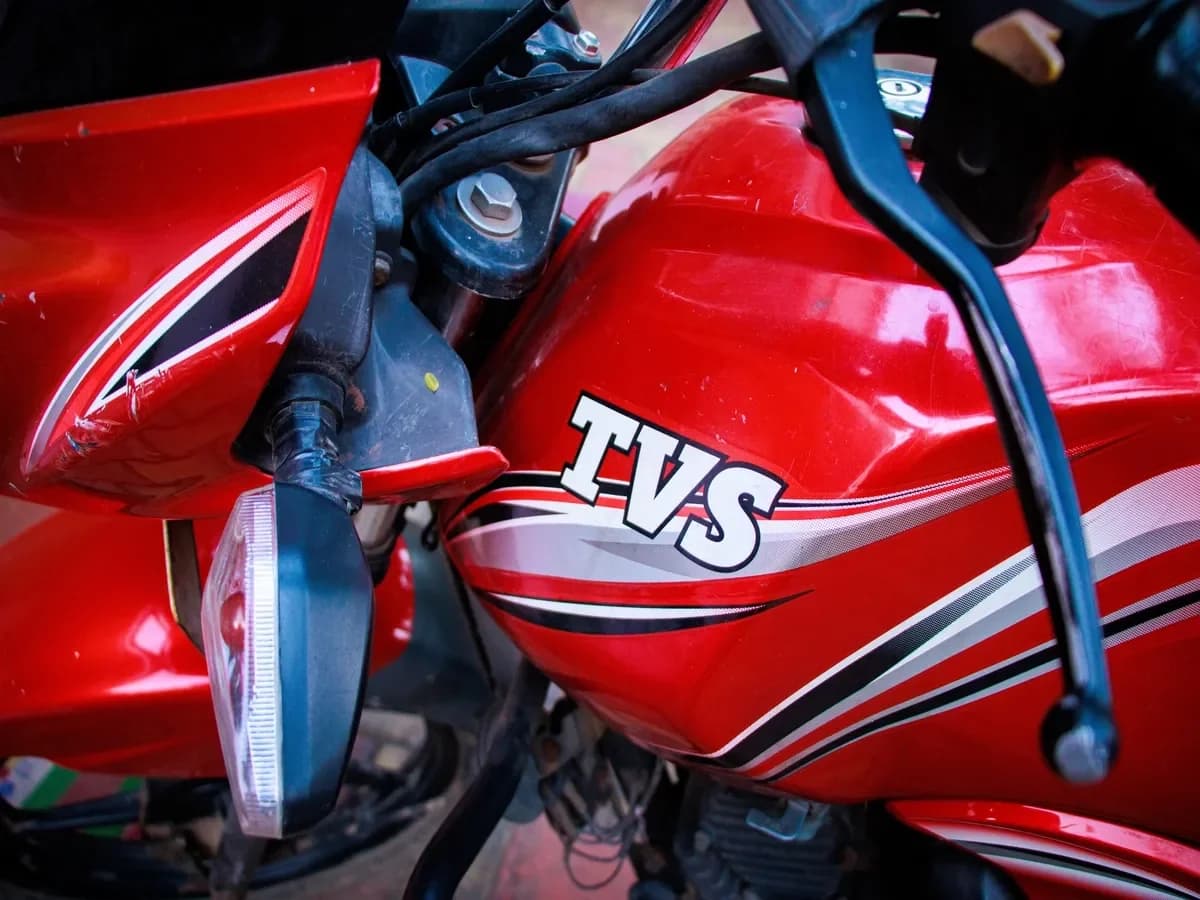
The policy has drawn contrasting responses from automakers based on their EV portfolios and market positioning. Stellantis India's CEO Shailesh Hazela welcomed policy directions that encourage cleaner mobility but emphasized the need for customer acceptance and charging infrastructure alignment. Citroën currently has one electric model in India, while JSW MG Motor India reported that 75% of its total sales came from EV portfolio in June 2026, with plans to add two more models this year. A JSW MG Motor spokesperson viewed the Delhi EV Policy as a pilot that could shape similar policies in other states. Maruti Suzuki's Partho Banerjee reiterated the company's view that India's transition to cleaner mobility should not rely on a single technology, noting that electric vehicle charging infrastructure would take time to develop. The company sells about 18 passenger vehicle models in India, with only one fully electric model — the e Vitara. Morgan Stanley reports that companies with established EV portfolios, including Hero MotoCorp, Bajaj Auto and TVS Motor, are better positioned to offset the impact through electric offerings, while Eicher Motors' success of its newly launched electric motorcycle assumes greater significance under the evolving regulatory landscape.
Despite the policy's comprehensive framework, several execution challenges remain. Citi points to underdeveloped charging infrastructure and the absence of e-motorcycle models capable of replacing existing ICE products. The policy's porous enforcement problem is highlighted by Delhi's borders with Haryana and Uttar Pradesh, making it straightforward for buyers to register vehicles outside the NCR. Kotak adds that while scooter electrification is progressing, motorcycle electrification remains nascent, putting motorcycle-heavy OEMs like Hero MotoCorp and Royal Enfield at a structural disadvantage. ICE two-wheelers currently account for 67% of all vehicles sold in Delhi — making the 2028 deadline particularly aggressive. Delhi Transco Limited becomes the nodal agency for public charging and battery swapping, with every OEM dealer required to deploy at least one public charging station — three points for two and three-wheelers, two for four-wheelers. The policy mandates that 30 percent of school bus fleets be electric by March 2030 and plans to install around 32,000 charging points across the national capital.
While the immediate financial impact on automobile manufacturers remains limited due to Delhi's small contribution to overall domestic sales, the long-term risk profile is more concerning. According to a Morgan Stanley report, the broader implication lies in the possibility of other states adopting similar measures. The report expects resistance from vehicle manufacturers and dealers, particularly in the motorcycle segment where electric alternatives remain limited. It pointed to Chandigarh, which had earlier proposed a ban on ICE two-wheelers but later deferred implementation to 2027 following industry concerns. Morgan Stanley maintains that while air pollution remains a legitimate concern, faster scrappage of ageing vehicles across segments would be the most effective way to curb transport-related emissions. The brokerage also underscored the importance of localising battery cell manufacturing to strengthen India's energy security as electric vehicle adoption gathers pace.