Thirty constituents of the Nifty 50 have together eroded investor wealth worth nearly ₹22.64 lakh crore in 2026 so far amid persistent selling pressure in banking, IT, auto and consumption-linked stocks. According to reports from The Economic Times, the sharp correction comes against the backdrop of tariff concerns, AI fears, expensive valuations, foreign outflows and rising geopolitical tensions, which have weighed heavily on market sentiment this year.
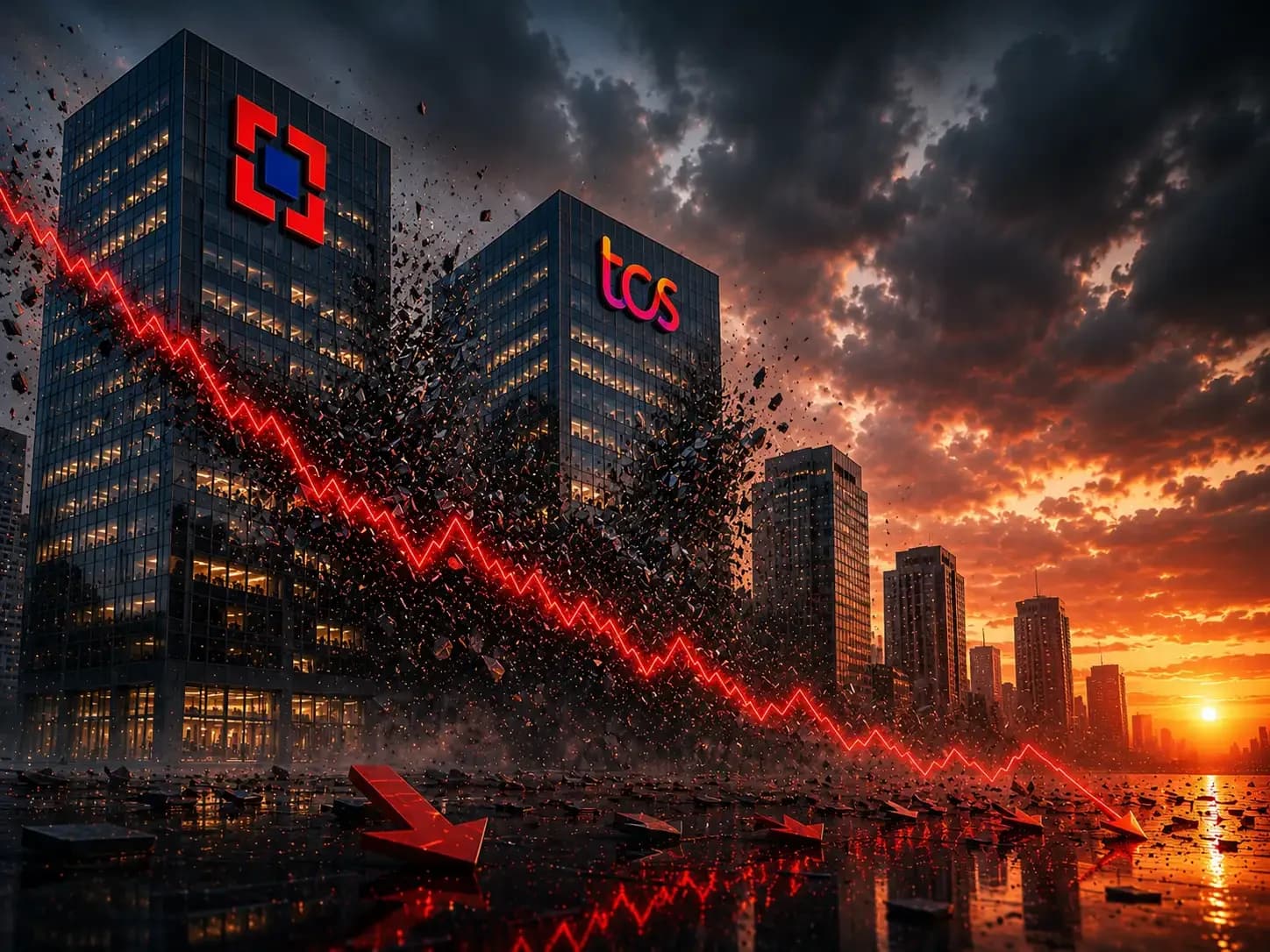
Among the biggest laggards, HDFC Bank has emerged as the top wealth eroder with its market capitalisation shrinking by ₹3.55 lakh crore, while the stock has fallen over 23% on a year-to-date basis. As reported by The Economic Times, Tata Consultancy Services (TCS) followed closely, wiping out ₹3.17 lakh crore in investor wealth as the IT bellwether plunged more than 27% amid mounting concerns over AI disruption and weak discretionary tech spending globally.
Oil-to-telecom conglomerate Reliance Industries (RIL) saw its market value decline by ₹2.85 lakh crore despite a relatively lower 13% fall in the stock price, while Infosys erased ₹1.70 lakh crore in market capitalisation after tumbling 26% this year. According to The Economic Times, another IT major, HCL Technologies, witnessed one of the steepest declines among heavyweights, shedding nearly 28% and wiping out ₹1.23 lakh crore in investor wealth. Other financial stocks like ICICI Bank, Kotak Mahindra Bank, Bajaj Finance and Bajaj Finserv too, came under pressure, together losing over ₹2.11 lakh crore in market value.
Auto stocks also witnessed sharp wealth erosion, with Maruti Suzuki India Limited losing more than ₹1.16 lakh crore in market capitalisation as the stock corrected over 22%, while Mahindra & Mahindra Limited saw a ₹72,995 crore erosion despite strong operational performance. As reported by The Economic Times, even relatively defensive names such as ITC Limited and Hindustan Unilever Limited failed to escape the selloff. The IT pack remained among the worst-hit sectors, with shares of Wipro declining over 25%, while Tech Mahindra slipped nearly 10%.
Despite the sharp correction across several frontline counters, analysts believe the selloff has turned pockets of the market attractive from a long-term perspective, particularly in financials and select consumption plays. According to a media release by smallcase, they project EPS estimates for the Nifty and the BSE Sensex in the range of ₹1,280 – ₹1,320. Based on the expected earnings trajectory, the index is likely to trade within a valuation band of 22X–24X, reflecting confidence in India's domestic growth momentum and corporate profitability. As reported by The Economic Times, experts expect NIFTY 50 to be in the range of 28,000–30,000 in FY27, a potential upside of nearly 15%–25% from current levels.