Indian markets witnessed a sharp sell-off on Wednesday, with benchmark indices posting their steepest single-day decline in over two months amid adverse global cues. According to The Economic Times, markets saw a significant decline influenced by global factors, with the Nifty slipping decisively below the key support zone of 24,000-24,150 and falling beneath its major moving averages. The BSE Sensex plunged 1,677.12 points, or 2.15%, to settle at 76,503.60, while the NSE Nifty 50 dropped 516.65 points, or 2.12%, ending the session at 23,882.05. However, markets opened higher on Thursday, July 9, with Sensex trading at ₹76,985.96, up ₹482.36 or 0.63% as of 9:25 AM, while Nifty climbed to 24,019.15, up 137.10 points or 0.57%. As per Enrich Money, geopolitical tensions in the Middle East have escalated further with the United States launching fresh strikes on Iran, with President Trump stating that the ceasefire is "over," heightening concerns over regional stability and raising fears of potential disruptions to global energy supplies. Markets remained under pressure for most of the week after fresh US strikes on Iran reignited fears of a wider regional conflict, pushing crude oil prices from $72.76 a barrel last Friday to $76.34 this Friday and triggering profit booking.
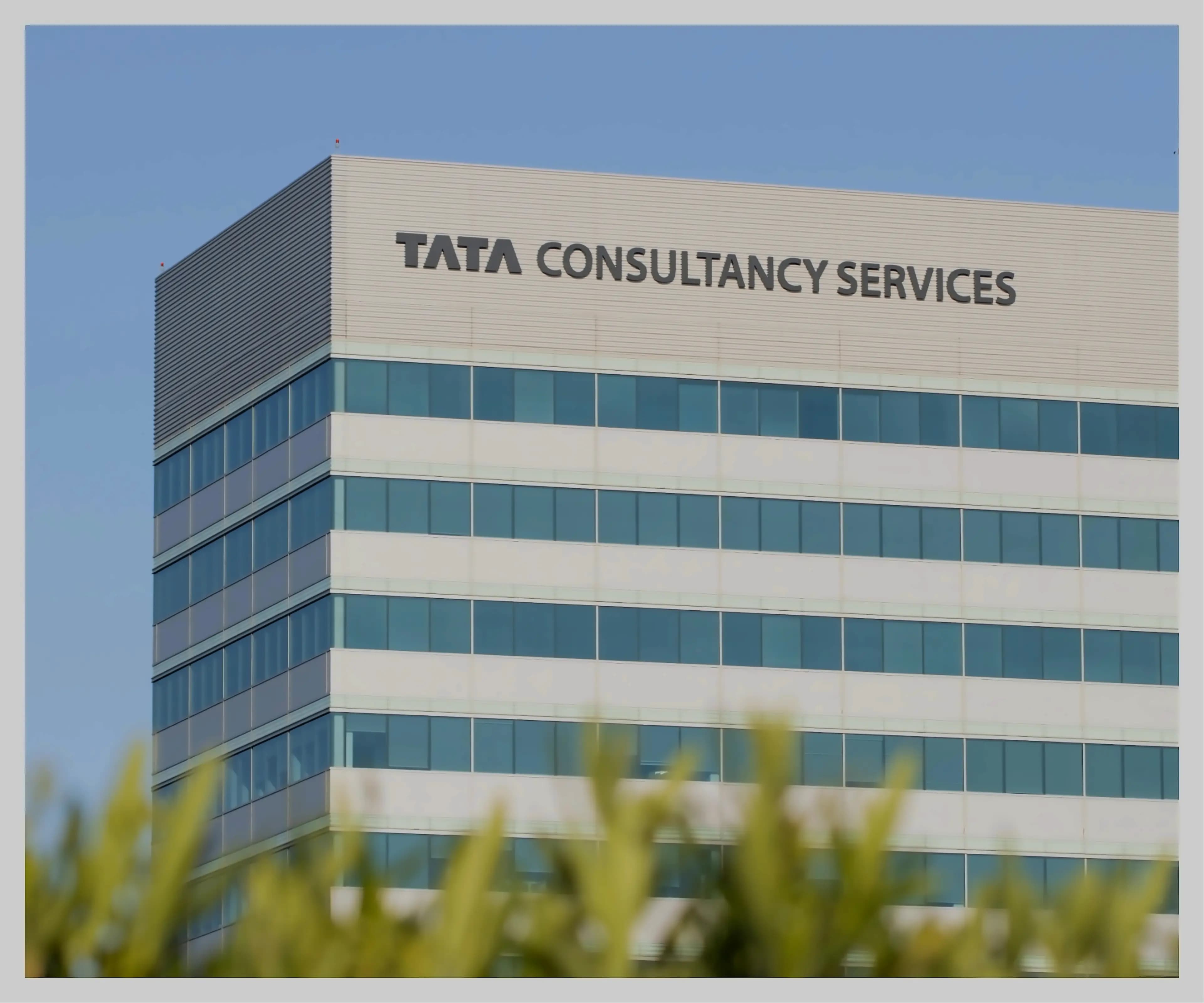
TCS shares declined 2% to ₹2,016 on Thursday as the company prepares to announce its first-quarter FY27 results, officially kickstarting the Q1 earnings season for the IT pack on Dalal Street. According to The Economic Times, the stock has already crashed more than 36% this year so far amid multiple headwinds including AI worries, inflationary pressures due to the Middle East war and more. Axis Securities expects TCS to report a 13% year-on-year growth in revenue and 4% YoY rise in profit for the quarter under review, based on an average of estimates by six brokerages, though sequential growth is likely to be nearly flat. EBIT margins are likely to decline by 98 bps QoQ due to wage hikes and continued AI investments, with margins remaining mixed but partly offset by currency depreciation and productivity gains. Nomura believes that Indian IT services companies are in the midst of a perfect storm of two key headwinds: macro uncertainty from the ongoing Middle-East conflict and US rate uncertainty keeping client spending subdued, while heightened competition among IT services companies sees the economic dividend of AI being immediately surrendered to clients. TCS reported results broadly in line with the Street's muted expectations after market hours, providing some relief to investor concerns about the IT sector's performance. TCS reported revenue of $7.62 billion for the April-June quarter, up 0.04% sequentially and 2.7% on a yearly basis, although profits declined 1.3% on a quarterly basis and 2.2% year-on-year. The company also announced a dividend of ₹12 per share and operating margin fell 130 basis points from the preceding quarter to 24% in Q1 of FY27.
Nifty 50 rebounded modestly on Thursday, closing 80 points higher at 23,962 after a volatile trading session that saw the index navigate significant intraday swings. According to CNBC TV18, the index opened 46 points higher and climbed to an intraday high of 24,134 within the first 90 minutes of trade, before trading in a narrow range for much of the session before profit booking in the final hour erased more than 150 points from the day's high. Sectoral performance remained broadly positive, with all indices ending higher except Nifty IT and Nifty Auto, as Realty, Media, Consumer Durables and PSU Banks led the gains. The broader markets outperformed the benchmark indices, with the Nifty Midcap 100 and Nifty Smallcap 100 advancing 1.4% and 1.8% respectively. The Indian rupee also strengthened, appreciating 16 paise against the US dollar to ₹95.39, supported by RBI intervention, a weaker dollar index and the recovery in domestic equities. From a technical perspective, Nagaraj Shetti of HDFC Securities said the Nifty has witnessed a rebound from the key support zone around 23,800, with a sustained move above the 24,200-24,300 zone could trigger fresh short covering. Nandish Shah of HDFC Securities said the 23,800 level remains crucial for maintaining the bullish bias, while Osho Krishan of Angel One expects the 23,880-23,800 zone to act as an important support area. On Friday, the BSE Sensex jumped 1.08% to close at 77,569.39, while the Nifty 50 gained 1.02% to settle at 24,206.90, building on Thursday's modest recovery of 0.31% and 0.34% respectively. The two-day rebound was not enough to erase the more than 2% decline on Wednesday, leaving both benchmark indices about 0.2% lower for the week.
Despite the broader weakness, real estate was the week's best-performing sector, with the BSE Realty index gaining 5.4%, as reported by The Economic Times. This was followed by consumer durables advancing 2.3%, while information technology gained 1.9%. Pratyush Pandey, founder of AARE Consulting, said real estate continued to benefit from healthy residential demand, strong office leasing and sustained infrastructure investment. He expects real estate, infrastructure, select financials and large-cap IT to remain market leaders, supported by earnings visibility and domestic liquidity. In contrast, the BSE Services index declined 1.3%, while FMCG and automobile stocks fell 1.2% and 0.6% respectively during the week. Singla attributed FMCG's weakness to profit booking after earlier gains, as investors shifted away from defensive sectors when risk appetite improved. Paul remained positive on realty and pharma but cautious on FMCG because of slower earnings growth and expensive valuations. Phoenix Mills reported Q1 retail portfolio consumption up 32% year-on-year to ₹4,727 crore, with commercial office gross leasing of about 1.9 lakh sq ft and gross residential sales of ₹64 crore.
Information technology stocks remained under significant pressure ahead of key earnings announcements, with TCS falling 1.47% to ₹2,027.30 after opening at ₹2,057.50, as reported by The Economic Times. Infosys dropped 2.17% to ₹1,046.10, the sharpest decliner among IT names, while Tech Mahindra fell 1.60% to ₹1,406.00 and HCL Technologies was down 1.54% to ₹1,128.00. The sector-wide decline reflects market concerns about discretionary tech spending by global clients and broader challenges in the IT sector amid changing client priorities and technological transitions. TCS is scheduled to announce its first-quarter FY27 earnings on Thursday, July 9, with brokerages expecting modest profit growth and weak revenue momentum due to soft IT services demand amid a cautious environment. Nomura expects the upcoming earnings season to be sombre with weak quarterly growth trends from most large caps, with Wipro expected to guide -1% to +1% revenue growth in 2Q FY27E. Investors will now look to results from HCL Technologies on 13 July, followed by Wipro and Tech Mahindra on 16 July, for confirmation that Friday's rally in IT stocks has legs. Prasenjit Paul, fund manager at 129 Wealth and research analyst at Paul Asset, remained cautious, arguing that the IT sector continued to face structural disruption from artificial intelligence (AI), which could automate parts of traditional IT services and put pressure on the valuation premium enjoyed by large technology companies.
According to a recent JPMorgan report, Nifty 50 earnings are expected to grow 5% year-on-year in the June quarter, led by financials, metals, industrials and discretionary companies. Strong demand, credit growth and rupee weakness could support revenues and pharmaceutical exporters, although elevated oil-linked raw-material costs may weigh on margins. Going forward, corporate earnings will remain the main trigger next week. Apart from the technology companies, other large-cap results coming in include HDFC Life Insurance on 15 July, Jio Financial Services on 16 July, and JSW Steel on 17 July. Sentiment improved towards the end of the week after TCS's June-quarter earnings marginally exceeded revenue expectations and reports suggested Washington and Tehran were continuing diplomatic talks despite the recent exchange of fire. Rajesh Singla, chief executive officer and fund manager at Alpha AMC, said Friday's rebound was supported by both fundamental factors and short covering, with easing geopolitical concerns and TCS's better-than-expected revenue helping the market recover. However, the sustainability of the rebound will depend on whether upcoming IT results confirm demand stability and whether tensions in West Asia remain contained.