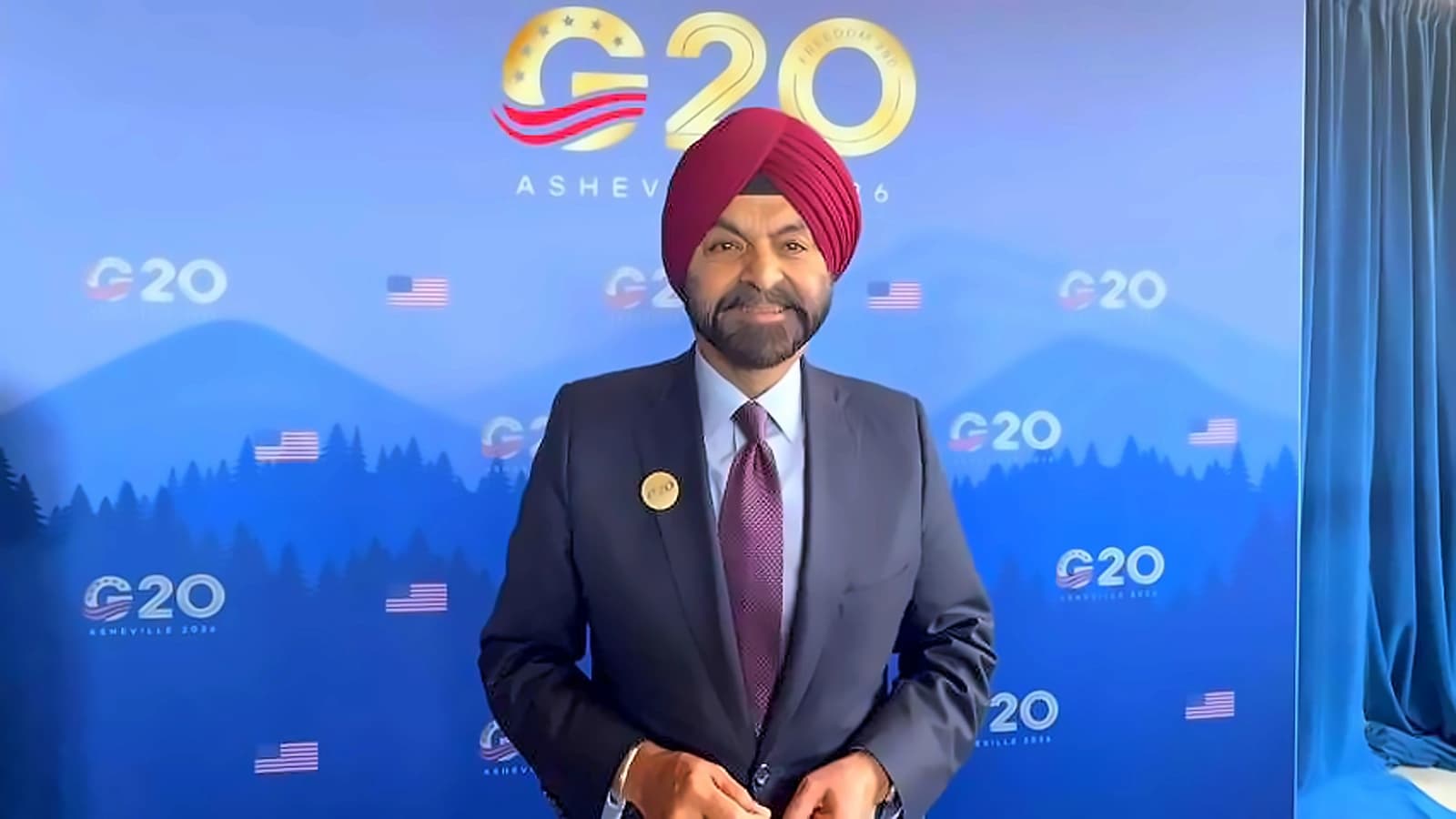
World Bank President Ajay Banga has emphasized that India has reached a stage where its development experience can be shared with other countries. In an exclusive interview with IANS on the sidelines of the G20 Finance Ministers' meeting in Asheville, Banga stated that India is doing great work in areas like roads, airports and digitization and has the potential to raise the growth rate of the economy beyond the current 7-8 percent. This statement comes at a time when India achieved 7 percent growth in the first quarter of FY27 amidst global instability. The World Bank chief described India's latest economic performance as resilient despite facing global energy pressures, trade uncertainty and climate-related challenges, with the latest growth figures reflecting the strength of India's underlying economy.
Banga highlighted several key factors supporting India's economic momentum, as reported by IANS. He pointed to growth in services and exports along with sustained investment as fundamental drivers of the country's economic strength. The World Bank president noted that even inside that 7.8 percent, there's good growth in services. There's good growth in exports. In fact, investment has held up. Banga emphasized that India was undertaking substantial work on roads, bridges, airports, power, water supply and digitisation infrastructure projects, which are contributing to the robust economic performance. However, he identified areas requiring further improvement, stating that more progress was needed in education, skilling and healthcare.
Banga outlined a comprehensive strategy for translating India's economic growth into meaningful employment opportunities, particularly for young people. According to IANS, he identified three pillars needed to generate employment: physical and human infrastructure, regulatory reform and the mobilisation of private capital. The World Bank chief emphasized that jobs are created in the private sector. Government enables and the private sector creates. He identified infrastructure, agriculture, primary healthcare, tourism and value-added manufacturing as sectors capable of generating large numbers of jobs, noting that India had particular strengths in minerals, metals and fashion. Banga stressed the importance of micro, small and medium-sized enterprises in the job creation effort, stating that the whole skilling and education ecosystem in India needs to be tuned even closer to where the jobs are going to come from in the future and what the private sector would want to do with you.
Finance Minister Nirmala Sitharaman met with World Bank President Ajay Banga on the sidelines of the G20 Finance Ministers and Central Bank Governors meeting in Asheville, focusing on strengthening the India-World Bank partnership and expanding cooperation in corporate, infrastructure and municipal bond markets. As reported by the Finance Ministry, the discussions focused on deepening cooperation in infrastructure, MSMEs, tourism, digital public infrastructure and private capital mobilisation. The two sides explored a larger role for World Bank institutions in supporting India's long-term development and investment ambitions. Sitharaman appreciated the World Bank's speedy processing of the $1.5 billion Development Policy Financing (DPF) programme and support from the International Finance Corporation (IFC) for MSMEs through the Small Industries Development Bank of India (SIDBI). The discussions indicated a broader evolution of the India-World Bank relationship from a traditional lender-borrower model towards a strategic partnership focused on knowledge, innovation and mobilisation of private capital.
Banga emphasized that India's journey towards its 2047 goals would depend both on domestic growth and the country's stature in global economics and politics. According to IANS, he noted that India is also emerging as a source of development knowledge for other countries, particularly through its digital public infrastructure and work in agriculture. The World Bank chief discussed tourism and MSME opportunities with Finance Minister Nirmala Sitharaman during the G20 meeting. Banga concluded that India's ability to convert all this into the opportunity and hopes and aspirations of young people would be crucial for sustainable growth beyond the current 7-8 percent trajectory. Sitharaman also held a separate meeting with International Monetary Fund (IMF) Managing Director Kristalina Georgieva, discussing the global economic outlook and India's growth trajectory, with Georgieva praising India's growth performance and economic track record.