India's economic growth momentum has strengthened further with GST collections jumping 14.7% to over ₹2 lakh crore in September, demonstrating continued resilience despite global uncertainties. According to the latest data, total GST collections reached ₹1,76,520 crore, with domestic collections clocking double-digit growth to ₹1,37,996 crore. The growth was powered by a 26% jump in integrated GST on imported goods to ₹65,525 crore as higher commodity prices and a weaker rupee drove up the import bill. Total refunds fell 3%, resulting in an 18% jump in net collections, with Gujarat (17%), UP (11%), Telangana (18%) and Karnataka (12%) reporting strong growth. As per The Times of India, it is expected that GST collections will continue to be robust in the festival season, which typically leads to higher consumption across product categories, and may lead to the annual target for the current year being exceeded. The Finance Ministry has confirmed that India's economic growth momentum remains largely intact heading into Q2 FY27, with the ministry expecting growth to clock 7.3% in the September quarter following a robust 7.8% expansion in the June quarter.
The automotive sector demonstrated exceptional strength with the five leading carmakers reporting double-digit growth in domestic passenger vehicle dispatches to dealers in September, ahead of the festive season. Maruti Suzuki posted nearly 37% growth, while Kia recorded the fastest increase at 41%. Utility vehicles powered much of Maruti's expansion, with sales rising 62% to 78,911 units, contributing more than three-fifths of its additional volumes over last September. The company's combined mini, compact and mid-size passenger car sales increased 24% to 91,887 units. Tata Motors remained ahead of Mahindra and Hyundai in domestic passenger vehicle volumes, with its electric vehicle sales including exports increasing 67% to 15,384 units. Digital payments activity also stayed strong in September, with daily average UPI value rising to ₹97,913 crore from ₹96,205 crore in August.
The Finance Ministry has confirmed that India's economic growth momentum remains largely intact heading into Q2 FY27, with the ministry expecting growth to clock 7.3% in the September quarter following a robust 7.8% expansion in the June quarter. According to the latest Monthly Economic Review released on Thursday, while high-frequency domestic indicators reflect sustained dynamism, maintaining a high-growth trajectory will demand rigorous macroeconomic discipline and swift policy execution. "Growth momentum has extended into Q2 FY27, though at a more measured pace. Geopolitical and geoeconomic uncertainty mean that India cannot afford to rest on its post-Covid growth laurels. It has to be earned every quarter," the ministry stated. A favourable south-west monsoon has brightened agricultural prospects, supported rural demand, and bolstered core economic activity across multiple sectors, with monsoon conditions being more favourable than earlier anticipated, with kharif sowing close to last year's levels across several crops. However, the ministry stressed that India cannot afford to take high growth for granted and that navigating the current global landscape will hinge on three core pillars: preserving macroeconomic stability, reinforcing structural resilience, and executing rapid, predictable, and consistent policy decisions.
The Finance Ministry acknowledged that India faces a stiff challenge in attracting capital flows as near-term uncertainties over US trade relations, crude price spikes, and the lack of an India angle in global AI developments weigh on its investment attractiveness. "India, as do other developing nations, faces a stiff challenge to attract capital flows. Indications are, however, that foreign direct investment inflows, on a net basis, should do better this financial year than the last," the report stated. "For now, investor interest in India is not low but cautious. Near-term uncertainties pertaining to the state of the trade relationship with the United States, tariff pressures, uncertainty with respect to crude oil prices and supply and the absence of an India angle to the AI-related global developments cast a shadow on India as an attractive investment destination," the ministry noted. The resilience displayed by the domestic economy in this challenging global environment is acting as a "big strength" in an otherwise difficult global situation. Over time, as these challenges dissipate, India's intrinsic growth potential will earn the attention it deserves from investors, as the ministry expects. Foreign investors have turned cautious on Indian equities, with foreign portfolio investors (FPIs) pulling out funds amid rising global bond yields, tariff pressures and the absence of a domestic AI play.
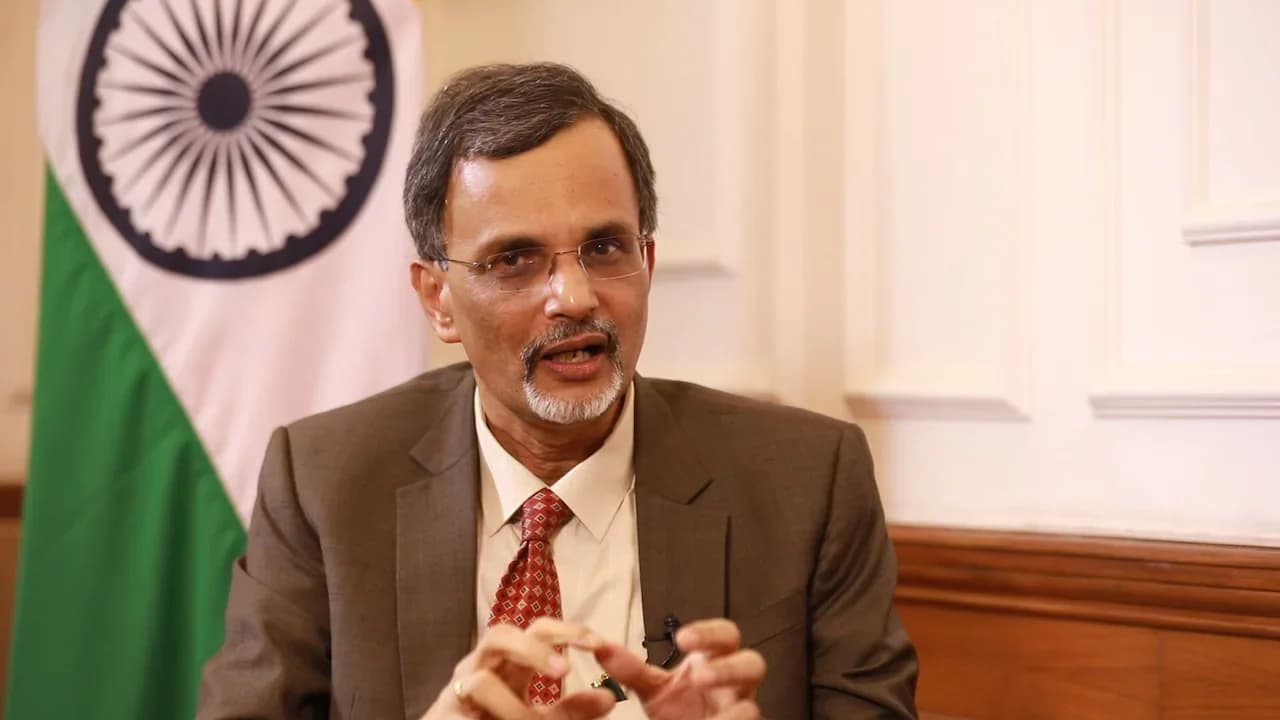
While private consumption is expected to accelerate further in the upcoming festive season, the Finance Ministry has sounded a note of caution on price pressures, noting that upside risks to inflation are resurfacing, driven by erratic weather patterns associated with El Niño, fluctuations in global crude oil prices, ongoing geopolitical conflicts, and rising industrial input costs. Rising oil prices have pushed India's fuel cost to USD 117 per barrel in September from USD 80-85 earlier, creating additional pressure on the economy. The ministry warned that inflation arising from supply shocks could restrain economic growth, with a strong El Niño event could pose risks to the upcoming Rabi crop through heat stress and reduced soil moisture, although a positive Indian Ocean Dipole (IOD) may partially offset these effects. Geopolitical tensions and elevated crude oil prices could also add to imported inflation pressures, particularly amid the U.S. Federal Reserve's 25 bps rate hike in September. The ministry also flagged worries around short-term pressure on Indian assets and the rupee, along with capital flowing towards geographies due to AI, noting that at the same time, developed countries are also racing to secure investments to finance their renewed manufacturing aspirations amid increasing weaponisation of global supply chains. Interest rates in developed world are rising sharply, which will spill over into domestic bond yields as well, meaning crossborder capital flows will slow as higher interest rates will persuade many investors to stay invested in domestic markets. Despite these challenges, the Finance Ministry expects the Reserve Bank of India's recent open market operations to absorb excess system liquidity could help maintain balanced financial conditions and contain any undue demand-side overheating.
The Finance Ministry emphasized that India must work on ensuring that the economy is more competition-friendly rather than business-friendly, stating that "Only a competitive economy will become a successful, innovative, and manufacturing economy". "Improved governance and enhanced state capacity at all levels of the government hold the key to a competitive Indian economy," the report said. The warning comes at a time when foreign investors have turned cautious on Indian equities, with foreign portfolio investors (FPIs) pulling out funds amid rising global bond yields, tariff pressures and the absence of a domestic AI play. However, the ministry expects that over time, investors will come to appreciate the resilience and sustained high growth in India in the post-Covid years. "As some of these clouds inevitably dissipate, India's intrinsic growth potential will earn the attention it deserves from investors," the report stated. Citing the robust goods and services export figures, the report said that, at the current run rate of nearly $400 billion in the first five months of the year, India's overall export value for the full financial year could approach $1 trillion. "That is a very strong confirmation that India's trade agreements are providing impetus to India's exports. It can only get better from here, with more trade agreements on the anvil," it said. In August 2026, the services trade surplus offset 65 per cent of the merchandise trade deficit, thereby reducing the overall trade deficit. The ministry noted that trade relations with the United States remain "unsettled" following the passage of the Graham Bill through Congress and its presidential assent, with the legislation empowering the US president to impose tariffs of up to 100% on countries that purchase Russian crude oil.