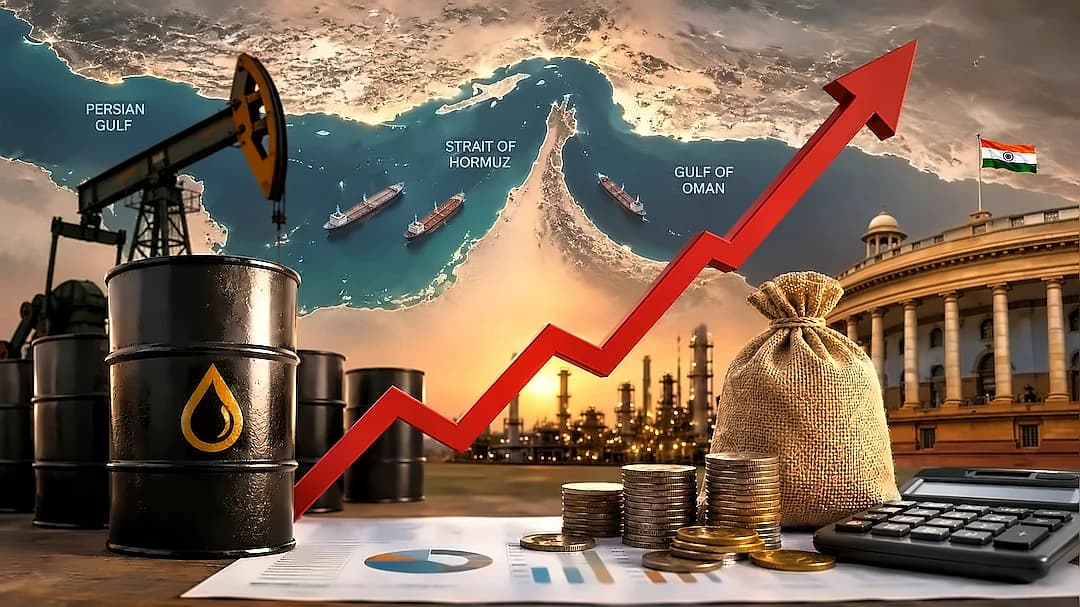
According to a report by Moody's Ratings, capital expenditure growth by Corporate India could slow sharply to around 4% annually over the next two years, compared with an 11% compound annual growth rate recorded between fiscal year 2022 and 2026. The report cited rising input costs, geopolitical tensions, supply-chain disruptions and rupee depreciation as key risks weighing on private investment. Despite the slowdown, Moody's noted that investment activity will remain substantial in absolute terms, with rated companies projected to spend around ₹4.6 lakh crore annually. The oil and gas sector continues to account for roughly one-third of total capex, while new project timelines are being deferred and discretionary investments postponed.
Despite global market volatility from the ongoing West Asia conflict, Indian markets have demonstrated remarkable resilience and the capacity to absorb different types of shocks, according to SEBI Chairman Tuhin Kanta Pandey. As per Pandey, when global crises occur, they impact all economies including India, creating inflationary risks and spillover effects. However, he emphasized that Indian markets are able to absorb different types of shocks and resume their normal trajectory when the crisis ends. The SEBI chief noted that while there have been some foreign portfolio investment outflows since September 2024, domestic investors have retained their confidence in Indian markets. According to Dr John Sfakianakis, Chief Economist at The Gulf Research Center, the world is very much at the beginning of the conflict, with inflation, jittery markets, weakening consumption, and major disruption in oil affecting Asia.
The first major concern flagged by Moody's is the rise in input costs and supply disruptions stemming from the ongoing U.S.-Iran conflict. The US-Iran conflict has sharply increased prices and tightened supplies of key imported commodities including crude oil, natural gas, LPG, and fertilisers, on which India is heavily dependent. When combined with sustained rupee depreciation, these pressures are pushing up energy inflation, eroding consumer sentiment, and curbing discretionary spending across consumer and industrial sectors. Higher commodity costs are likely to be passed through to end consumers, dampening demand, while companies unable to fully raise prices will suffer margin compression, both outcomes likely to weigh on corporate earnings.
The second major concern highlighted by Moody's is growing labour market uncertainty due to accelerating adoption of artificial intelligence. While AI adoption could improve productivity, the agency said it also raises the risk of job displacement and skill mismatches, especially in services and white-collar segments. The services sector accounts for nearly 60% of urban employment, making it particularly vulnerable to these changes. The resulting uncertainty over income growth and employment is likely to encourage precautionary savings and further restrain household consumption, affecting sectors across the economy.
According to Moody's, companies are likely to delay or scale back capital spending plans as they prioritise liquidity preservation and balance sheet strength over aggressive expansion. Sectors such as airlines, automobiles, oil marketing companies, retail, hospitality, real estate, steel, metals, and cement are particularly exposed to the slowdown. In the automobile sector, passenger vehicle sales have remained resilient but a sharp rise in petrol and diesel prices could weaken demand for internal combustion engine vehicles, affecting companies such as Tata Motors. State-run oil marketing companies including Indian Oil Corporation, Bharat Petroleum and Hindustan Petroleum are already witnessing severe earnings pressure because retail fuel prices have not increased in line with higher feedstock costs.
Despite the slowdown, Moody's believes overall credit quality will remain broadly stable, supported by significantly strengthened balance sheets. Aggregate debt/EBITDA for rated non-financial companies is estimated to have declined to around 2.5 times in 2025-26 from 3.9 times in fiscal 2020-21. However, the agency warned that weak consumer sentiment and macroeconomic uncertainty could delay home purchases and commercial property investments, weighing on real estate activity and reducing demand for steel, cement and metals. Companies including Tata Steel, JSW Steel, Vedanta Resources and UltraTech Cement could be impacted by slower demand growth.