Global rating agencies have reached a consensus on India's economic outlook, with both S&P Global Ratings and Moody's raising their GDP growth forecasts for FY27 to 7%. In its latest Economic Activity for Asia Pacific report, S&P has upgraded India's GDP growth forecast to 7% for the current fiscal year, citing robust economic activity and forecasting that the Reserve Bank of India could hike interest rates by 25 basis points in FY27. This consensus places India at the fastest growth rate among all G20 economies, significantly above the IMF's 6.4% forecast and S&P Global Ratings' previous projection of 6.6% growth. The 7% FY27 GDP growth estimate compares with 6.7% projected by the RBI and 6.4% by Fitch Ratings, highlighting the broad-based optimism among major institutions about India's economic trajectory.
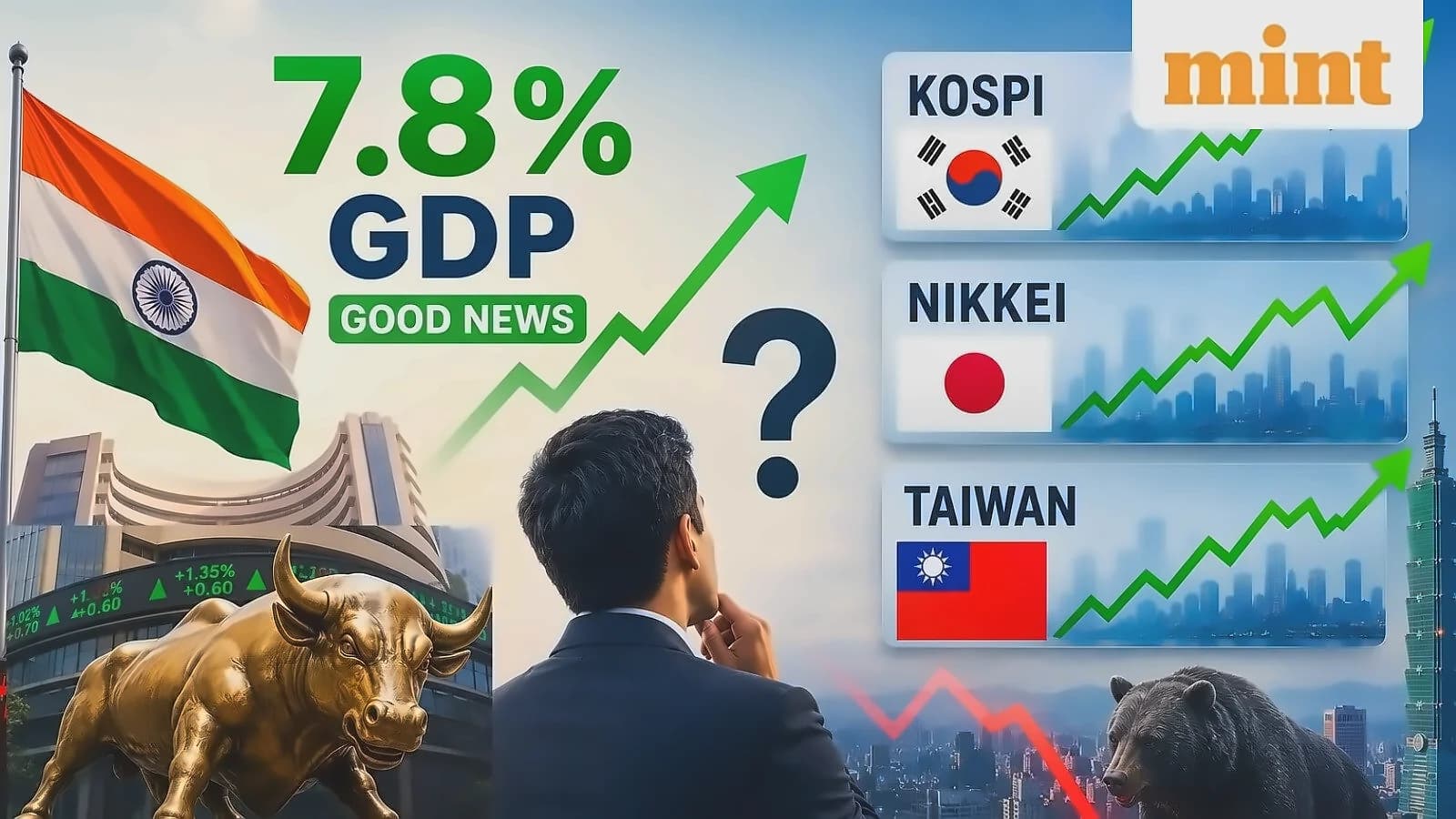
India's economic resilience has been demonstrated through strong recent performance, with real GDP growth accelerating to 8.2% year-on-year in the first six months of calendar 2026, compared with 7.3% for the full year 2025. As reported by S&P, the Indian economy grew higher than expected at 7.8% in the June quarter, with factors like robust industrial activity, healthy consumption, strong goods exports, and accelerating government investment driving this growth. The agency noted that India's economy has proved more resilient to the Middle East conflict shock than previously expected, with the combination of domestic investor base support and government fiscal measures helping absorb external pressures. This robust performance underscores India's fundamental economic strength and ability to maintain growth momentum despite global uncertainties. The upward revision follows India's real GDP growth of 7.8% in FY26, accelerating from 7.1% in the previous year. S&P expects growth could ease in the second half of the fiscal year as the tailwinds from General Sales Tax rationalisation and income tax cuts diminish, though the agency maintains confidence in India's long-term growth prospects.
Bank credit expansion has emerged as a key indicator of India's economic momentum, with bank credit growing 19.1% year-on-year at the end of August, while corporate lending expanded 21.6% in July. According to Jefferies, loans to micro, small and medium industrial enterprises rose 24.9%, supported by deposit growth of 17.8% in August. The pickup in SME lending could indicate that recent GST and labour reforms, along with efforts to improve the ease of doing business, are beginning to generate benefits. The increase in corporate lending also points to a possible revival of the long-awaited private-sector capital expenditure cycle. Jefferies expects corporate earnings growth to accelerate to 17% in the fiscal year beginning April 2027, from an estimated 14% in the current fiscal, supported by the improvement in nominal GDP growth. Domestic demand has remained resilient, with GST receipts rising 14.8% year-on-year in August, while power demand growth accelerated to 9.4% during April-August, compared with 1.8% in January-March. Residential real estate sales across the top seven cities rose 7% year-on-year in the first seven months of 2026, compared with a 1% decline in 2025.
Despite the optimistic outlook, both Moody's and S&P have identified significant inflationary pressures that could impact India's economic trajectory. Since the beginning of the war in West Asia on February 28, crude oil prices have risen significantly, stoking inflation fears. Crude prices have risen over USD 100 per barrel this month, from about USD 73 level before the war. Elevated energy prices could push India's average inflation above Moody's current 4.8% estimate for FY27, with S&P estimating consumer inflation to average 5.1% in FY27. The agencies warn that higher energy and fertiliser import costs could widen the current account deficit and increase government subsidy expenditure. S&P has noted that weather-related risks warrant close monitoring, with cumulative rainfall being 15% below normal till September 9, 2026 in the current monsoon season, making agricultural output and food inflation key variables to watch. These inflationary pressures, combined with external demand challenges, represent key risks to the outlook that could impact India's growth trajectory. The 4.8% inflation projection for FY27 is already significantly higher than the 2.4% outturn in fiscal 2025-26, with the agencies flagging that in the absence of an enduring resolution to the Middle East conflict, elevated energy prices could push annual average inflation beyond current forecasts, which would weigh on private consumption and economic activity.
The fiscal response to the Middle East shock has been muted, reflecting the government's commitment to reduce the central government deficit to 4.3% of GDP in FY27 from 4.4% in the previous year. According to Moody's, rising defence spending and continued infrastructure investment could constrain the pace of fiscal consolidation, with debt reduction expected to remain gradual over the next two to three years. The government's fiscal deficit was down 46% year-on-year in June as it did not transfer an extra instalment of tax devolution to states during the month, unlike last year. The agency expects fiscal metrics to improve gradually, supported by strong nominal GDP growth and continued efforts to improve tax administration and revenue collection. In the FY27 Union Budget, the government has estimated the debt-to-GDP ratio at 55.6% of GDP, lower than 56.1% of GDP for FY26, with a target to reduce it to 50% by March 2031. The government has projected the fiscal deficit at 4.3% of GDP or ₹16.96 lakh crore for FY27, with a gross borrowing target of ₹16.09 lakh crore and net borrowing of ₹11.73 lakh crore after repaying past loans. Higher global energy prices could increase subsidy outlays and create pressure for additional support measures, while higher energy and fertiliser import costs, softer external demand and weaker remittance inflows from West Asia could also widen the current account deficit and weigh on growth momentum. However, Moody's cautioned that fiscal accommodation amid an uncertain global macroeconomic environment—including measures that could reduce government revenues—could slow progress on debt reduction and further weaken debt affordability.
India has several buffers against external shocks, including greater diversification of its crude import sources, sizeable foreign exchange reserves and strong domestic demand. However, both Moody's and S&P have cautioned that a slowdown in external demand and weaker remittance inflows from West Asia could add to pressures and widen India's current account deficit. The agencies' latest forecasts follow other recent developments involving India's sovereign credit ratings, including Japanese rating agency JCR upgrading India's sovereign rating to 'A-' - marking the first such upgrade in 35 years - citing solid economic growth and a strong financial system. Last week, Moody's had raised India's GDP growth forecast for the fiscal to 7%, with the agency maintaining India's rating at 'Baa3' since June 2020. The stable outlook on India's sovereign rating takes into account improving fiscal metrics and resilient growth prospects relative to peers, though fiscal accommodation in an uncertain global economic environment could slow progress towards more meaningful debt reduction. Moody's has highlighted India's large and diversified economy, high growth potential, sound external position and stable domestic financing base as key strengths underpinning its sovereign credit profile, while noting that structural reforms that lead to a significant pick-up in private investment, faster growth in GDP per capita and greater economic diversification could support stronger assessments of India's policy effectiveness and credit profile.