Manufacturers demonstrated resilience in the first four months of financial year 2026-27 (FY27), selling products at prices higher than input costs at a faster rate than four years ago. According to reports from Business Standard, this pricing strategy resulted in producer prices rising for output faster than input prices when they increased, and falling less when they declined. The only exception occurred in May, when the producer price index (PPI) for manufactured products rose compared to the previous month at a lower rate than the PPI for inputs. Latest data from UFlex shows how companies like UFlex successfully implemented this strategy, with EBITDA margin reaching 17% in Q1 FY27, marking the highest level in 21 quarters. As per Investing.com, this performance improvement was driven by operating leverage, stronger realizations, improved product mix, and forex gains, reflecting benefits from the company's integrated global footprint.
The pricing strategy comes amid significant raw material inflation, with BOPET film prices peaking around ₹204 per kilogram in April 2026 and BOPP film prices reaching approximately ₹172 per kilogram in March 2026. Both represented increases of 25% to 35% from February levels. Key raw materials showed similar trends, with Brent crude rising to $117.3 per barrel, MELT to ₹99.7 per kilogram, MEG to ₹65.34 per kilogram, and PTA to ₹90.16 per kilogram. As per UFlex management, higher packaging films realizations from raw material inflation pass-through and local sourcing premiums were key revenue drivers, with the company's global manufacturing footprint enabling it to benefit from localized sourcing premiums as customers diversified supply chains amid the West Asia crisis. The quarter was characterized by significant raw material price inflation, driven by the West Asia crisis disrupting production and transit routes, with India's import dependence on MEG, homo polypropylene, and other key feedstocks further tightening supply and elevating prices.
The pricing strategy reflects manufacturers' ability to outpace input cost changes despite the volatile environment. According to the analysis reported by Business Standard, this performance improvement compared to both the four-year historical average and the previous month demonstrates enhanced market positioning. UFlex exemplifies this trend, with international operations contributing 62% of total revenue in Q1 FY27, up from 51% in the prior-year quarter, and overseas businesses contributing approximately 91% of incremental EBITDA. The geographic revenue split showed India at 41.3%, Middle East & Africa at 20.6%, Europe at 18.0%, and Americas at 17.6%. The company's total packaging films production volume grew 7.8% quarter-on-quarter and 6.2% year-on-year to 135,873 metric tons, with capacity utilization improving to 85.4%. Management provided bullish guidance for FY27, expecting 35% year-on-year growth in both revenue and EBITDA. The company projects full-year EBITDA margin above 14%, with normalized margin already at 15.5% in Q1, and expects to double volume over the next three years.
UFlex incurred total capital expenditure of ₹4,782 million in Q1 FY27, allocated across four key projects designed to expand capacity and enhance product mix. The company's capex strategy focuses on value-added products, with management indicating that 60% to 70% of future investments will target higher-margin segments. The following table details the status and timeline of major capacity expansion projects: Two significant facilities were commissioned during the quarter and shortly thereafter. The Noida Sector 155 recycling unit, with 39,600 metric tons per annum capacity, began operations on April 30, 2026. The Mexico woven polypropylene bags facility, with 80 million units annual capacity, was commissioned on July 31, 2026. The Egypt aseptic packaging facility represents the largest ongoing investment, with 12 billion packs annual capacity and ₹10,290 million of the planned ₹11,920 million total capex incurred as of June 2026, with commissioning scheduled for H1 FY27. The Dharwad BOPP line in India, with 54,000 metric tons per annum capacity, is scheduled for commissioning in FY27-28, with ₹1,000 million of the ₹7,154 million planned capex incurred as of June 2026. Management expects the Egypt plant to contribute approximately 2 billion packs in FY27, assuming a six-month operating period and 30% annualized utilization. Capital expenditure has been substantial, increasing from ₹11,155 million in FY21 to ₹20,426 million in FY26, supporting the expansion of manufacturing capacity and product capabilities.
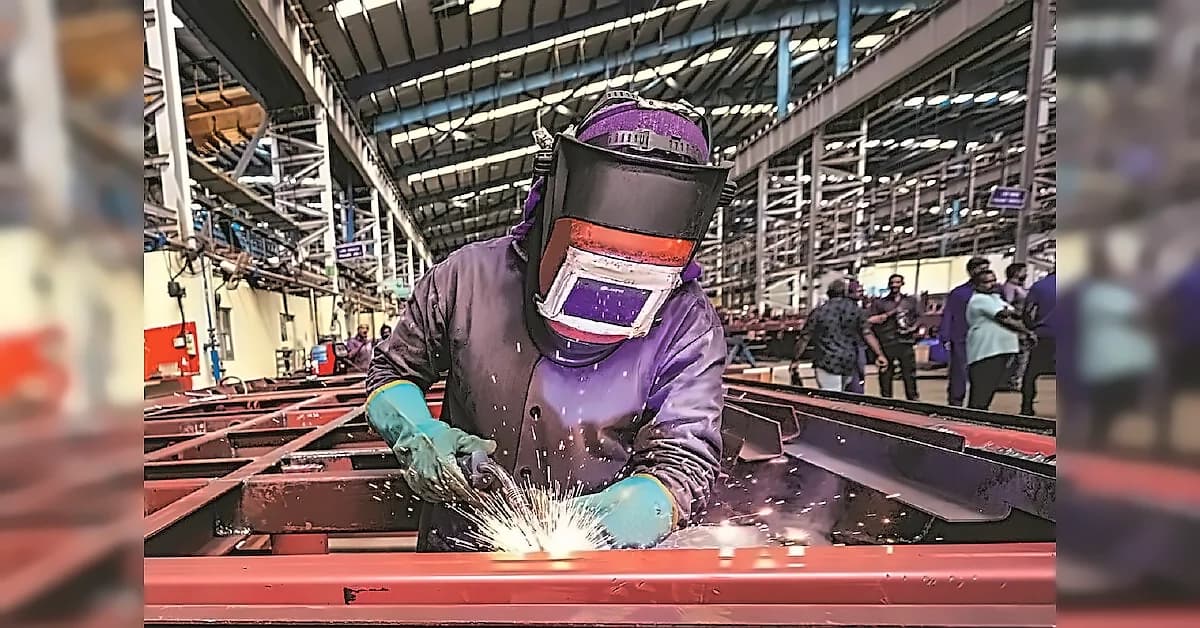
Chairman and Managing Director Ashok Chaturvedi attributed the performance to "a diversified portfolio, integrated capabilities, and strong global presence, supported by improved volumes, higher capacity utilization, and enhanced operating efficiencies in core packaging." The company emphasized its commitment to sustainability through "Project Plastic Fix," demonstrating significant progress in recycling and circular economy initiatives during Q1 FY27. The company recycled 319 million post-consumer PET bottles and 2,926 metric tons of multi-layered packaging plastic waste. CFO Arun Kumar Sharma noted that the expansion was led by operating leverage, stronger realizations, improved product mix, and forex gains. "This reflects the benefits from our integrated global footprint," he stated. For the longer term, UFlex expects to double volume over the next three years and reduce debt-to-EBITDA below 3.0x by FY29, from the current level of 3.5x. The company indicated that debt leverage has already improved from 4.5x in FY26, reflecting both EBITDA growth and disciplined capital allocation. Key growth levers for FY27 include higher capacity utilization through localized sourcing to de-risk supply chain disruptions, continued shift toward value-added packaging films, progressive contributions from recently commissioned facilities, and the ramp-up of the Egypt aseptic plant in the second half of the year.