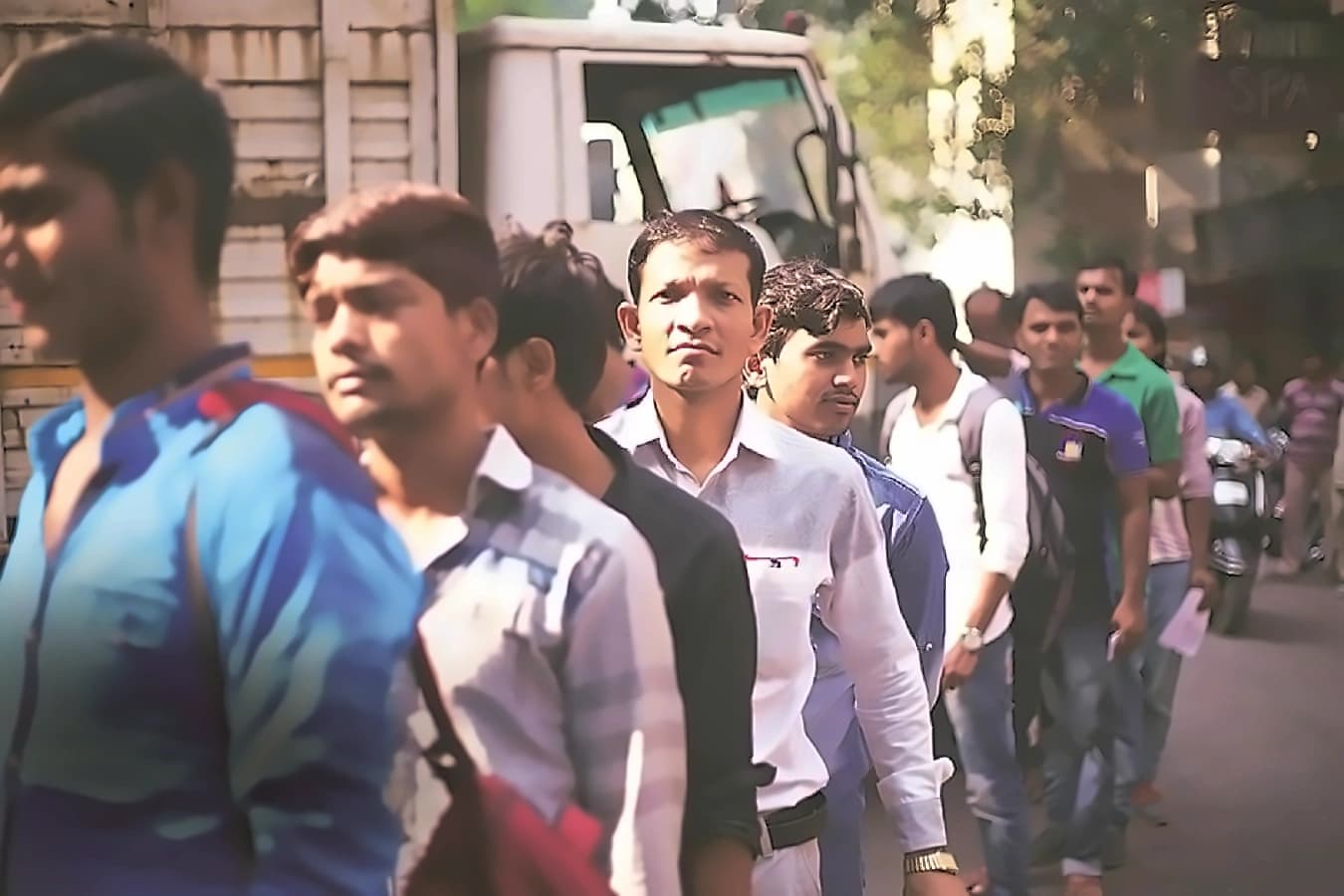
India's unemployment rate declined marginally to 4.9% in October from 5% in September, as reported by the Central Statistics Office. The overall unemployment rate for people aged 15 years and above was 0.3 percentage points lower than the 5.2% recorded in October 2025, according to the latest Periodic Labour Force Survey (PLFS) bulletin released by the National Statistics Office on November 16. Urban unemployment showed more significant improvement, declining to 6.7% from 6.9% in September, while rural unemployment remained unchanged at 4.2%. The unemployment rate had previously declined to 5.1% in the July-September period from 5.4% in the previous quarter, showing consistent improvement over recent months.
The improvement was accompanied by a notable increase in female labour force participation, which rose to 35% in October from 34.6% in September and 34.2% a year earlier, reaching its highest level since February 2026. The rural female Labour Force Participation Rate increased to 39.5% in October from 38.9% in September and 38.4% a year ago, while urban female participation remained unchanged at 25.9% from 25.4% in October 2025. Female unemployment also declined to 5% in October from 5.2% in September, with rural female unemployment reaching its lowest level at 3.8% from 4% a year earlier, marking the lowest level recorded during 2026. Over the year, the overall female LFPR increased by 0.8 percentage points from 34.2% in October 2025 to 35.0% in October 2026, with rural female participation gaining 1.1 percentage points and urban female participation rising 0.5 percentage points during the same period.
Rural areas demonstrated stronger gains in workforce participation compared to urban centres. The rural Labour Force Participation Rate increased to 58.4% in October from 58% in September, while the worker population ratio rose to 56% from 55.2% in October 2025. In contrast, urban participation weakened marginally, with the LFPR declining to 50.5% from 50.7% and the worker population ratio edging up to 47.1% from 47% over the same period. The overall Labour Force Participation Rate increased to 55.7% in October from 55.4% a year earlier, while the Worker Population Ratio improved to 53% from 52.5% year-on-year. Male unemployment remained unchanged at 4.9%, while urban female unemployment fell to 8.7% from 9.7% over the month, showing continued improvement in female employment indicators. The bulletin noted that rural areas led the improvement in labour force participation, with rural LFPR increasing by 0.6 percentage points and rural WPR rising by 0.5 percentage points over the month.
The latest data reveals significant improvements in female workforce participation beyond basic LFPR. The female Worker Population Ratio (WPR) increased to 33.3% in October from 32.8% in September, representing a 0.5 percentage points monthly improvement. Rural female WPR rose from 37.4% to 38%, while urban female WPR increased from 23.5% to 23.7% over the same period. The bulletin noted that female WPR recorded a more notable month-on-month improvement, with the ratio rising in both rural and urban areas. This enhanced participation metric indicates that not only are more women entering the workforce but also that they are securing more meaningful employment opportunities, contributing to the overall improvement in female unemployment rates.
The latest estimates are based on a survey of 3,70,475 people, comprising 2,11,474 respondents in rural areas and 1,59,001 in urban areas. The PLFS, conducted by the National Statistics Office under the Ministry of Statistics and Programme Implementation, serves as India's principal source of data on employment, unemployment and labour force participation. The monthly estimates follow the Current Weekly Status approach and cover people aged 15 years and above, assessing employment activity during the seven days preceding the survey. The consistent improvement in unemployment rates and participation rates across multiple quarters demonstrates the sustained recovery in India's labour market dynamics, with rural areas leading the overall improvement in workforce participation and employment.