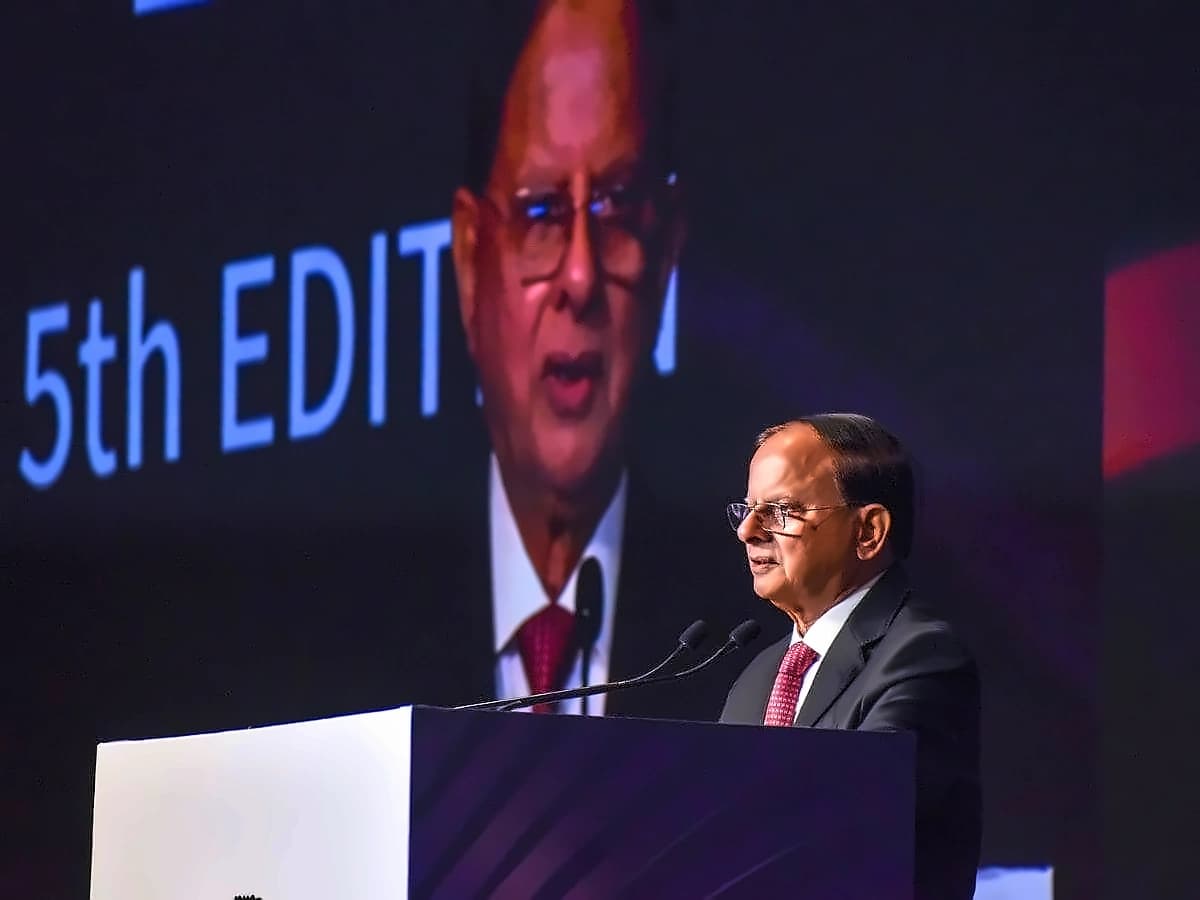
India's response to a world increasingly priced for risk involves openness without excessive vulnerability, according to Principal Secretary to the Prime Minister P K Mishra. Speaking at the fifth Kautilya Economic Conclave on October 3, Mishra emphasized that the cost of building resilience must be weighed against the risks it seeks to insure against. As reported by Business Standard, Mishra stated that "Resilience is not a choice between self-sufficiency and globalisation. A more rational approach lies between the two." Mishra noted that "We are increasingly confronted not merely with risk, but also with uncertainty" and that "economic decision-making had become significantly more difficult because countries were increasingly dealing not simply with risks, whose probabilities could be estimated, but with uncertainty where probabilities themselves were difficult to assign." The pandemic, geopolitical conflicts, supply-chain disruptions, trade restrictions and rapid technological changes have brought this distinction into sharp focus. Mishra observed that "Geography, which technology was once thought to have made less relevant, has returned to the centre of economic decision-making."
India has significantly expanded its energy procurement strategy, with the number of countries from which it imports crude oil rising from 27 to 43. According to Mishra's address, the country has maintained substantial stocks and increased domestic production where possible while diversifying procurement sources. The disruption around the Strait of Hormuz served as a clear reminder of how geography can translate into economic risk for energy-importing economies. Mishra highlighted that "Disruptions to shipping routes can affect energy prices thousands of kilometres away" and that "the concentration of critical minerals and their processing creates new vulnerabilities." For energy security, India has focused on maintaining substantial stocks, increasing domestic production where possible, and diversifying procurement sources to reduce concentration risk.
India has established partnerships with multiple countries including the United States, France, Germany and the Netherlands for exploration, processing, recycling, technology and supply-chain resilience through the National Critical Minerals Mission. As reported by Business Standard, Mishra highlighted that the same vulnerability is emerging in the clean-energy transition, with the extraction, processing and refining of lithium, cobalt, rare earths and other critical minerals highly concentrated geographically. The transition is being repriced along with everything else, creating new supply chain dependencies. Mishra noted that "The clean energy transition also brings new forms of strategic dependence that need to be addressed."
India's electronics manufacturing sector has demonstrated remarkable growth, with production rising from around ₹2 trillion in 2014-15 to about ₹13 trillion in 2025-26, while exports increased from around ₹38,000 crore to ₹4.24 trillion during the same period. According to Mishra's address, the policy focus has progressively shifted from assembly towards components and a deeper manufacturing ecosystem. Similar efforts are underway in semiconductors, pharmaceuticals and other strategic sectors, with the ultimate objective being to create capabilities that are competitive, scalable, and eventually export-oriented rather than simply replacing imports at any cost. Mishra emphasized that "Building domestic capability should not mean replacing imports at any cost, but creating capabilities that are competitive, scalable and ultimately capable of serving global markets."
India's external economic strategy focuses on avoiding excessive concentration rather than eliminating dependence entirely. As reported by Business Standard, Mishra highlighted trade agreements with the UAE, Australia and the European Free Trade Association (EFTA), and more recently with the UK, Oman, New Zealand and the European Union. India has maintained fiscal consolidation while maintaining public investment, with the fiscal deficit projected at 4.3 per cent of gross domestic product (GDP) in the Budget, down sharply from pandemic-era levels. Mishra emphasized that macroeconomic resilience through fiscal space, adequate foreign exchange reserves, a sound financial system and credible institutions gives countries room to respond to external shocks. Mishra noted that "Resilience is not free" and that the key economic question was whether the premium paid for resilience was justified by the potential cost of the disruption being avoided. He added that "Security and sustainability are increasingly converging, with energy, food, technology and environmental security becoming closely interconnected."