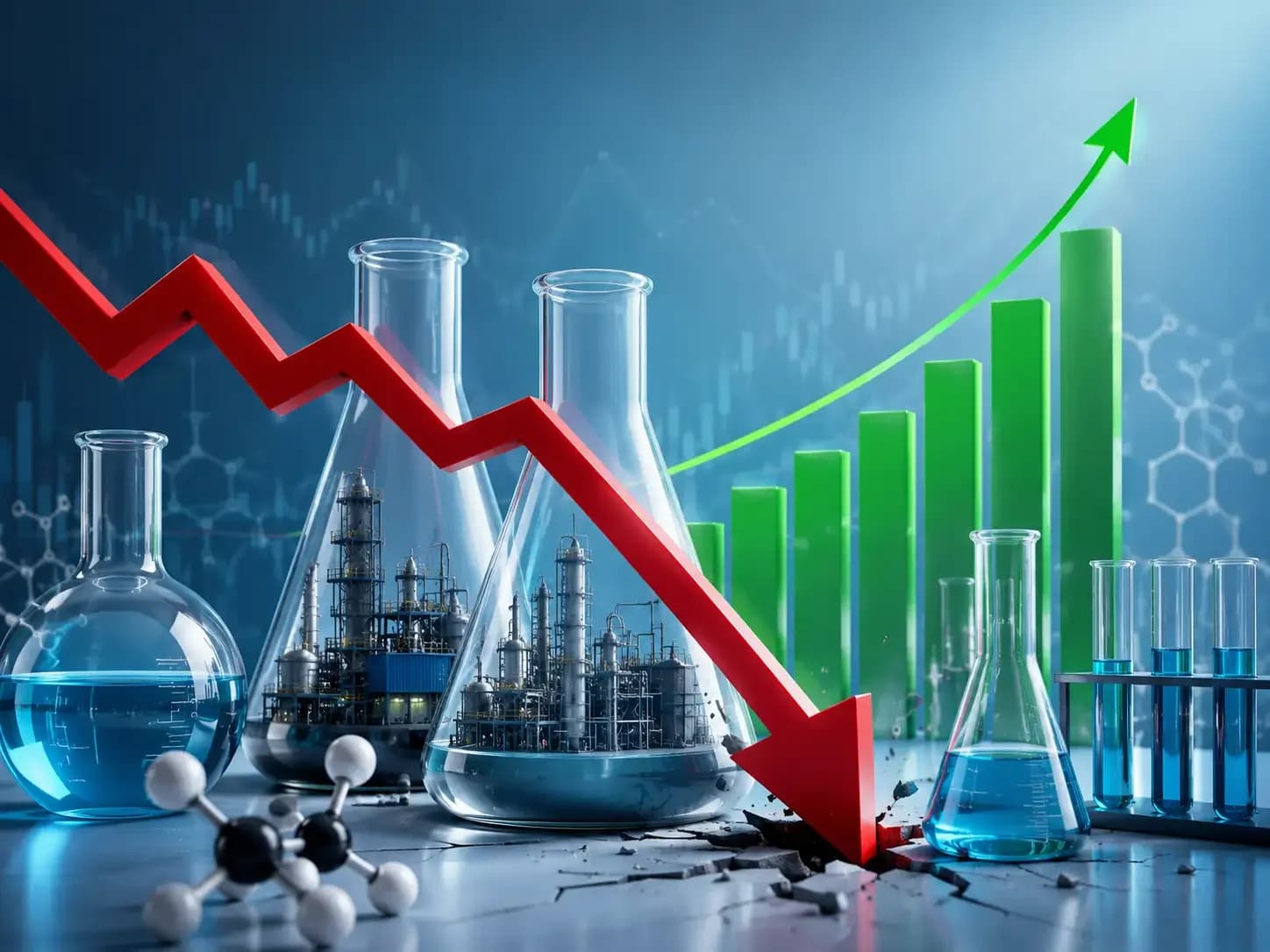
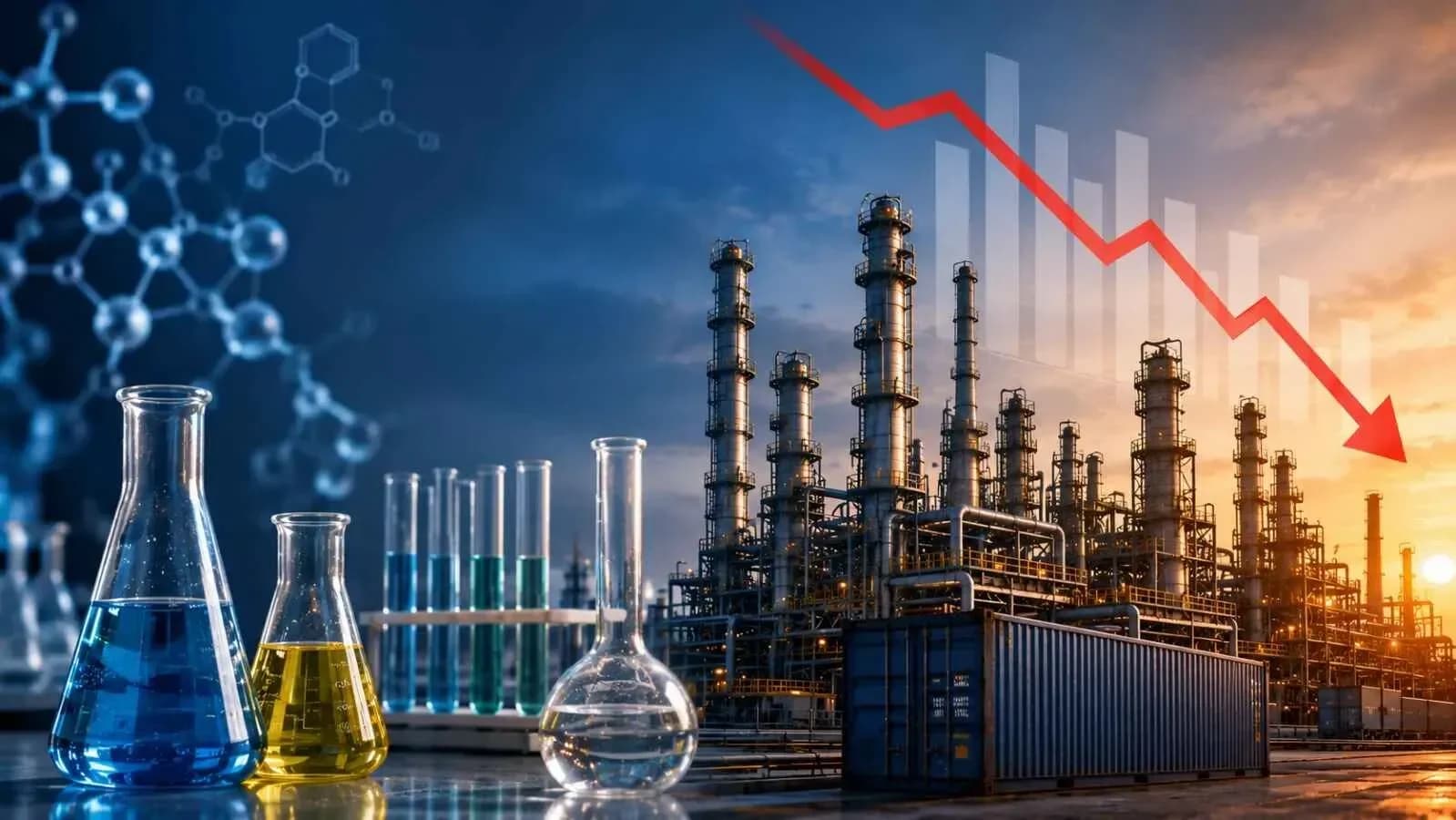
The Indian specialty chemicals industry is experiencing a consolidation phase where only high-margin derivatives players survive, as evidenced by recent financial results. Gem Aromatics reported a devastating 96% profit collapse to ₹1 crore and 48% revenue slide to ₹110 crore in Q4 FY26, highlighting the operational challenges facing niche players without significant pricing power. This signals that companies without substantial market presence or pricing flexibility are struggling with operational deleverage during the current market conditions.
Recent developments present a complex picture for the sector, with BASF India Ltd's investment rating downgraded from Hold to Sell as of 20 May 2026, reflecting mixed market sentiment. Despite the company's exceptional quarterly earnings growth with PBT surging 1204.54% to ₹66.14 crores and cash reserves reaching record ₹873.60 crores, the stock has declined 4.56% on the day of the announcement, closing at ₹3,627.80. The downgrade from Good to Average quality grade is attributed to subdued long-term growth metrics with sales CAGR of only 9.79% and EBIT growth of 2.43% annually over the past five years, lagging behind industry peers.
The industry is embarking on a great journey to reposition the petrochemicals including specialty chemicals sector to achieve the targeted $1 trillion in output by 2040, as stated by Sagar Kaushik, Chairman of the ASSOCHAM National Council on Chemicals & Petrochemicals. According to Business Standard, this ambitious target requires unprecedented levels of capacity creation to meet the growing captive demand within the sector, though recent results suggest execution challenges in achieving this timeline.
The sector faces significant headwinds from high energy costs and the ripple effects of the West Asia crisis on logistics, as reported by industry analysts. Companies like Gem Aromatics, which focuses on cooling agents and citral derivatives, are competing directly with global giants like Symrise, making pricing power difficult to maintain during demand slumps. The industry's high reliance on top 10 clients poses a systemic revenue risk, with companies like Gem Aromatics having 56% customer concentration from top 10 clients.
The Indian specialty chemicals industry is navigating a complex transition from bulk commodities to high-value derivatives, with 'China Plus One' remaining a long-term tailwind for the sector. However, the immediate reality involves high energy costs and geopolitical volatility from the West Asia crisis impacting raw material transit and freight costs. The sector's transformation requires a level playing field to unlock potential and achieve the ambitious growth targets set for 2040, with markets likely to re-rate companies based on sequential volume growth and margin stabilization rather than just growth projections.