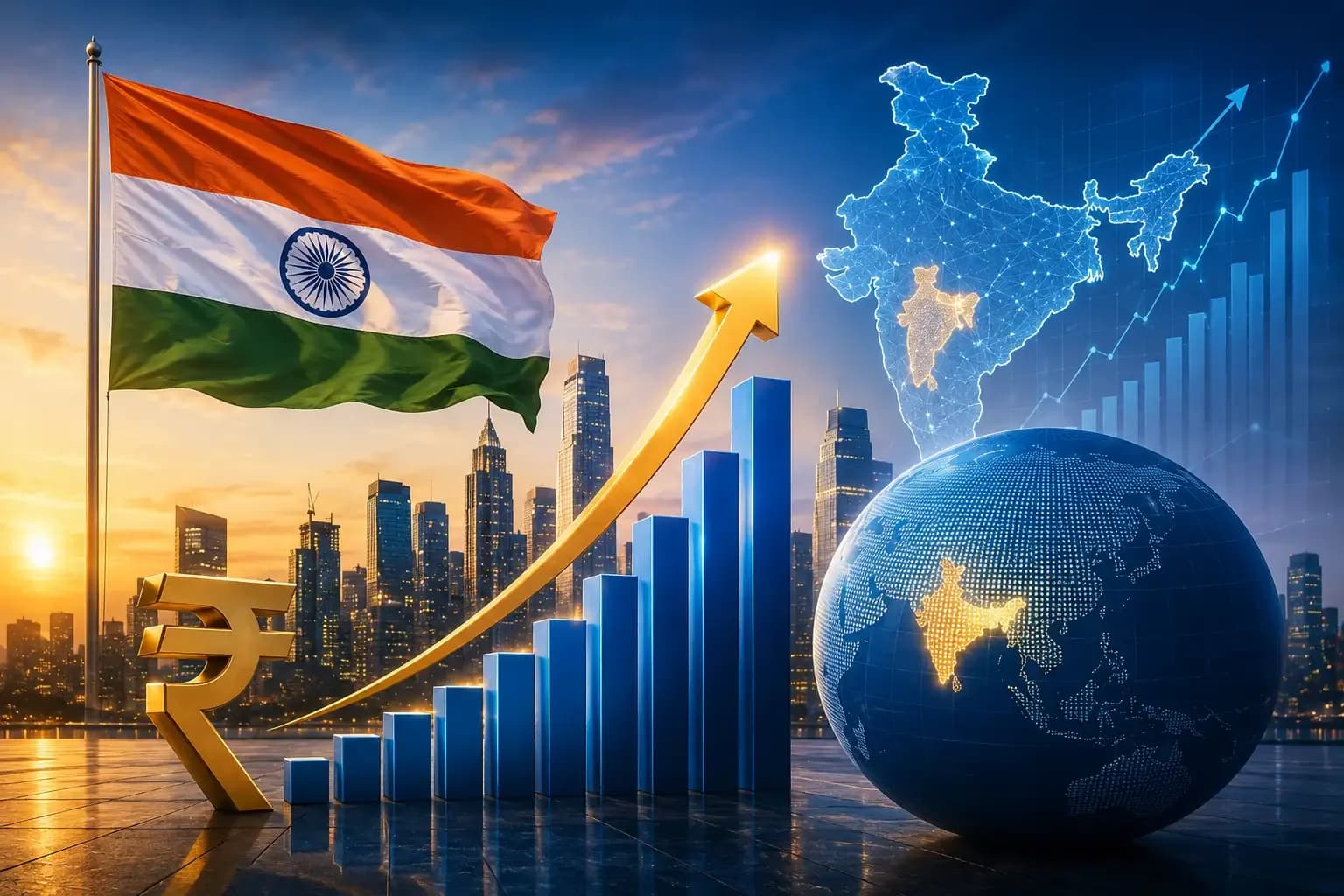
India's fertility rate has officially fallen to 1.9, joining the global trend where two-thirds of people now live in countries that have slipped below the replacement rate of 2.1 births per woman required for stable population growth. According to The Guardian, this decline has arrived faster and spread further than anticipated, with East Asia leading the way but countries like Albania and Chile now having far lower rates than the US or England. The global fall in fertility rates represents a fundamental shift from traditional economic models where economic output was directly proportional to population growth, with the transition from high fertility to lower replacement rates viewed as an opportunity rather than a crisis through technological advancement.
The analysis suggests that artificial intelligence and robotics are accelerating baseline national-level productivity dramatically. As reported by Business Standard, PwC research projects AI will inject up to $15.7 trillion into the global economy by 2030, with $6.6 trillion driven directly by labour productivity gains. McKinsey findings indicate that generative and agentic AI architectures will add between $2.6 trillion and $4.4 trillion annually in pure structural value across global industries. The authors compare this to corporate finance where companies can increase earnings per share through share buybacks by reducing the number of outstanding shares while maintaining or growing profits.
According to the analysis from Business Standard, if India's population peaks around 1.65 billion in the 2050s and naturally steps down to 1 billion by 2100, the country's per capita GDP could surge from today's ₹2,15,000 to ₹4,70,000. The projections assume India's real long-term GDP growth averages a conservative 3.5% over 75 years, with AI integration in services and manufacturing sectors providing structural elevation. The authors note that this transformation would compress the wealth gap between the United States and India from a 34x advantage in 2025 to just a 9x gap by 2100.

As reported by Business Standard, the demographic shift could fundamentally change India's economic structure and government finances. The analysis suggests that tax collections will rise while freebies and subsidies decline as a percentage of GDP due to fewer mouths to feed. Infrastructure spending requirements will decrease significantly for a billion people compared to 1.7 billion. The authors emphasize that this transformation requires actual policy implementation of AI and robotics, noting that while the projections are optimistic, the path will be non-linear with potential social unrest during the transition period. The Guardian notes that supporting those who want to have more children with family-friendly policies and affordable housing may bring a softer demographic landing, as sharp falls are harder to manage than slow declines.