
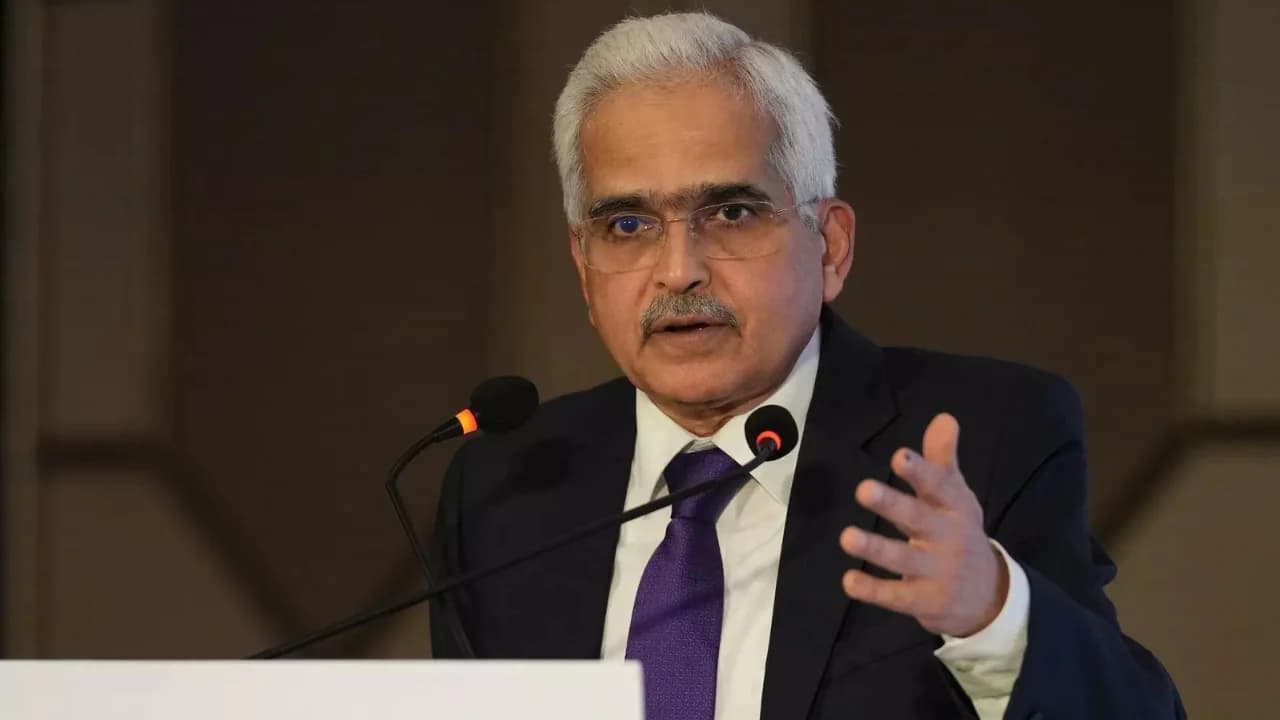
Former RBI governor Shaktikanta Das delivered a bold vision for India's future at the Business Today Banking & Economy Summit under the theme of The Great Reset, stating that the coming decade will not be one where India simply participates in global growth, but one where India shapes it. According to The Times of India, Das, who is currently principle secretary 2 to the prime minister, framed macroeconomic stability and inflation control as compatible with sustained high growth. He emphasized that India is moving from recovery to global influence, positioning the country for a transformative decade ahead. 'Today, India is not just reacting to the world. We are influencing its future direction and shape,' Das stated, highlighting India's evolution from a reactive economy to a proactive global leader. This vision aligns with PM Modi's recent statement that India is firmly on course to become the world's third-largest economy in the near future and realise the vision of Viksit Bharat by 2047. The keynote address provided clarity on the government's priorities for banking, capital markets, infrastructure financing, and inclusive growth, setting the tone for the summit with a macro-policy lens on India's transformation journey.
India's entrepreneurial landscape has reached unprecedented scale with over two lakh startups now generating more than 21 lakh employment opportunities. As reported by The Times of India, this represents a significant milestone in the country's innovation ecosystem. The startup sector has emerged as a key driver of India's economic transformation, contributing to the country's positioning as a key driver of global growth. This substantial employment generation through entrepreneurship demonstrates the effectiveness of India's innovation-focused economic strategy and the growing maturity of the startup ecosystem. Dr. Jitendra Singh's recent confirmation that India has over two lakh startups generating 21 lakh jobs reinforces this achievement and supports the broader vision of becoming a key driver of global growth.
India's innovation capabilities have shown remarkable improvement, with the country improving its ranking in the Global Innovation Index from 81st position in 2014 to 38th at present. According to The Times of India, this upward trajectory reflects the country's enhanced innovation ecosystem and growing global influence. The improved ranking positions India as a more competitive player in the global innovation landscape, supporting its broader vision of becoming a key driver of global growth and achieving the Viksit Bharat by 2047 vision. This innovation advancement complements India's broader economic transformation strategy and demonstrates the country's commitment to becoming a global innovation leader.
Technology and digital public infrastructure form another pillar of the forward strategy, with Das speaking of 'India Stack 2.0' as 'a more nuanced, intelligent, AI-driven and globally scalable evolution'. As reported by The Times of India, this indicates a move towards sovereign AI capacity and AI-enabled public platforms that extend beyond payments into credit, commerce and governance. The recent inauguration of Micron's ₹22,516 crore semiconductor facility in Gujarat marks a significant milestone in India's technology leadership journey. PM Modi inaugurated the facility, calling it a 'milestone in India's journey towards technology leadership' and emphasizing that 'this century belongs to the AI revolution, if oil was the regulator of the last century, microchips will be the regulator of this century'. This technological advancement positions India for competitive advantages in the global digital economy and supports the country's vision of becoming a key driver of global growth.
On fiscal policy, Das signalled continued consolidation alongside elevated public investment. As reported by The Times of India, India has moved down its fiscal glide path from the pandemic peak, with central government debt targeted to decline towards 50 (±1) per cent of GDP by 2031. The approach reflects a model where consolidation does not come at the expense of growth, with capital expenditure having risen sharply. This balanced approach demonstrates India's commitment to fiscal discipline while maintaining investment momentum for long-term growth. The fiscal prudence is further reinforced by India's emergence as a model of prudence and stability amid global economic volatility.