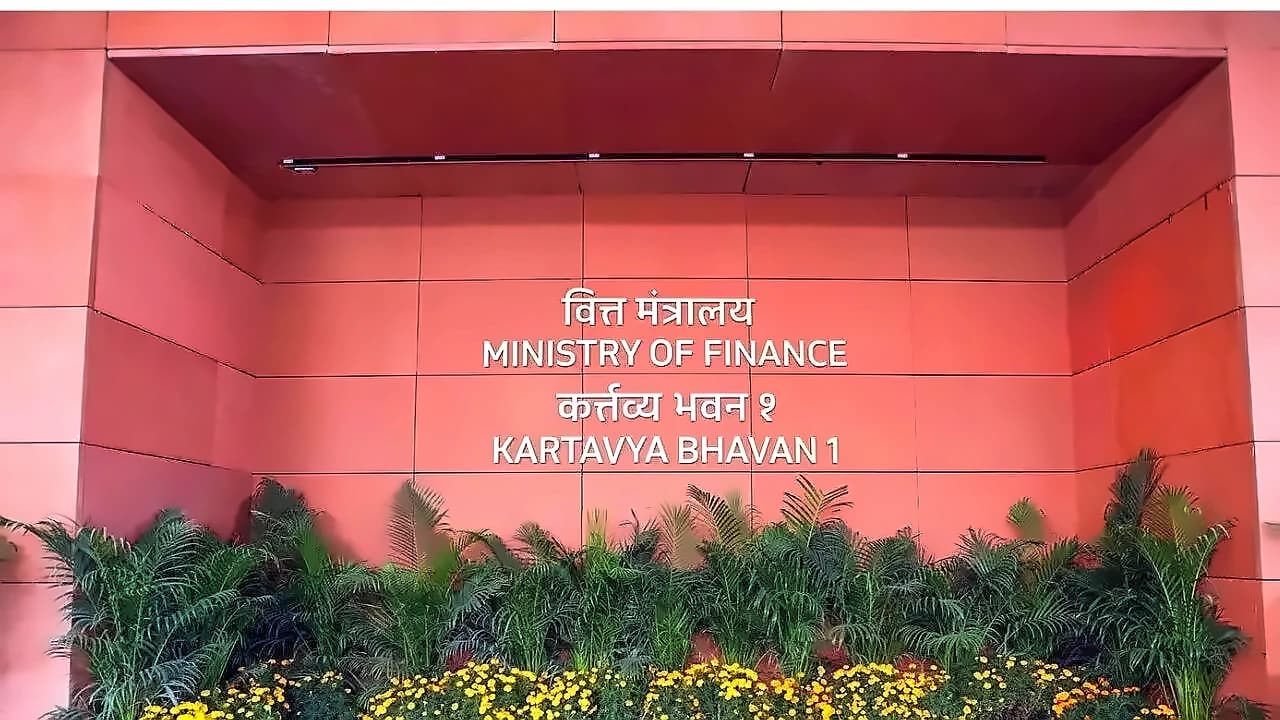
India has successfully met its fiscal deficit target for 2025-26, with the deficit standing at 4.4% of GDP for the year ended March 31, 2026. According to reports from ANI, Union Finance Minister Nirmala Sitharaman confirmed this achievement while addressing the Indian diaspora in Chicago during her ongoing US visit. The absolute fiscal deficit reached ₹15.19 lakh crore, representing 97.5% of the government's revised estimate presented in February. Sitharaman emphasized that the government has maintained its planned path of fiscal discipline, fulfilling the trajectory set for the final year of the current fiscal framework. She noted that the target had been met without cutting funding for social welfare schemes or public capital expenditure on infrastructure. Looking ahead, the government has set an ambitious target to reduce the debt-to-GDP ratio to 50% by 2030, contrasting India's position with several advanced economies where debt levels exceed 200% of GDP.
India's fiscal management has shown significant improvement in expenditure efficiency and capital investment allocation. According to the latest data, revenue expenditure as a percentage of GDP decreased to 10.8% in 2025-26 (RE) from 13.6% in 2021-22, while central government's capital expenditure share increased from 1.7% in 2019-20 to 3.1% in 2025-26 (RE). Including capital grants to states, the total capital expenditure share reached 3.9% of GDP. The government's approach to the pandemic exemplified this efficiency, with India adopting a flexible and agile strategy rather than front-loading stimulus packages, as most countries did. Direct Benefit Transfer has been particularly effective, estimated to have brought savings of about 50 billion USD until March 2024, along with digitalization of government programmes and just-in-time flow of funds to state governments.
India's economic growth prospects have been bolstered by robust industrial performance, with Industrial Production (IIP) expanding 7.3% in June 2026, marking its fastest pace in 23 months. According to The Times of India, industrial growth averaged 5.7% during the first quarter of FY27, representing its strongest performance in eight quarters. Manufacturing emerged as a key contributor, with output increasing 7.8%, while electrical equipment, motor vehicles, textiles and food products were among the better-performing segments. However, there are signs of moderation, with Manufacturing PMI falling to 53.5 in July from 54.2 in June, and Services PMI dropping to 53.3 from 57.4. Despite this moderation, gross bank credit growth accelerated to 18.6% in June, its highest level in 25 months, supporting continued economic activity.

EY forecasts India's real GDP growth to remain resilient at 7-7.2% in FY27, supported by buoyant domestic demand and continued government focus on capital expenditure. According to EY's latest report, nominal GDP growth could reach 12.5-13%, with the stronger capex push expected to support demand and improve real GDP growth prospects. The outlook comes despite significant global challenges, with Sitharaman pointing to India sustaining growth of 7% or more since the Covid-19 pandemic despite global headwinds including the Russia-Ukraine war, tariff disputes and disruptions in the Strait of Hormuz. Capital expenditure growth rebounded to 23.7% in the first quarter of FY27, reversing a 23.3% contraction in the fourth quarter of FY26, with the fiscal deficit at 18.2% of the annual budget target during the quarter.
The fiscal discipline achievements have contributed to improving credit ratings, with Sitharaman noting that credit ratings are improving as a result of the government's fiscal prudence. The Finance Minister emphasized that the trust that the world has of the fiscal prudence of Prime Minister Modi, shall not be compromised. EY noted that the higher WPI inflation could push nominal GDP growth above the government's budgeted 10.04% assumption, potentially supporting revenue receipts and allowing continued capex while maintaining the fiscal deficit target. Despite strong growth prospects, external risks remain significant, with EY citing higher energy costs and weaker global demand as constraints on exports. However, EY sees scope to strengthen India's external position through import substitution and greater domestic value addition, with a targeted strategy covering 1,272 products potentially substituting around $189 billion of imports.