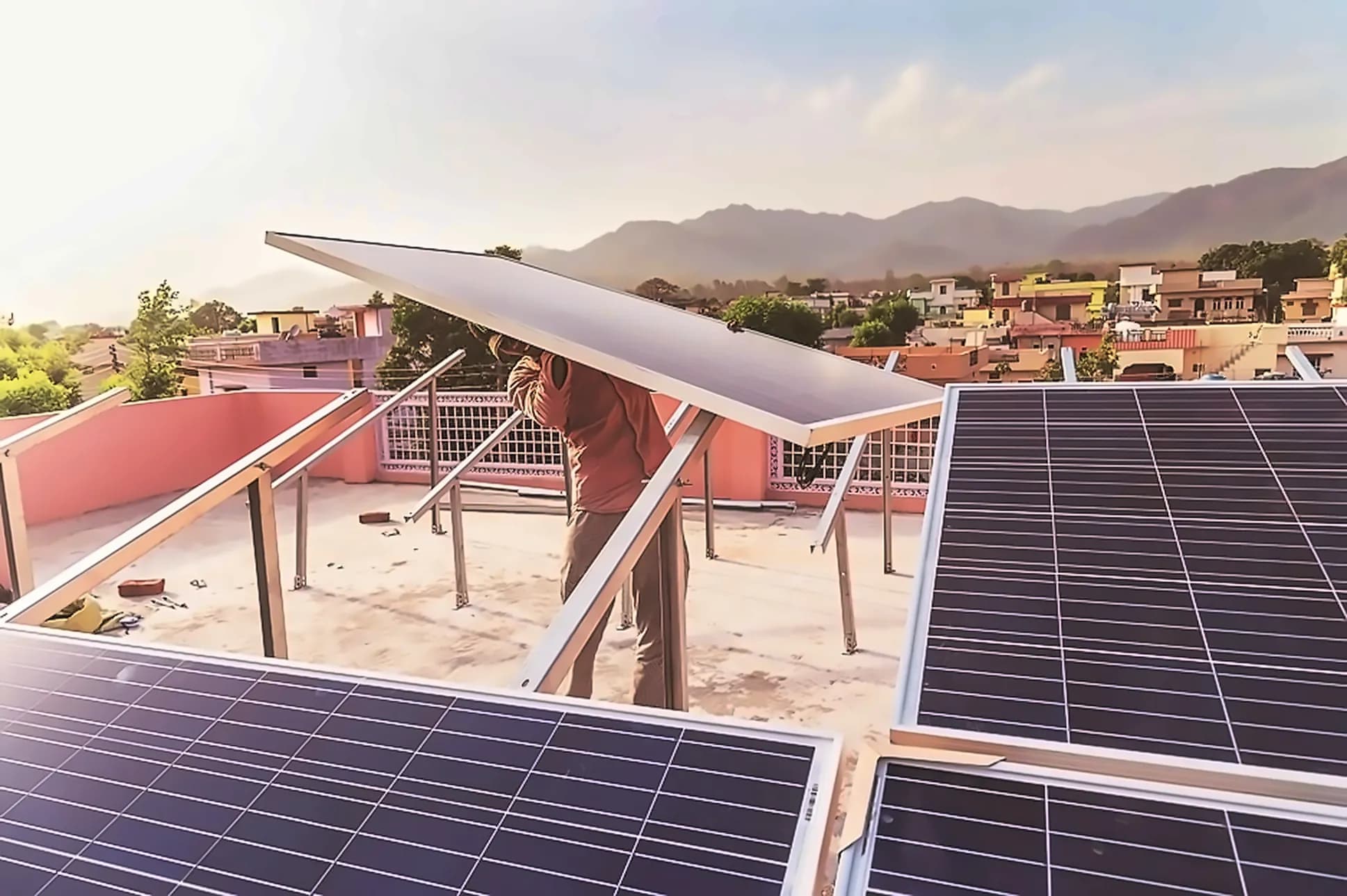
India attracted $31 billion in climate and sustainability equity funding between 2021 and October 2026, according to a report released by the Indian Venture and Alternate Capital Association (IVCA) and Boston Consulting Group (BCG). The investment was heavily concentrated in specific sectors, with power and low-carbon fuels attracting $19 billion and transport receiving $9.5 billion. Together, these two sectors accounted for over 90 per cent of total funding, while manufacturing, waste and agriculture attracted $1 billion each. As reported by Business Standard, equity funding reached $6.2 billion across 243 rounds in the first 10 months of 2026, indicating a shift towards fewer but larger transactions. According to BCG's Anirban Mukherjee, "India's climate transition is no longer a question of intent. Capital is arriving, but unevenly."
The report estimated that India's long-term climate transition will require cumulative investment needs of $22-24 trillion through 2070, equivalent to $500 billion annually, compared with current annual climate investment of around $135 billion. According to BCG's Anirban Mukherjee, investment has followed at scale in renewable power and electric mobility because economics now stand on their own, but the task ahead is to build confidence in storage, grids, green fuels, industry and adaptation. Nakul Zaveri from LeapFrog Investments noted that the priority is to broaden the pool of investable opportunities and develop financing structures that can support businesses at different stages of maturity. The report argues that India's next climate investment cycle will depend not simply on raising more capital but on directing it towards underfunded sectors and technologies that can deliver commercially viable solutions at scale.
The report highlighted emerging investment opportunities including energy storage and grid infrastructure, fast-charging networks, fleet electrification and domestic battery supply chains. Biofuels and green hydrogen present opportunities, though their commercial viability depends on policy support and reliable demand development. Industrial recycling is gaining traction supported by regulatory mandates, while agricultural technologies with shorter payback periods offer potential for wider adoption. However, decarbonising heavy industry remains more challenging, with investment viability dependent on carbon pricing and access to international carbon markets. The report identifies green hydrogen and biofuels as potential capital attractors as industrial demand and policy support develop.
The report identified adaptation as an emerging investment market, particularly in water management, cooling, resilient infrastructure, insurance and climate-risk analytics. As physical climate risks intensify, these solutions could attract greater investment, with the potential for economic benefits of $2-19 for every $1 invested in adaptation. The report also highlighted challenges in scaling climate investments, noting that emerging technologies often lack testing infrastructure, established performance records and early customers, making it difficult for investors to assess commercial viability. Financing timelines present another challenge, with some climate projects requiring 12-15 years of capital support against typical fund lives of 7-10 years.
The report emphasized the importance of a clear climate finance taxonomy, green product standards and consistent monitoring, reporting and verification frameworks. Measures such as green public procurement, payment security and streamlined land, grid and permitting processes are required to reduce investment risks and create greater certainty for investors. According to the report, stronger payment security, green public procurement and streamlined project approvals could improve investment viability. The report calls for a national climate-finance taxonomy, shared testing facilities, reliable climate-risk data and greater mobilisation of patient and catalytic capital through blended-finance structures. As physical climate risks intensify, adaptation solutions could attract greater investment where businesses and communities can quantify the economic value of reducing climate-related losses.