The International Monetary Fund's new G20 report on strong, sustainable, balanced and inclusive growth (SSBIG) has identified regulatory and institutional reform as central to addressing global growth challenges. According to the IMF report, medium-term G20 growth is estimated at only 3 per cent, close to its weakest level since the SSBIG framework was launched in 2009. The report reveals that about half the G20 advanced economies and nearly three-fourths of the emerging-market economies face growth constraints from overly restrictive regulations on labour markets, product markets, or consumer markets.
India has delivered a stronger-than-expected 7.8 per cent GDP growth in Q2 FY2026, exceeding both IMF staff expectations and consensus among other observers. As per Julie Kozak, Director of the IMF's Communications Department, the upward surprise was driven by stronger than expected activity in the services sector and also in exports, even as the economy faced an energy price shock. The IMF official noted that the outturn also underscores the resilience of the Indian economy, despite the energy price shock, highlighting the economy's ability to withstand external pressure. The 7.8% growth in real GDP for Q1 FY27, covering April-June, was higher than the Reserve Bank of India's earlier estimate of 7%, with data from the Ministry of Statistics and Programme Implementation showing real GDP at ₹81.36 lakh crore in the quarter, compared with ₹75.46 lakh crore in the same period of FY26. The IMF welcomed India's modernisation of macroeconomic statistics, incorporating new indices of industrial production and producer price index series that should improve GDP estimates.
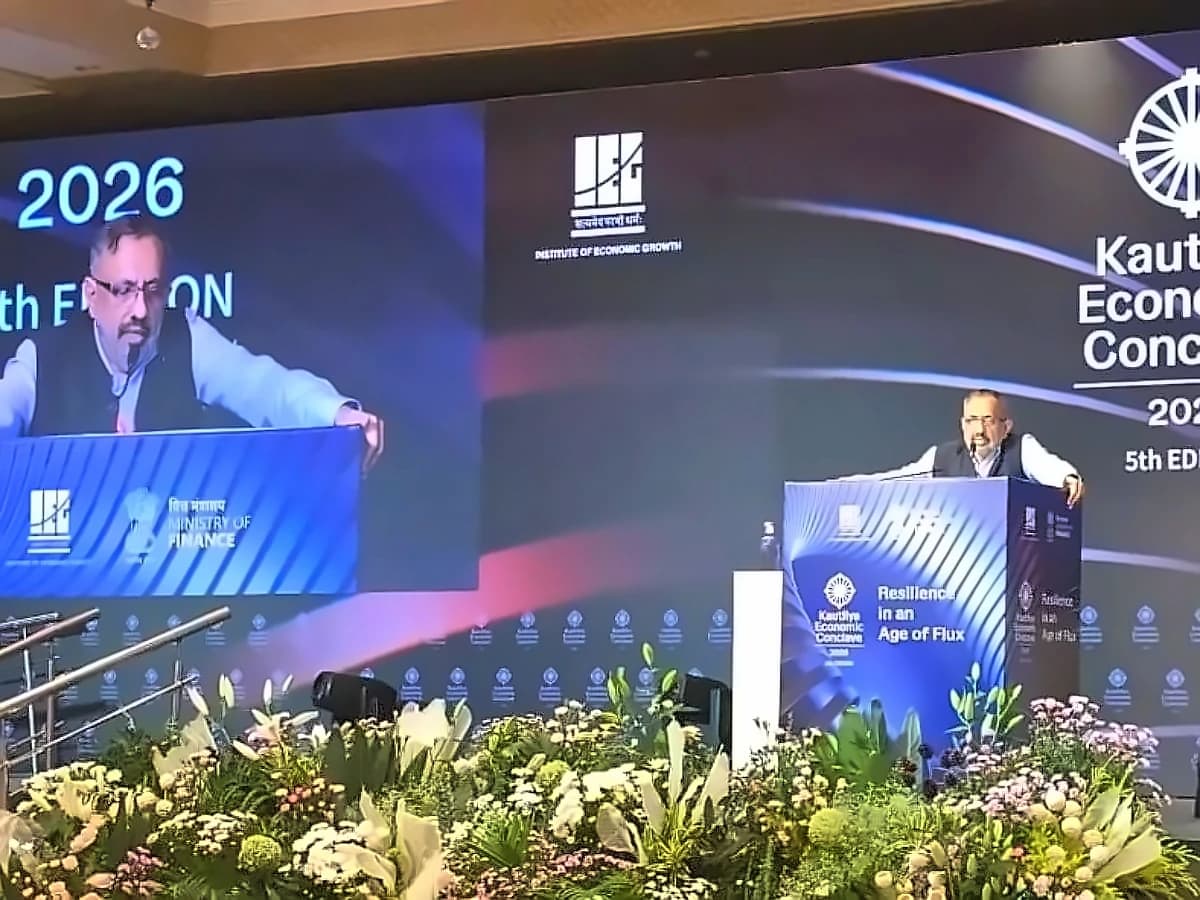
NITI Aayog member Rajiv Gauba has called for systematic deregulation, advocating that India's next-generation reforms must move away from the licence, approval and permission regime. Speaking at the Global Fintech Fest 2026 in Mumbai, Gauba emphasized that the next phase of reforms should focus on dismantling the maze of permissions, approvals, registrations and renewals that continues to burden businesses and citizens. He highlighted that the reform process cannot be limited to the Centre, as many important areas fall within the domain of state and municipal governments, requiring cooperative federalism with a competitive edge.
According to Gauba, the next generation reform architecture must be defined by deregulation, moving from prohibited unless permitted to permitted unless prohibited. Under the framework being developed, licences should be required only where there are compelling reasons, such as national security or serious risks to human health or the environment. Registrations in other areas should be automatic, while licences that are necessary should have perpetual or long-term validity. Inspections should not be random but risk-based, representing a paradigm shift in regulatory approach. Regulatory changes should follow a fixed calendar rather than being introduced randomly, with existing and new regulations undergoing regulatory impact assessments and compliance cost assessments.
Turning to India's fintech sector, Gauba highlighted its rapid growth and contribution to financial inclusion, noting that India's digital public infrastructure, including Aadhaar, Unified Payments Interface (UPI), DigiLocker and the account aggregator framework, can be replicated globally. He stressed that regulation in technology-driven sectors needs to maintain a dynamic balance between protecting public interest and allowing innovation to flourish. The IMF report specifically highlights that in G20 emerging markets, inadequate regulatory and institutional frameworks themselves are significant barriers to private and public investment. According to the report, the most important impediments include underdeveloped capital markets, weak public-investment management, and deficiency in governance and institutional quality.