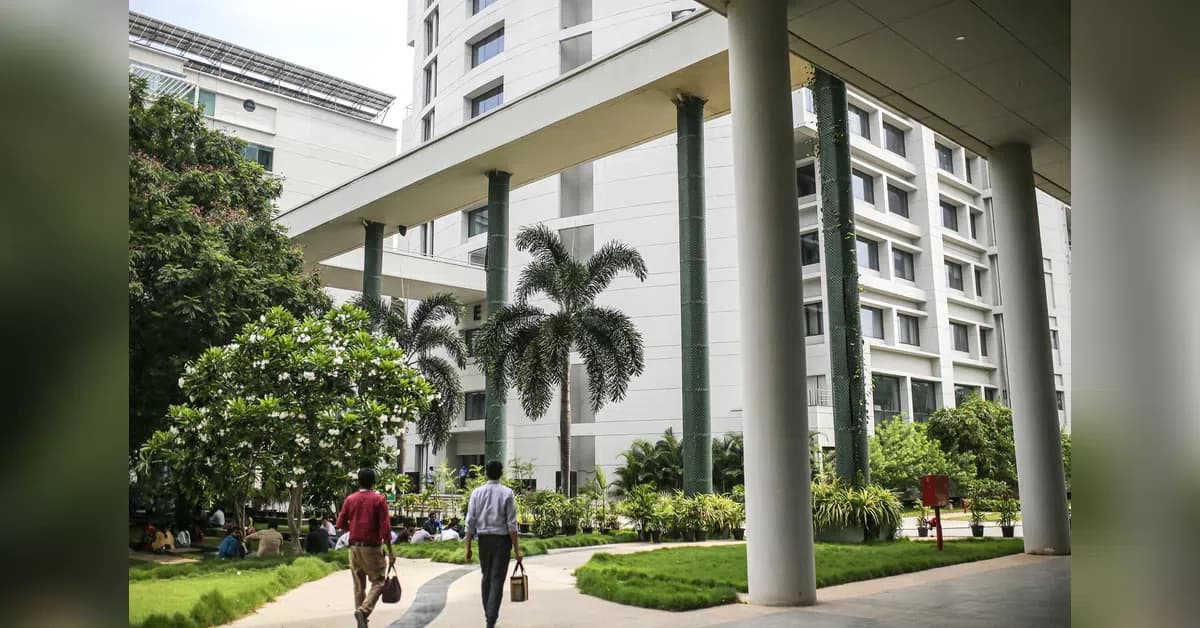
Researchers at the Indian Institute of Technology (IIT) Bhubaneswar have identified a network of thermal hotspots across Odisha that pose significant threats to public health and economic growth. According to the study published in the Environmental Science: Advances journal of the Royal Society of Chemistry, the research analyzed two decades of satellite observations and mapped thermal hotspot evolution across all 30 districts of Odisha. The study, led by Dikshika Mahapatra and Debadatta Swain, examined localized areas experiencing extreme land surface temperatures rather than average temperatures, tracking hotspot evolution between 2017 and 2023. The extensive climate study was spearheaded by Ms. Dikshika Mahapatra and Dr. Debadatta Swain of the School of Earth, Ocean and Climate Sciences at IIT Bhubaneswar, evaluating two decades of high-resolution spaceborne observations to track the shifting footprint of thermal hotspots across the state.
The study found that coastal districts undergoing rapid urban transformation and industrialisation saw hotspot coverage expand between 2% and 9% in just seven years. As reported by the researchers, built-up urban areas experienced hotspot growth of as much as 9% annually. Khordha, Ganjam, Sundargarh, Sambalpur, Angul, Jharsuguda and Cuttack were identified among districts where urbanisation and industrial activities are driving significant heat accumulation. The researchers noted that extensive concrete structures, asphalt roads, industrial facilities and shrinking vegetation have altered the land surface, enabling these areas to absorb and retain substantially more solar radiation than natural landscapes. Major urban and industrial hubs, including Khordha, Ganjam, Cuttack and Sundargarh, are bearing the brunt of this thermal expansion, with hotspot coverage in several coastal areas growing by 2% to 9% every year.
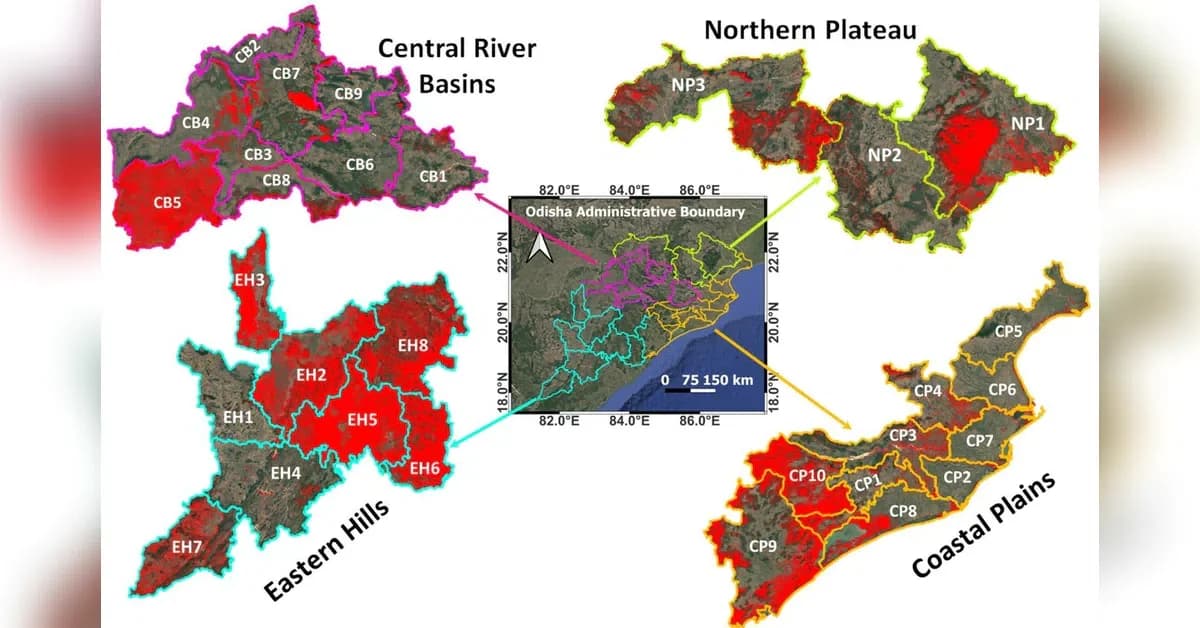
The study identified Rayagada as recording the highest persistent hotspot coverage at 92.09% of its geographical area, followed by Gajapati at 86.16% and Nayagarh at 76.05%. According to the researchers, these persistent hotspots represent structurally stable heat reservoirs that continuously expose communities to extreme temperatures. The western and interior districts of Kalahandi, Nuapada, Bargarh and Balangir recorded large thermal hotspots across non-built-up areas due to increasing barren land, degraded forests, fallow agricultural fields and declining vegetation cover. Interior and hilly regions, such as Balangir, Kalahandi, Rayagada and Gajapati, are now facing prolonged, intense thermal conditions - breaking away from historical patterns where severe thermal stress was unique to concrete cities. Coastal districts such as Balasore and Bhadrak reported relatively low persistent hotspot coverage due to the moderating influence of the Bay of Bengal.
The researchers warned that rising thermal stress could increase annual building cooling energy demand by 15-20%, with similar pressures expected to emerge in rapidly industrialising states. As reported in the study, outdoor workers in mining, construction, manufacturing, transport and agriculture are likely to experience reduced productivity, shorter safe working hours and greater health risks during prolonged heat events. The state has received investment proposals worth more than ₹22 trillion over the past two years, with most projects proposed in thermal hotspot regions. The study highlighted that increasing land surface temperatures worsen air quality by accelerating ground-level ozone formation and increasing risks of heat exhaustion, heatstroke, and cardiovascular and respiratory illnesses. Allowing these thermal hotspots to expand unchecked presents a looming crisis for public health, will heavily strain regional power grids due to soaring cooling demands and undermines broader environmental sustainability.
The study recommends district-specific mitigation strategies instead of uniform statewide approaches. For rapidly urbanising industrial districts such as Khordha, Jagatsinghpur, Jajpur and Sundargarh, researchers advocate cool roofs, reflective construction materials, permeable pavements, vertical gardens, expanded urban forests and green corridors to reduce heat absorption. According to Mahapatra, coastal districts should strengthen mangrove conservation to improve natural cooling, while western and southern districts require forest restoration, watershed management and sustainable land-use practices to restore soil moisture and vegetation cover. The researchers emphasized that increasing urban greenery, implementing heat-resilient infrastructure and promoting sustainable land-use policies would help reduce surface heating and support long-term climate resilience. Key recommendations include the rapid expansion of urban green canopies, the adoption of heat-resilient construction materials, the rehabilitation of degraded riverbanks and coastal mangroves and the mandatory integration of satellite mapping into urban zoning laws.