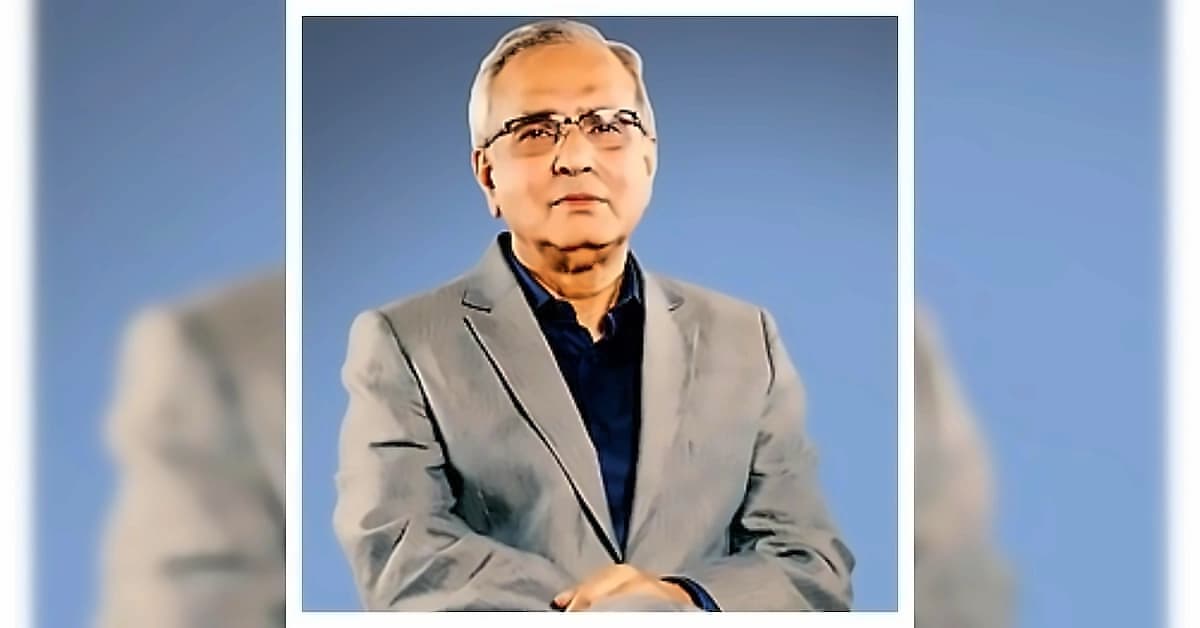
NITI Aayog Vice-Chairman Ashok Lahiri has outlined the specific economic requirements needed to achieve India's ambitious goal of becoming a developed country by 2047. Speaking at an event organized by the National Council of Applied Economic Research (NCAER), Lahiri stated that India must sustain 9.25 per cent annual nominal growth for 21 years, backed by reforms, to achieve developed-country status. According to Business Standard, Lahiri emphasized that 'Others have done it, so can India, but it needs support through rapid reforms', citing Japan, South Korea, Taiwan, Hong Kong, Singapore and China as examples of comparable economic jumps during their high-growth phases. The economist, who took charge at NITI Aayog in April 2026, identified education, health, infrastructure and entrepreneurship, along with administrative reforms, law and order, and a faster justice system as his 'favourite' long-term growth priorities.
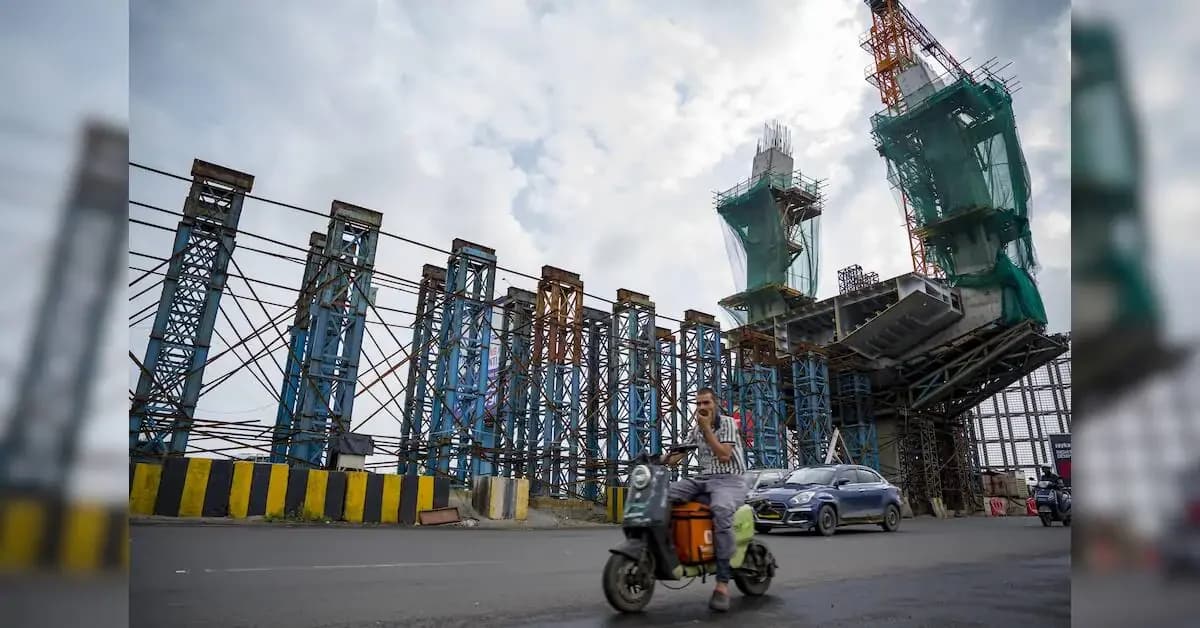
Lahiri outlined the substantial economic transformation required to meet the 2047 target, with per capita income needing to rise from an estimated $2,813 in 2026 to around $18,000 in 2047 - representing a more than six-fold increase. As reported by Business Standard, he noted that India's gross fixed capital formation has stayed below 30 per cent of GDP for most years, against 35 per cent or more sustained by East Asian peers. However, he highlighted that India is using capital efficiently, with an incremental capital output ratio (ICOR) of 4.5 to 5, compared with China. Lahiri cautioned that 'Growth depends on absorptive capacity: An economy does not grow so much because it does not invest enough, but because its dynamism is not strong enough to enable it to apply more investment efficiently'. He also identified factor market imperfections in land and capital as major impediments and called for easing business at the grassroots level.
Lahiri addressed India's savings and investment dynamics, noting that the savings rate peaked at 37 per cent in 2007, slipped to 29 per cent in 2020 and recovered to 35 per cent in 2025, but has consistently trailed China by 10 to 15 percentage points. According to Business Standard, he linked the shortfall to a persistent current account deficit of $16.5 billion in 2025, contrasting it with surpluses in China, Korea and Singapore. Lahiri rejected the view that India suffers from under-consumption, stating 'You can't be talking about the savings rate being too low and at the same time saying under-consumption [is there]'. He emphasized that 'Investment, both domestic as well as foreign, will flow in search of profits' and urged India to become the most attractive location for running a successful business. The economist concluded that 'Instead of too little investment and too little savings, let us have plentiful investment and adequate savings with efficient intermediation'.
Former NITI Aayog Vice Chairman Rajiv Kumar has highlighted the urgent need for dialogue between policymakers and India's youth amid growing concerns over artificial intelligence's impact on employment. According to reports from PTI Videos, Kumar stated that India's youth is 'very uncertain and very unclear about the future because of Artificial Intelligence (AI)' and that this uncertainty is generating fears of both employability and employment generation. The Periodic Labour Force Survey (PLFS) Monthly Bulletin June 2026 reveals that youth unemployment rate in India for the 15-29 age group stands at around 20 per cent, with female unemployment at 20.7 per cent and male unemployment at 14.6 per cent in the same age group. Kumar noted that 'now, if you are faced with their circumstances, then of course you will be frustrated. And, I think this is why we need to have an on-going dialogue with the youth'. The current economic challenges facing India's youth underscore the critical importance of addressing both immediate employment concerns and long-term growth strategies to ensure sustainable employment opportunities.
Kumar advocated for a fundamental shift in India's export promotion strategy, suggesting state-specific export policies rather than a uniform national approach. As reported by PTI Videos, he stated that 'India has one export policy for the whole country. Now this is impossible. What is good for export promotion for Punjab can hardly be relevant for Tamil Nadu'. He recommended that the Department for Promotion of Industry and Internal Trade (DPIIT) should work with each state to identify its comparative and competitive advantage and create conditions for sharply ramping up exports from each state. Kumar emphasized that 'it is absolutely necessary for India to increase its export share in the world market because if we do not do that, we will not be able to expand our manufacturing capacity'. He noted that 'it is absolutely necessary for India to increase its export share in the world market because if we do not do that, we will not be able to expand our manufacturing capacity, and if we do not expand our manufacturing capacity, we will not be able to generate the employment opportunities that are desperately required'. This export strategy becomes even more critical given the need for India to increase its global competitiveness and manufacturing capacity to achieve the 2047 targets.