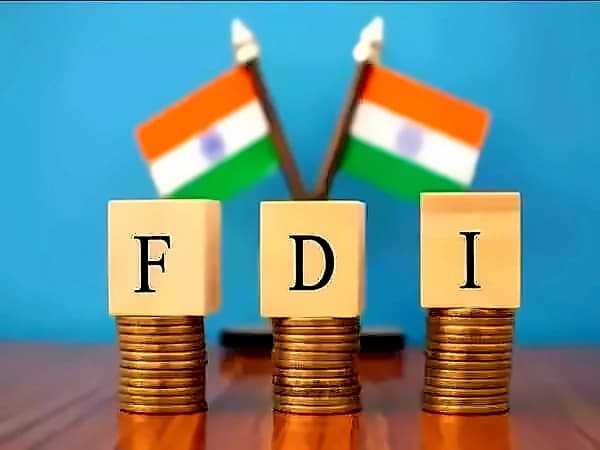
Gross foreign direct investment (FDI) grew 16.7% to a record $94.5 billion in 2025-26, marking the fastest pace of expansion in six years, according to The Times of India. This growth helped reverse the four-year falling trend of net FDI, with net FDI estimated at $7.7 billion during the last financial year, compared with under $1 billion in the previous year. After excluding repatriation and disinvestment of $53.6 billion from gross inflows, direct investment into the country is estimated to have increased 40.6% to $40.9 billion last year.
There was an 18% increase in FDI from India, which rose to $33.3 billion, as reported by The Times of India. The gap between FDI into India and those from the country represents net inflows, which have been under pressure for the last few years as overseas investors, including private equity players and companies like Hyundai and LG, have sold their stakes in Indian entities and taken money out of the country. Indian companies have stepped up investments by 22% higher at $22.6 billion in 2025-26 as they seek to be part of the global value chain.
While there have been two consecutive years of double-digit growth in gross FDI, many experts have argued that the absence of core AI activity has resulted in inflows growing at a slower pace, according to The Times of India. The government is banking on a series of recent announcements for investment in the data centre business, with global tech giants Google, Microsoft and Amazon having committed investments of around $70 billion on last count, while Foxconn, Vinfast and Shell are planning investments of another $65 billion or so. Recent easing of FDI rules in insurance, where 100% overseas investment is now permitted, is likely to further increase flows into the business.
There has been heightened activity in the financial services space, with Japan's Mitsubishi UFJ Financial Group announcing a $4 billion investment in Shriram Finance and Japan's Sumitomo Mitsui Banking Corporation buying into Yes Bank, as reported by The Times of India. The government maintains a tight vigil over Chinese investment and has not allowed companies like BYD to invest in Indian ventures, which has slowed down inflows from the neighbouring country where companies are sitting on large piles of cash. Tension in West Asia and potential US tariff plans are key factors weighing on the minds of CEOs of global corporations which are keen to diversify their production bases.