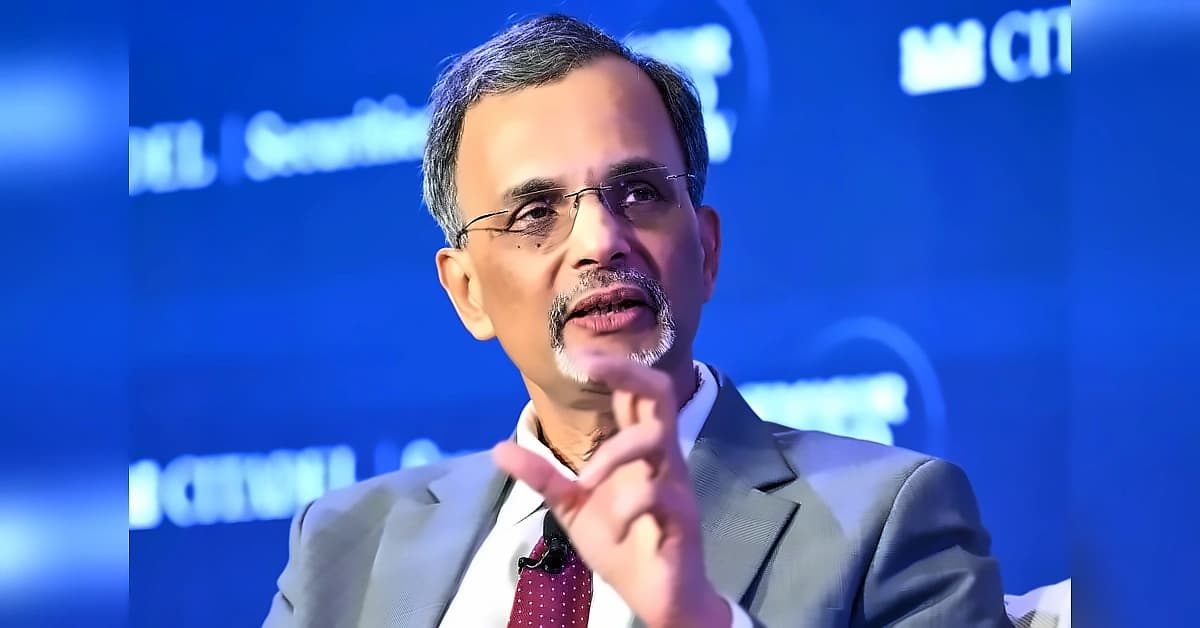
Chief Economic Adviser V Anantha Nageswaran has revealed a critical gap in India's infrastructure financing capabilities, stating that government budgets alone cannot meet India's infrastructure financing needs. Speaking at the CII Tamil Nadu Infrastructure Summit 2026, Nageswaran emphasized that 'The financing required for the infrastructure in India is far beyond what any government budget can carry'. According to The Times of India, the CEA noted that the public purse opened the innings but it cannot bat all day, highlighting the urgent need for private capital investment. The effective infrastructure financing figure rises to nearly ₹17 lakh crore when grants that create assets in states are included, compared to the current capital expenditure of over ₹12 lakh crore, representing a more than fourfold increase from around ₹2.5 lakh crore in the previous budget.
Chief Economic Advisor V Anantha Nageswaran delivered a stark warning at the CII Tamil Nadu Infrastructure Summit 2026, stating that 'free' is the most expensive word in public policy. According to The Times of India, Nageswaran emphasized that building infrastructure on the promise of below-cost services creates a contradiction that ultimately ruins economic balance sheets. The CEA argued that pricing vital utilities like water at zero leads society to treat them as limitless, invariably resulting in waste and destruction. "The thing we call free is the thing we destroy. This is not a paradox, it is a policy choice and it can be chosen differently," he noted, debunking the notion that underpricing acts as a social safety net. As reported by ANI, Nageswaran stressed that 'Patient capital does not arrive because we ask nicely or because we insure it against our own unpredictability'.
Nageswaran systematically debunked the notion that underpricing acts as a social safety net, instead arguing that free water effectively subsidises comfortable households with existing piped connections while forcing the genuinely vulnerable to purchase water from private tankers at several times the standard rate. As reported by Business Standard, the CEA noted that 'The thing we call free is the thing we destroy' and explained that the illusion of ''''free'''' infrastructure always has a hidden cost, with only three true outcomes: users pay fair charges, taxpayers bear the burden, or assets decay through lack of maintenance. Honest pricing, he said, would allow the government to protect the vulnerable directly while utilities earn enough to expand coverage to the unconnected.
The CEA emphasized that private investment will be crucial to meet the country's future infrastructure requirements, specifically highlighting the need for 'patient capital' - capital willing to earn steady returns over a period of 20-30 years. According to The Times of India, Nageswaran noted that what makes infrastructure worthy of patient capital? and stressed that 'Patient capital' only arrives when the underlying asset is sound and yields a dependable return over 20 to 30 years. The CEA also highlighted the Infrastructure Risk Guarantee Fund announced in this year's Budget, which is intended to provide greater confidence to private developers, though he cautioned that guarantees alone would not be sufficient to attract patient capital.
Nageswaran extended his critique to urban planning, specifically targeting artificially low Floor Space Index (FSI) limits that force cities into horizontal sprawl and make land scarce and expensive. As reported by Business Standard, he noted that restricting vertical growth inevitably drives developers to build on the cheapest available plots, often historical tanks, filled-in ponds, and critical catchments. The CEA warned that by trading natural water storage for floor space, cities guarantee severe flooding during monsoons and debilitating droughts. "This inevitably drives developers to build on the cheapest available plots, often historical tanks, filled-in ponds, and critical catchments," he explained, emphasizing the environmental and economic consequences of such policies.