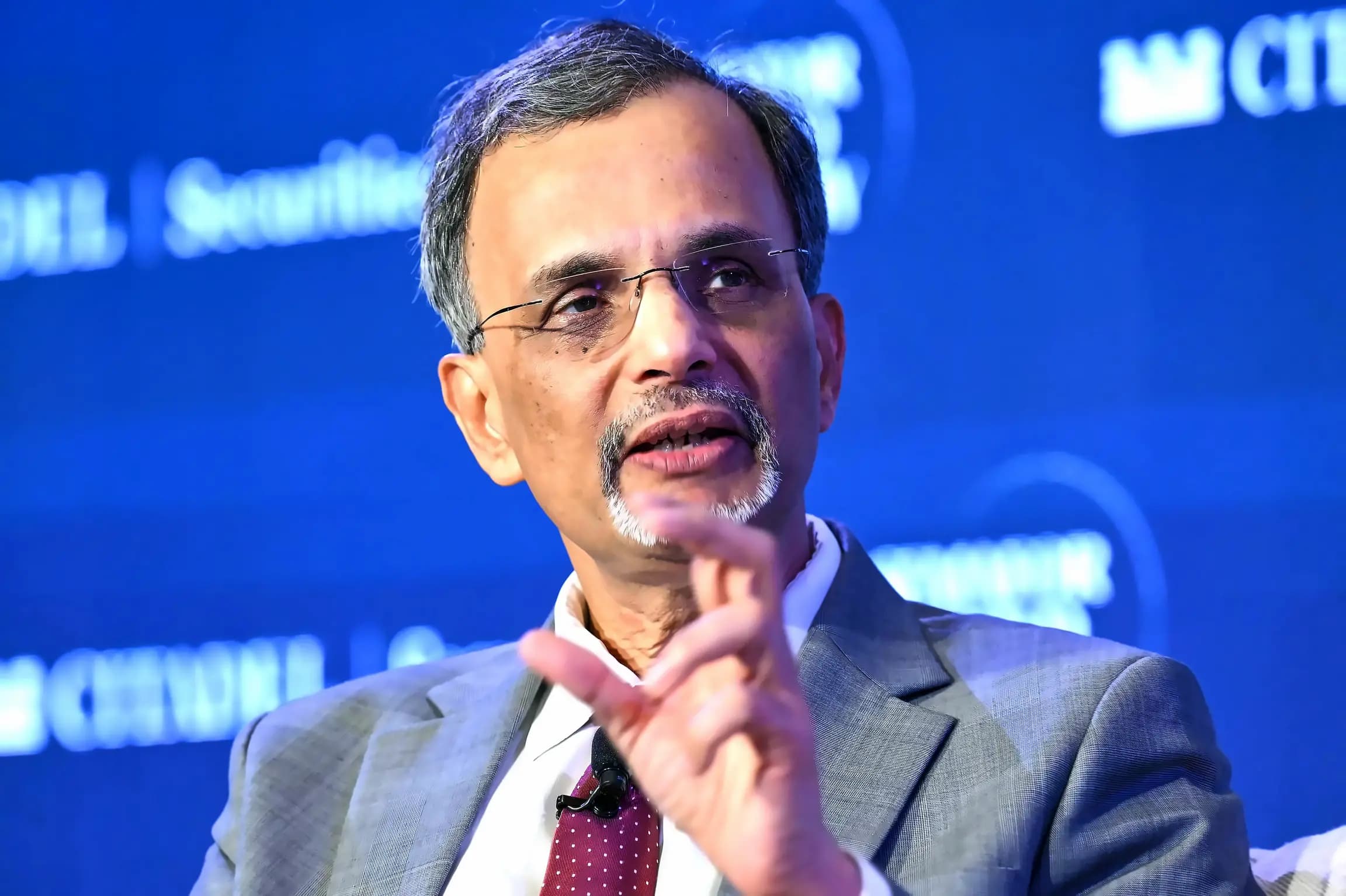
Chief Economic Adviser V Anantha Nageswaran highlighted India's short-term savings behavior as a critical barrier to retirement security at the Pension Fund Regulatory and Development Authority's (PFRDA's) NPS Divas 2026. According to reports from Mint, Nageswaran stated that while Indians have shown willingness to accept market risk, they have not yet committed savings for the longer tenures needed to finance retirement. He emphasized that 'Indians do not optimise for the long term' and that this decision is fundamentally different from accepting market risk. The CEA noted that India's demographic transition would make retirement planning increasingly important, as retirement in India is close to two decades of life on average—and could be longer—that must be financed from savings made during the working years. Nageswaran called on the PFRDA, financial intermediaries and households to work together to encourage 'less exciting' long-term investing, as reported by Mint.
Despite the savings challenge, India's appetite for equity and mutual funds has grown significantly. According to the Economic Survey 2025-26 (FY26), the share of equity and mutual funds in annual household financial savings rose from around 2 per cent in FY12 to 15 per cent in FY25. Simultaneously, the share of bank deposits declined from more than 58 per cent to around 35 per cent over the same period. Monthly inflows into systematic investment plans also increased dramatically, from less than ₹4,000 crore in FY17 to more than ₹28,000 crore in the first eight months of FY26, as reported by Mint. However, the CEA noted that the Indian saver has shown a willingness to accept market risk—or so we would like to believe. What the saver has not yet done at scale is to commit savings for a longer tenure. Nageswaran shared the lesson of Lord Yama's in the Katha Upanishad, comparing choosing between the enduring good 'Shreya' and the fleeting comfort 'Preya' to long vs short-term investing, stating that a contribution to a pension account is a small, repeated choice of Shreya over trading in futures and options at very narrow frequencies and short frequencies.
Despite increased equity participation, pension and insurance assets remain underrepresented in household savings. According to Nageswaran's statement, the share of pension and insurance assets in household savings remained unchanged between FY19 and FY24. India's total pension assets currently represent around 17 per cent of gross domestic product (GDP), significantly lower than at least 80 per cent in Organisation for Economic Co-operation and Development (OECD) economies. This gap highlights the need for greater long-term savings commitment among Indian households, with the CEA emphasizing that financial markets would need to channel these savings into productive, long-duration investments. However, Nageswaran noted that there is significant scope for expansion in India's pension sector, as reported by Mint.
The National Pension System (NPS) currently manages a ₹18 lakh crore corpus as of September 2026, with its investment allocation showing a balanced approach to risk management. According to Mint, around 47% is invested in government securities (G-Secs), 28% in equity, and 21% in corporate debt. The PFRDA is working on retirement income schemes with assured payout so that retired individuals over 60 have the option to convert their accumulated corpus into steady income that lasts for your lifetime and keeps pace with inflation. This development addresses the challenge of converting lump-sum pension assets into sustainable retirement income, providing greater financial security for retirees.
Financial Services Secretary Sanjay Lohiya emphasized that pension fund managers need to be mindful of their unique responsibility in managing retirement savings. According to Mint, he stressed that pension fund managers need to be mindful of the responsibility with which they need to manage the pension corpus of subscribers, noting that it's one thing to manage a debt fund or a mutual fund and another thing to manage a pension fund. Lohiya added that the aim is for India's pension corpus to grow and become patient capital for infrastructure building—similar to foreign pension funds. He called on the government to slowly develop our own pension funds to provide patient capital, with the goal of building trust among pension subscribers and ensuring that pension savings should not be treated like regular financial products given their intended purpose to provide income and financial security after retirement.