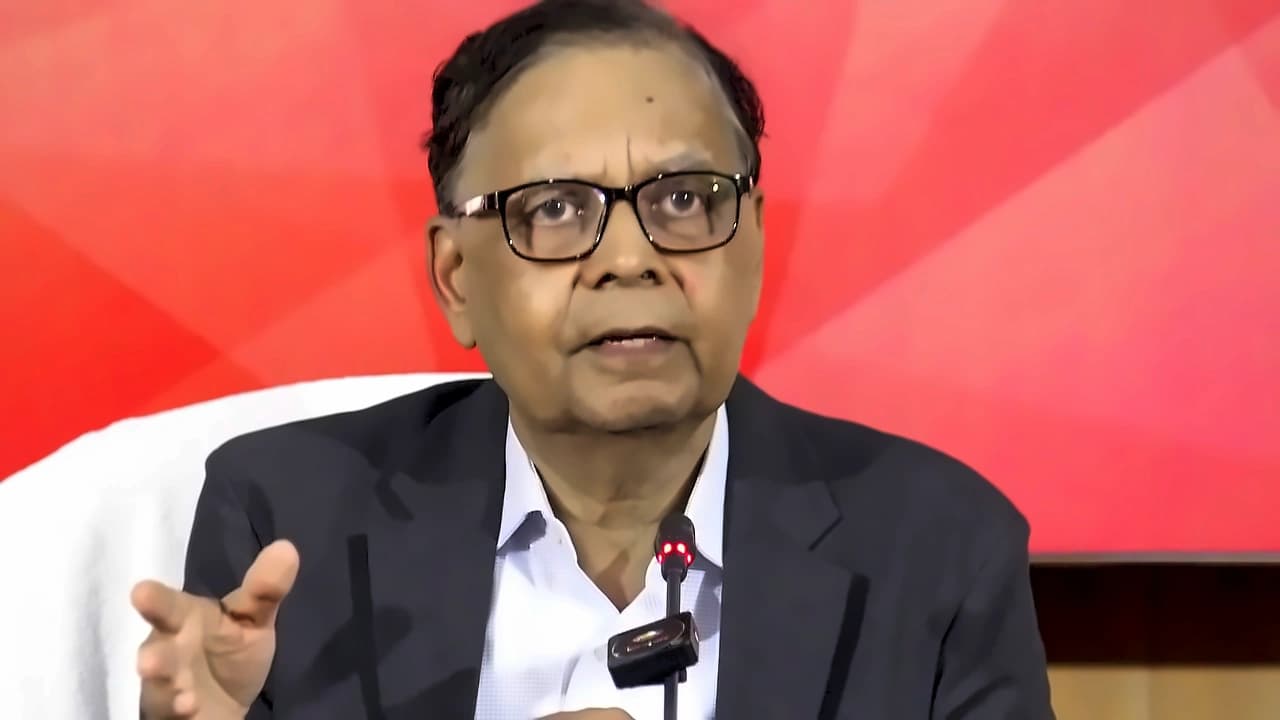
Economic Affairs Secretary Anuradha Thakur announced that private sector investment is witnessing steady and sustained growth, driven by the government's continued capital expenditure push. Speaking at the National Council of Applied Economic Research's India Policy Forum 2026, Thakur revealed that public capex has increased more than fivefold over the last decade from ₹2 lakh crore in 2014-15 to ₹10.7 lakh crore in 2025-26. The government has projected public capital expenditure at ₹12.2 lakh crore for the current fiscal in the Budget. According to Thakur, various indicators have shown, including the number of projects off-take, number of projects which are stalling, which is apparently at a decade low, demonstrating the effectiveness of public investment in crowding in private capital.
According to Business Standard, the 1991 reforms have delivered a growth rate of at least 6.5% over the past 35 years, which Ramesh emphasized cannot be underestimated. However, he highlighted a current paradox where official data shows growth above 7%, but private corporate investment sentiment remains subdued. As reported by Business Standard, Ramesh noted that the growth rate would have been worse without public investment picking up the slack, making it paradoxical to achieve such healthy growth rates with low investment levels. The central challenge today, according to Ramesh, is stimulating private investment, which needs to increase from the current 30-31% of GDP to 35-36%.

As reported by Business Standard, Ramesh emphasized that the current foreign exchange situation is completely different from 1991, with forex reserves at $690 billion compared to $900 million then. The government faces pressure on capital inflows and needs to shore up dollar earnings by $30-50 billion. Ramesh noted that PM Modi, who is critical of the ancien regime based on public investment, has had to depend on the same public investment to achieve claimed growth rates. He highlighted that while there is investment taking place, the rate of investment remains the key concern.
According to Business Standard, Ramesh identified several factors affecting private investment sentiment, including stagnated real wages over the past decade and increased market inequalities. He noted that while the power of tax authorities and investigative agencies has increased significantly, creating uncertainty and intimidation among investors. Ramesh emphasized that the doors of government are not as freely open to investors as they were during Singh's tenure or even during Vajpayee's or Rao's time. He also highlighted growing oligopolies in sectors like ports, airports, and cement, where one or two players dominate, contrasting with the 1991 philosophy of controlling monopoly power abuse rather than growth.
Thakur emphasized that India has made remarkable progress in expanding its pool of domestic financial resources, with household financial savings becoming increasingly diversified through greater participation in equity markets and mutual funds. She stressed that innovation has become the central point, needing to increasingly become the principal driver of long-term growth, as economic growth is increasingly driven by knowledge and technology rather than just accumulation of labour and capital. The secretary noted that India has built one of the world's largest startup ecosystems, with global strengths in information technology, pharma, DPI, and an expanding range of frontier technologies. Looking ahead, Thakur emphasized that capital formation and innovation are mutually reinforcing, with high investments enabling firms to innovate while innovation improves productivity and generates returns.