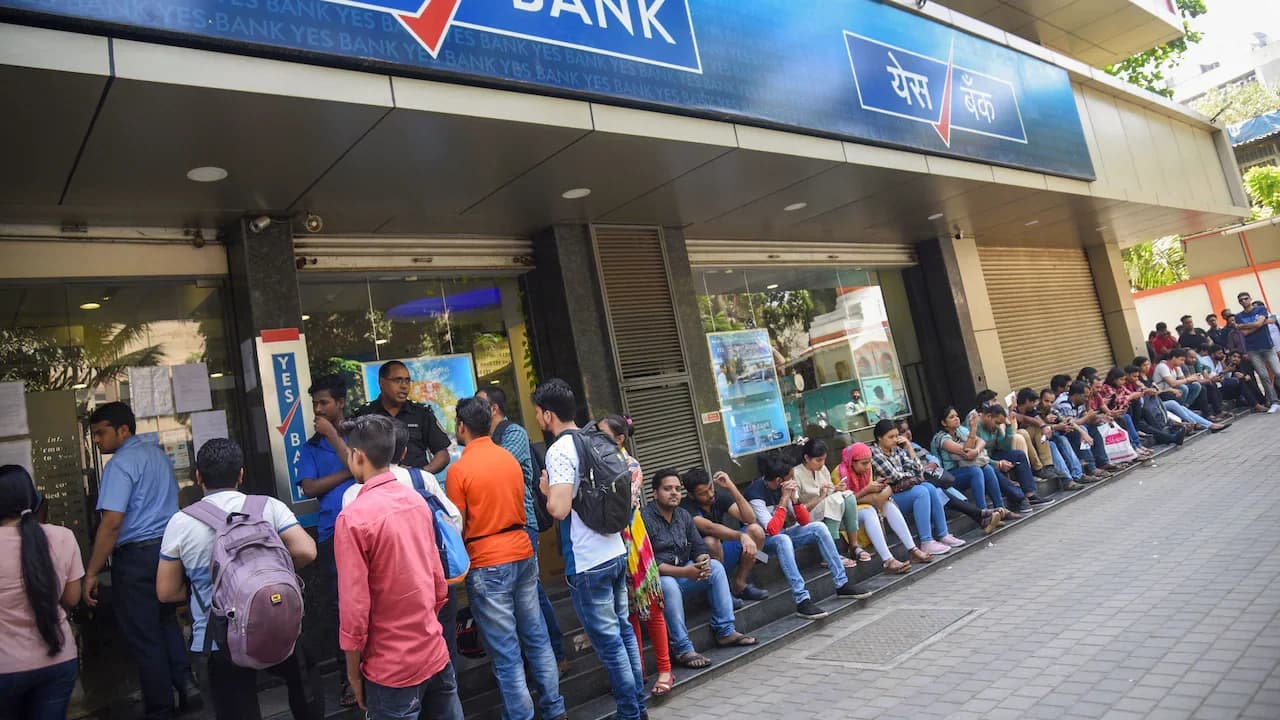
YES Bank has filed a review petition before the Supreme Court seeking reconsideration of its October 15 judgment that set aside the bank's write-down of ₹8,415 crore worth of AT-1 bonds. According to The Hindu BusinessLine, the lender's latest move comes days after Axis Trustee Services, acting on behalf of the bondholders, filed a contempt petition in the Supreme Court alleging the bank's failure to provide a "concrete roadmap" for restoring the bonds and implementing the court's judgment. In a November 13 regulatory filing, YES Bank said it had filed a review petition under Article 137 of the Constitution, seeking a review of the Supreme Court's judgment and order dated October 15, 2026. This development follows the Supreme Court's October ruling that upheld the Bombay High Court's January 2023 decision that quashed YES Bank's decision to write down the entire outstanding value of the AT-1 bonds in March 2020 as part of the bank's reconstruction exercise. The move comes after Yes Bank, in which Japan's Sumitomo Mitsui Banking Corporation now holds a 24% stake, was declared insolvent six years ago, with new investors brought in under a restructuring scheme.
The dispute concerns two issuances of AT-1 bonds - ₹3,000 crore carrying a coupon rate of 9.5 per cent, issued in December 2016, and ₹5,415 crore carrying a 9 per cent coupon, issued in October 2017. YES Bank had written down the instruments in March 2020 following the Reserve Bank of India's reconstruction of the lender, which was grappling with mounting bad loans, governance concerns and a deterioration in its financial position. Axis Trustee Services, representing the bondholders, had approached the Bombay High Court in May 2020 against the write-down, with the High Court ruling in favour of the bondholders in January 2023, a decision subsequently upheld by the Supreme Court on October 15. In its October order, the court ruled that the bank's administrator had acted under the "erroneous impression" that he retained the power to write down the bonds after the restructuring scheme was finalised, stating the write-off was "impermissible." AT-1 bonds are risk-bearing instruments that banks use to strengthen their capital, offering relatively higher returns but can be written off or converted into equity when a lender faces financial stress.
Yes Bank and Axis Trustee Services did not respond to requests for comment outside regular business hours. However, Yes Bank responded to the contempt petition on October 30, acknowledging the ruling and stating it remained "fully committed to acting in accordance with the Supreme Court's judgment and applicable law." The bank said it was examining the judgment's implications, consequential actions and available legal remedies, with its board cognizant of the matter and that it would take steps permissible under law. The bank, however, said it "does not accept the characterization" of its conduct as wilful disobedience and called Axis Trustee's assertions "baseless and without merit." Following the ruling, Reuters had reported that Yes Bank was unlikely to pay coupons due on the AT-1 bonds this year and planned to seek a review of the decision. In a notice dated October 28, Axis Trustee Services Ltd asked YES Bank's managing director and board to restore the bonds in its register of holders to their status before the March 2020 write-down, as reported by Mint. The latest petition adds another legal step to the dispute, with the bank saying it will disclose further material developments as required.
The Supreme Court's judgment has significantly impacted YES Bank's stock performance and investor sentiment. Following the Supreme Court's order, shares came under intense selling pressure, falling 28% in October, marking their biggest monthly decline since July 2020, with the sell-off dragging the stock to its lowest level in more than three years. However, the stock attempted a recovery in November, rebounding 15% so far, though it still remains down 19.35%. The potential impact on YES Bank's capital position remains a key concern for investors. The lender had earlier indicated that reinstating the AT-1 bonds would reduce its common equity tier-1 (CET1) capital ratio by around 240 basis points. Any move to restore the written-down bonds or meet related obligations could therefore put pressure on the bank's capital ratios and weigh on investor sentiment. The actual impact will depend on the outcome of the review petition and the subsequent course of action.