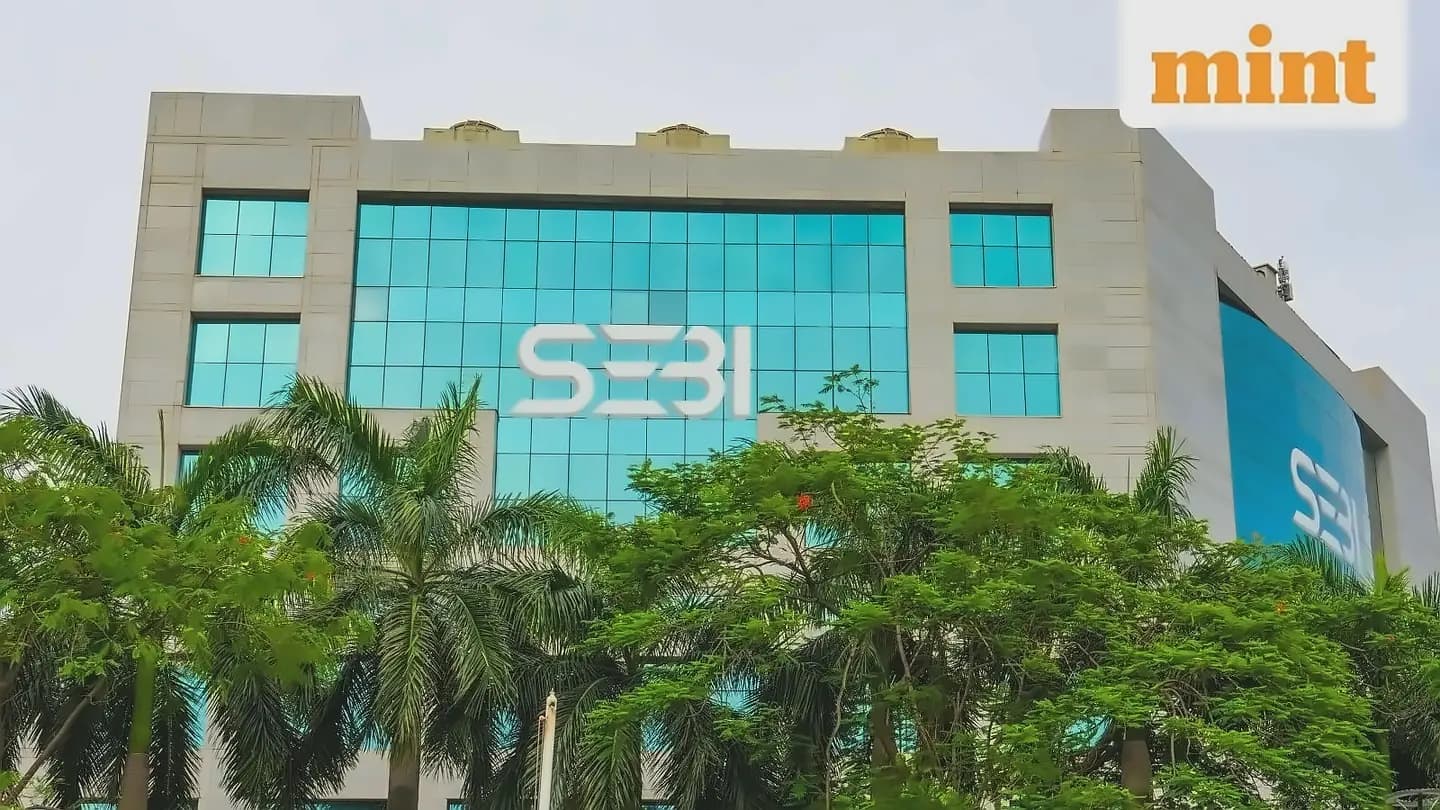
The Securities and Exchange Board of India (Sebi) and Reserve Bank of India (RBI) are developing a comprehensive framework for corporate bond index derivatives to improve liquidity and deepen India's debt market. According to reports from The Financial Express, Sebi Chairman Tuhin Kanta Pandey announced that a working group is currently sorting out operational details to introduce a market-making framework for corporate bond indices. Speaking at the India Investor Conference 2026, Pandey emphasized that this initiative represents a significant step toward modernizing India's debt market infrastructure. The RBI has already laid the groundwork by providing draft guidelines on total return swaps and derivatives on corporate bond indices in February, which are now being finalized, as reported by ANI. As per ETBFSI, the collaboration aims to improve liquidity, price discovery and access for global capital in India's debt market.
Sebi is considering a market-making framework for commodity derivatives to address the long-standing liquidity challenges in longer-dated contracts, as reported by The Economic Times. The Commodity Derivatives Advisory Committee (CDAC) is exploring a proposal to introduce designated market makers or a liquidity enhancement scheme for commodity derivatives, according to sources familiar with the discussions. The regulatory panel aims to improve trading activity across the full lifecycle of commodity derivatives contracts rather than allowing liquidity to remain concentrated in the first month or near expiry. As per The Economic Times, the current challenge is that liquidity is often concentrated near expiry or the first month of the contract, making it difficult for businesses to hedge future price risks effectively. Market makers typically provide buy and sell quotes continuously, helping ensure liquidity and reducing trading costs, particularly in contracts with limited natural trading activity.
The domestic debt market is positioned to attract higher capital inflows following recent policy reforms, as reported by The Financial Express. Key measures include the exemption of capital gains tax for foreign portfolio investors (FPIs) on government securities (G-Secs) and the removal of certain investment restrictions in corporate debt. The government has notified a revised common application form for foreign portfolio investors (FPIs) to streamline registration and account opening processes, as reported by The Economic Times. The updated form introduces an "investing exclusively in government securities" category and removes certain declaration requirements, making it easier for foreign investors to enter the market. Last week, the government announced the removal of 20% tax on interest income from G-Secs, 12.5% long-term capital gains tax, and 30% short-term capital gains tax applicable to FPI investments from FY27. As of May 12, FPI holdings in G-Secs stood at ₹3.75 lakh crore through both general and fully accessible routes. Sebi has also eased regulatory requirements for FPIs investing in government securities and simplified processes through standardized forms, digital signature-based document submission and tracking mechanisms.

To address temporary liquidity challenges faced by mutual funds, Sebi has proposed a more practical framework allowing intra-day borrowing, according to The Financial Express. Mutual funds often encounter timing mismatches between redemption payouts and incoming investment flows and rely on short-term borrowings from banks and financial institutions to bridge such gaps. The regulator is also examining changes to the pre-open call auction mechanism for initial public offerings (IPOs) and relisted shares to improve price discovery and ensure orderly market openings. Operational efficiency will improve through measures like net settlement of funds to reduce cost and friction, as reported by ANI. Enhancements to closing auctions and block deal frameworks have also improved price discovery and liquidity, especially meeting the concerns of foreign portfolio investors, according to ETBFSI.
The electronic book provider platform has been expanded to include issuances by REITs and InvITs, improving transparency and efficiency, according to ANI. Sebi is considering easing compliance requirements for research analysts, including call-recording obligations during institutional interactions, as reported by The Financial Express. For stockbrokers, the regulator is reviewing variable net-worth requirements so that capital norms better reflect operational scale and risk exposure. The regulator has also issued a consultation paper after receiving feedback on suppressed price discovery and excessive volatility on listing days, proposing faster and automatic expansion of price bands in response to strong investor demand. As per ETBFSI, these reforms combined with the SEBI-RBI collaboration on bond index derivatives are meant to reduce friction and build trust so that 'growth becomes investable only when access is simple, processes are predictable and markets function smoothly'.
With corporate bond issuances exceeding ₹9 trillion in FY26 and the market cap at 128% of GDP, derivatives on bond indices will give investors better tools to hedge and allocate, as reported by ETBFSI. The Chairman framed these steps under SEBI's 'optimum regulation' approach -- protecting investors and market integrity while enabling growth. These measures are part of the government's efforts to encourage greater FPI participation in the G-Sec market amid moderating inflows and intermittent outflows. The collaboration aims to provide better tools for hedging and allocation in India's growing debt market, enhancing investor access and market efficiency across both domestic and foreign investor segments. According to The Financial Express, India's growth story is increasingly defined by the formalization of the economy, the financialization of savings, and trust in institutions, with household financial savings as a share of GDP rising to 21.7% in FY25 from around 20% in FY23.