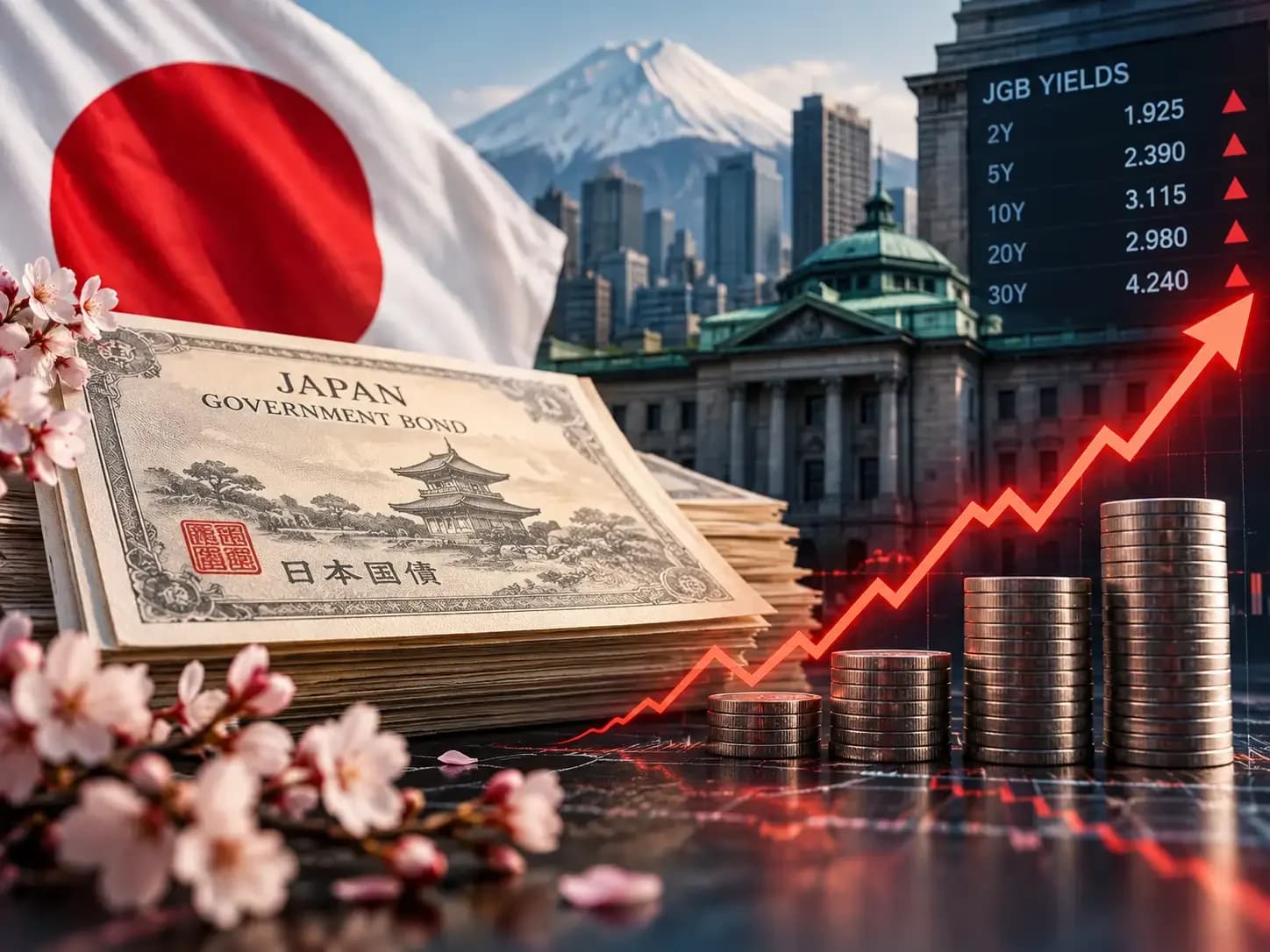
Japanese bond exchange traded funds have achieved a record $1.5 billion in net inflows in the year to date, according to data from Morningstar reported on Tuesday. This unprecedented surge represents nearly three times the $550 million collected during the whole of 2025, highlighting the dramatic shift in investor sentiment toward Japanese debt securities. The latest data from The Economic Times confirms that foreign investors, particularly in Europe, are increasingly willing to look beyond traditional US fixed-income markets as rising Japanese yields create more attractive investment opportunities.
The 10-year JGB yield climbed to 2.93% earlier this month, marking its highest level since the mid-1990s from 2.1% at the start of the year, according to The Economic Times. This represents a significant increase from just 0.1% at the start of 2022, as inflation has returned and the Bank of Japan has started raising rates. The rise in yields has pushed bond prices lower but has also given foreign investors meaningful income opportunities that Japan's debt market has lacked for years. BlackRock reported that its Europe-domiciled Japanese government bond ETFs attracted $1.4 billion in inflows this year, driven mainly by large wealth investors, compared to a $58 million outflow in 2025.
Foreign buying accelerated significantly in July with net inflows of $2.8 billion, marking the strongest monthly figure in more than a year, as reported by The Economic Times. BNY, the world's largest custodian bank, found that non-Japanese accounts invested $4.7 billion in JGBs this year. The interest reflects a broader shift as European investors are diversifying their portfolios, moving away from US dollar assets due to growing uncertainties surrounding the dollar's reliability as a safe haven. Once currency exposure is hedged, Japanese bonds can offer more appealing returns due to interest-rate differences between Japan and markets such as the US and Europe.
The JGB market is worth roughly $8 trillion, meaning this year's foreign inflows remain small relative to its overall size, according to The Economic Times. Investors are aware that the same forces making Japanese bonds more attractive could push yields even higher. Vanguard's Ales Koutny remains positioned for higher yields in shorter-dated JGBs, expecting the Bank of Japan may need to raise rates relatively sharply, while yields above 4% on 30-year bonds are beginning to look more compelling. The central bank's next meeting in September will be closely watched for a widely expected rate increase that could further reshape the Japanese bond market.