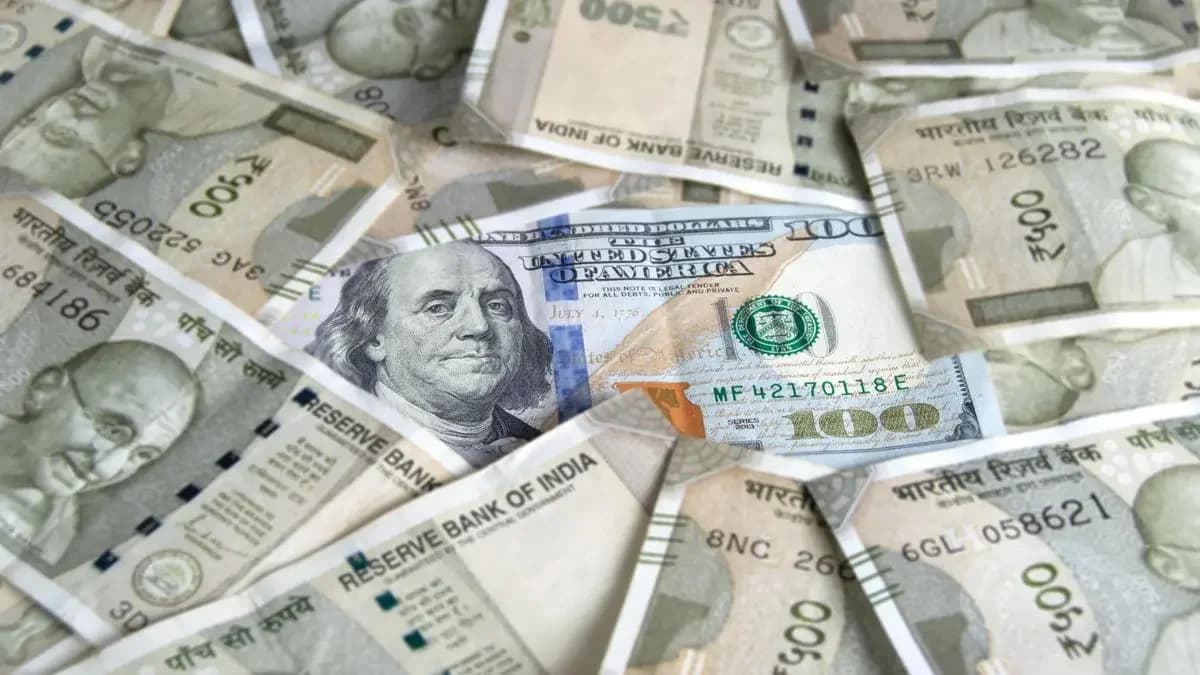
The rally in Indian government bonds is expected to lose momentum as hopes of inclusion in Bloomberg's Global Aggregate Index fade, with traders expecting yields to remain range-bound amid higher borrowing, interest rate uncertainty and crude oil price volatility. According to The Economic Times, the benchmark 10-year government bond yield closed at 6.84% on Thursday, with traders not expecting a similar rally to the 30 basis points decline seen in the June quarter. Vijay Sharma, senior executive vice-president at PNB Gilts, warned that "if this doesn't happen, we could witness a sell-off of 8-10 bps while an early announcement of a positive development on this front can make the yields soften by 3-4 bps." At current levels, inclusion in Bloomberg's Global Aggregate Index is priced into yields, with traders noting that if included, the upward bias may turn into an easing bias if crude oil prices remain around $70-80 per barrel.
Crude oil prices continue to surge as Brent eased on Friday but remained on track for a gain of more than 10% this week, after rising 16% and 5.4% over the previous two weeks. The oil rally is now putting significant pressure on the Indian rupee, which weakened to a two-month low of 96.5650 per dollar on Wednesday, having traded in the 94.50-94.60 per dollar range in mid-June. A trader with a state-run bank warned that "Indian bonds are starting to look vulnerable as higher oil prices threaten to revive inflation pressures and weaken the rupee. Unless crude cools meaningfully, yields may have more upside." Gopal Tripathi, head of treasury at Jana Small Finance Bank, agreed that "yields will move in a narrow range, but the bias would be upward. It will be difficult for yields to move below 6.60% levels, even if Indian bonds are included in the Bloomberg Index."
Foreign investors maintained their bond buying, albeit at a reduced pace, with demand shifting toward shorter-duration securities. As reported by HSBC's Soumya Mohanty, robust demand for bonds continued, while demand across the curve shifted towards the short end in July, with nearly 47% of total foreign purchases seen in bonds with up to five-year maturity. The 10-year U.S. Treasury yield hit 4.70%, its highest level since January 2025, as investors frontloaded bets on a rate hike from the Federal Reserve. The odds of a rate hike by the Fed in July rose to 30% from 13% last week, and for such an action in September stand at 80%, up from 58%. However, Axis Bank's chief financial officer Puneet Sharma noted during the post-earnings media call that "bond yields softened about 30 basis points in the June quarter tracking the oil price movement, but we expect some sobering effect on bond yields although there will be no sharp movement."

India's overnight index swap (OIS) rates jumped for the second week, reflecting the reaction to rising bond yields. The one-year swap rate ended at 5.98%, while the two-year rate closed at 6.19%, and the most liquid five-year rate jumped 11 bps to settle at 6.49%, after jumping 21 bps last week. The surge in swap rates occurred in tandem with bond yields, indicating broader market stress. Bargain buying and state-run bank bids continued to limit losses, with traders noting that bids from state-run banks likely cushioned the fall, after the 10-year yield didn't rise past 6.83% at open. The altered outlook on yields could change many equations for both borrowers and banks, which rely on the fixed income market for a substantial portion of their revenues, including trading and arranging sale of bonds.
Oil prices extended their rise as Brent crude futures rose for a fifth consecutive session, briefly approaching $99 a barrel in Asian trade, their highest level in seven weeks, as the widening conflict in the Middle East fuelled concerns over disruptions to global energy supplies. The rising attacks could further disrupt energy supplies, threatening to deepen the shortfall in global markets triggered by the closure of the Strait of Hormuz, which used to transit nearly a fifth of global supply before the war. India imports almost 90% of its crude oil requirement and is vulnerable to any supply shock, as higher crude prices can swell the import bill, push up inflation and pressure the rupee. MUFG warned that "Should oil prices remain elevated and concerns over fuel shortages persist, the spillover effects could be significant, particularly for energy-intensive industries and economies with large external energy needs."