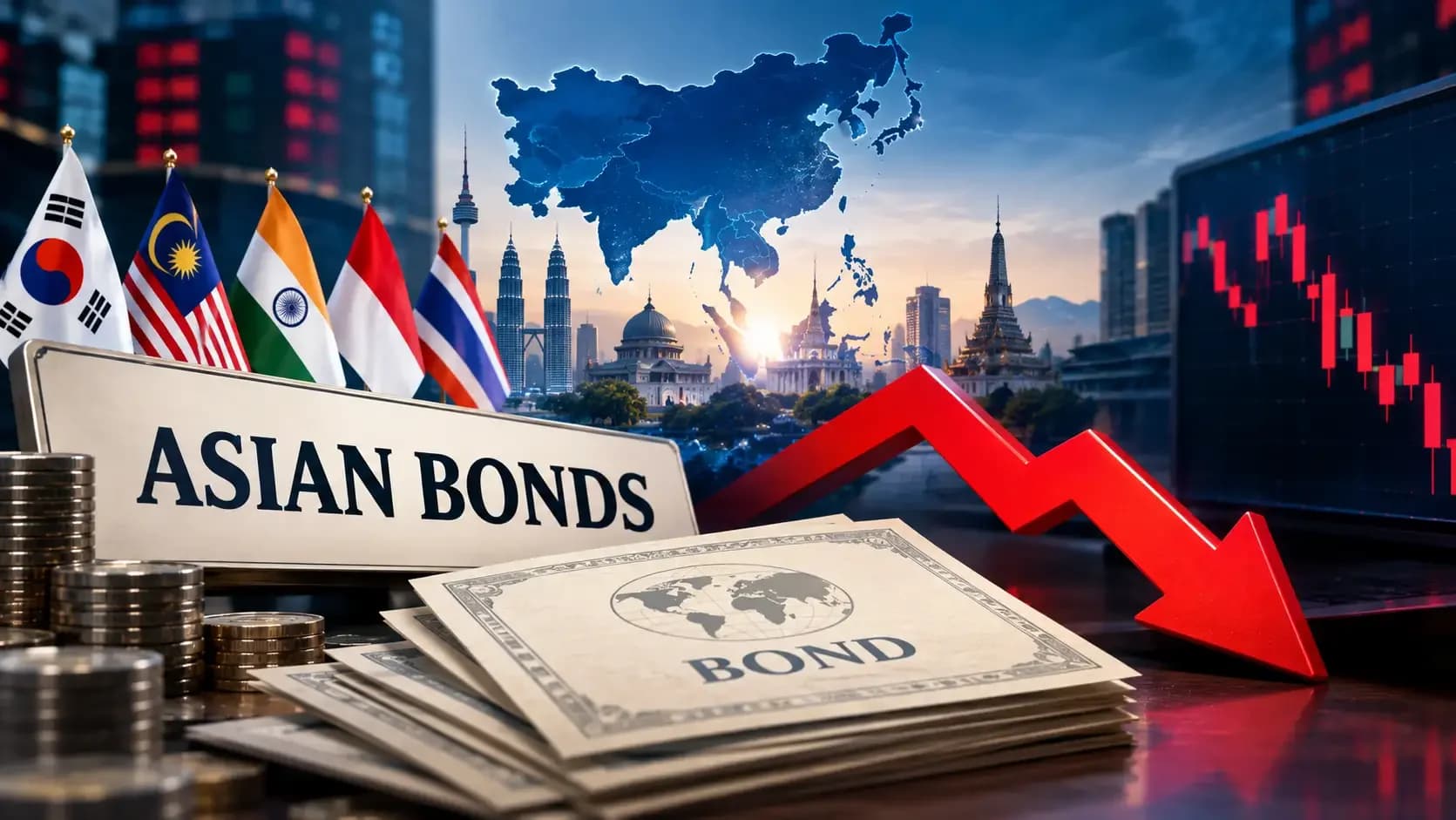
Foreign portfolio investors have reversed their investment strategy in Indian government bonds after an unprecedented buying spree earlier this year. According to The Economic Times, foreign investors sold ₹987 crore worth of government bonds since August, marking a sharp contrast to the robust net purchases of ₹49,355 crore recorded in June and July through the Fully Accessible Route (FAR). This reversal represents a significant shift in foreign investor sentiment toward Indian debt markets, reflecting the combined impact of persistently high global yields, Bloomberg's move to defer inclusion of local debt on a key gauge, and increasingly shortened odds on a rate hike.
Several factors have contributed to the reversal in foreign investment flows. As reported by The Economic Times, Abhishek Upadhyay, economist at ICICI Securities PD, attributed the outflows to rising global risk-free rates and AI-related flows being attracted to other countries. The economist noted that "it is very difficult to see inflows amid high crude prices" and that some investors are waiting on the sidelines for a rate hike before entering the market. Additionally, some investors are also waiting on the sidelines to enter the market after there is a rate hike.
A major setback occurred in late July when Bloomberg Index Services deferred the inclusion of local debt in its flagship Global Aggregate Index. According to The Economic Times, this decision affected flows significantly as the index is tracked by funds that collectively invest into about $70 trillion worth of debt worldwide. The deferral has made Indian bonds less attractive to global investors seeking diversified exposure across major markets, with higher yields in developed markets narrowing the differential with Indian rates.
Despite the recent outflows, market participants anticipate a period of largely neutral flows in the near future. As reported by The Economic Times, Dhiraj Nim, economist and FX strategist at ANZ Bank, stated that "it is difficult to imagine that debt inflows could surge unless there is some let-up in high global rates." The rupee has stabilized in FY27 after hitting historic lows of around 97 to a dollar in late May, providing some currency stability for investors. Market participants do not expect either a sharp surge in inflows or significant outflows, but rather a period of largely neutral flows, with any buying likely to come from global investors with dedicated India or broader Asia mandates.