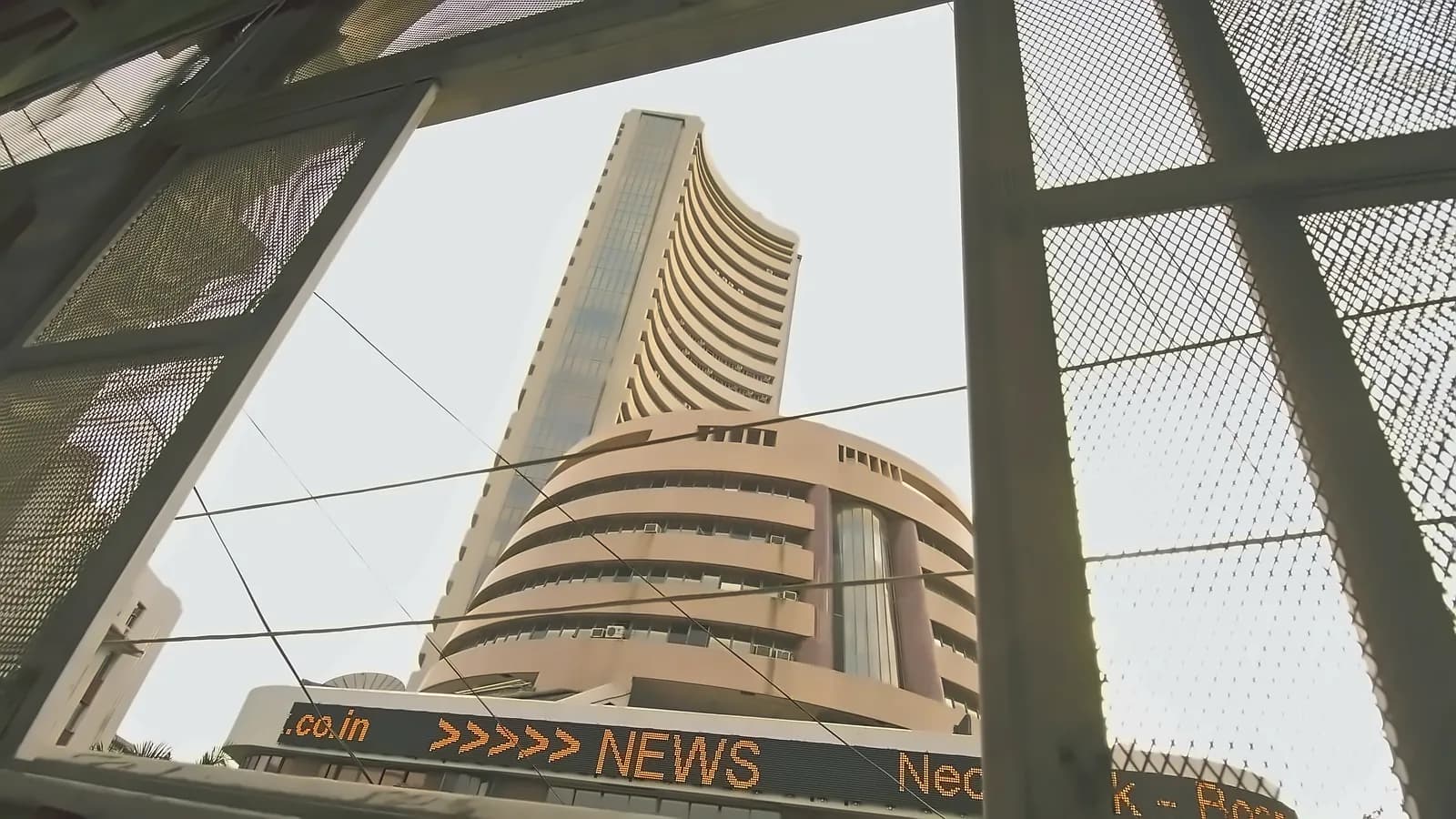
Indian equities suffered their steepest single-day decline in three months as rising crude prices, renewed Middle East tensions and weak global cues triggered broad-based selling. The BSE Sensex crashed 1,677.12 points to close at 76,503.60, while the Nifty 50 plunged 516.65 points to settle at 23,882.05. The sharp decline wiped out ₹9 lakh crore in investor wealth, with the total market capitalisation of BSE-listed companies declining to ₹471.55 lakh crore from ₹479.68 lakh crore in the previous session. According to Vinod Nair, Head of Research at Geojit Investments, sentiment turned decisively negative as renewed flare-ups in West Asia sent crude oil prices climbing, while inflationary worries resurfaced, pushing bond yields higher both at home and in the US. The heightened uncertainty was reflected in the Indian VIX, which surged more than 28%, signalling a sharp increase in market volatility and investor risk aversion.
Foreign investors' aggressive unwinding of interest rate hike positions has pushed India's five-year overnight index swap market to unprecedented levels. According to reports from Business Standard, turnover in the five-year swap jumped to a record ₹25,300 crore ($2.65 billion) on Wednesday, breaking past the ₹23,600 crore notional contracts recorded on Tuesday. The volume represents nearly three times the average daily volume so far this year, signalling a significant return of market confidence. The selling pressure was broad-based across sectoral indices, with the Nifty PSU Bank index declining 2.72%, Nifty Chemicals losing 2.67%, Nifty Cements falling 2.57%, and Nifty Financial Services Ex-Bank dropping 2.54%. Among broader indices, the Nifty 100 and Nifty 500 lost 2.07% and 1.97% respectively, while the Nifty Midcap 100 slipped 1.55% and the Nifty Smallcap 100 dropped 2.24%. The Nifty Oil & Gas segment fell the most at 2.23%, reflecting the impact of rising crude prices.
India's five-year OIS fell to a four-month low of 6.1% on Tuesday, only 10 basis points above where it was before the start of the Iran war. As reported by Business Standard, this represents a dramatic decline from the 6.9% level reached in April, when investors had factored in up to 125 basis points of rate increases. The Reserve Bank of India's recent measures to boost inflows and support the rupee have prompted a significant scaling back of expectations for monetary policy tightening. According to Ponmudi R, CEO of Enrich Money, the renewed escalation triggered a sharp rebound in crude oil prices, which surged nearly 7%, sending shockwaves across global financial markets and raising fresh concerns over global energy supplies. The Brent crude jumped 6.20% to $78.75 per barrel following the latest developments, while WTI crude rose 4.45% to $74.98 per barrel. Higher crude prices also revived fears of persistent inflation and the possibility of a more hawkish US Federal Reserve, further dampening global risk appetite.
According to Mandar Pitale, head of treasury at SBM Bank (India), some market participants had accumulated sizeable positions for a series of "front-loaded" rate hikes in quick succession on concerns over inflation and rupee weakness. As reported by Business Standard, these positions are being unwound aggressively, contributing to the record trading volumes. The unwinding reflects changing market sentiment as investors reassess monetary policy expectations. The sell-off spared very few stocks, with only Trent declining just 0.17% among Sensex constituents, followed by Infosys (-0.21%) and Titan (-0.34%). On the losing side, IndiGo plunged 5.02%, emerging as the biggest loser, followed by Maruti Suzuki (-4.11%) and Hindustan Unilever (-3.32%). The top losers were Asian Paints, ITC, IndiGo, Reliance, HUL and Bajaj Finance, among others, with barring Healthcare and Pharma, all other stock indices traded in loss. Even relatively defensive sectors such as healthcare and pharma ended lower, with Sun Pharma declining 0.75% and Tata Steel falling 0.87%.

The rupee, which fell to a record low of 96.96 per dollar on May 20, has risen 1.5% since then, though it has come under renewed pressure after US President Donald Trump said the ceasefire with Iran was "over." According to Duncan Tan, APAC rates strategist at HSBC, expectations of sizeable foreign-exchange inflows have improved sentiment toward the rupee, limiting the risk that currency volatility could push offshore OIS rates higher. The developments fuelled concerns over potential disruptions to oil supplies through the Strait of Hormuz, one of the world's most critical energy shipping routes. Following the escalation, Brent crude surged 6.20% to $78.75 a barrel, while WTI crude rose 4.45% to $74.98 a barrel. Higher crude prices also revived fears of persistent inflation and the possibility of a more hawkish US Federal Reserve, further dampening global risk appetite.