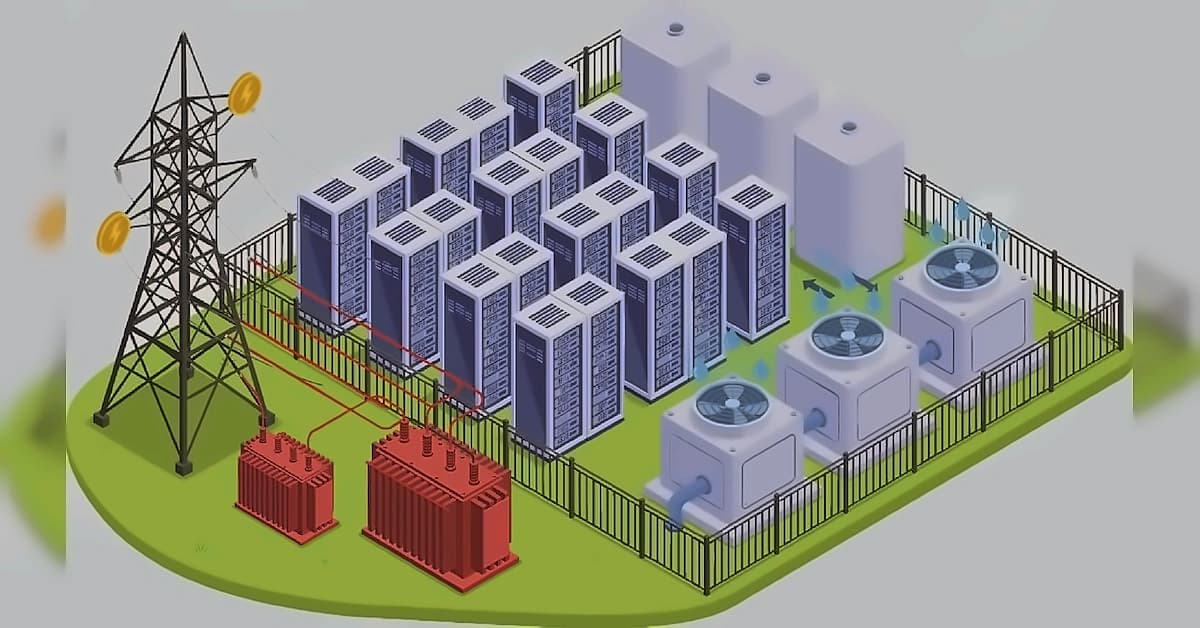
According to latest reports, Alphabet has raised its artificial intelligence infrastructure budget to $205 billion for the year, representing a significant increase from previous projections. The company's AI infrastructure budget will be directed toward servers, GPUs, CPUs, memory, custom chips called Tensor Processing Units (TPUs), data center construction, and networking gear. Roughly 60% of the company's recent capital outlays went into servers, while the remaining 40% funded facilities and connectivity infrastructure. This massive investment reflects the company's commitment to meeting accelerating AI workload demands and maintaining competitive positioning against rivals Amazon Web Services (AWS) and Microsoft Azure. As reported by industry analysts, the importance of Alphabet's rising capex is straightforward - without additional compute capacity, the company will struggle to convert the capacity agreements it has already secured into revenue, particularly as AI workloads are expanding faster than traditional cloud usage.
The AI infrastructure financing landscape has reached unprecedented levels with Nvidia teaming up with Apollo, BlackRock, Blackstone, Brookfield, Goldman Sachs, and KKR to establish financing platforms designed to mobilize more than $500 billion of third-party capital for AI infrastructure. Nvidia itself could backstop as much as $125 billion, or 25% of potential deals, representing an extraordinary number even by AI standards. The company argues that its compute is attractive collateral because the hardware is broadly adopted, can support different workloads and customers, and benefits from the CUDA software ecosystem. Goldman Sachs is already speaking with insurers, banks, money managers, and other investors about participating in this financing revolution. The structure would create an asset-backed market for AI compute, potentially allowing that debt to trade more like other financial securities, with Nvidia hardware forming part of the collateral supporting the financing.

On August 17, Alphabet engaged banks to arrange a potential inaugural Australian dollar bond issuance, as confirmed by ANZ Bank via email statement. The issuance may cover four tenors with a maximum maturity of 20 years, marking another move by US tech giants to enter credit markets to raise funds for AI investments. This follows Alphabet's recent $25 billion USD bond issuance and nearly $85 billion through equity financing earlier this month. Combined with the proposed Australian dollar bond plan, Alphabet's funding channels for AI capital expenditures are rapidly expanding from the US dollar market to a global multi-currency framework. As reported by Morgan Stanley, global AI-related bond issuance could reach nearly $570 billion by 2026, with Alphabet among the most aggressive issuers in this expanding market. The company's diversification into foreign currency markets reflects the massive scale of AI capital expenditure requirements, with hyperscalers now accounting for nearly 5% of the USD IG index compared to just 1.2% for the EUR IG market.
Google Cloud's backlog has reached a massive $514 billion, reflecting a surge in multiyear enterprise commitments for AI-powered solutions. As reported by Alphabet CEO Sundar Pichai, roughly 90% of the Fortune 100 now use the company's Gemini Enterprise model in some form, with customer acquisition doubling year over year. Existing clients are exceeding their original consumption commitments by more than 50%, demonstrating strong demand for AI-driven solutions. The company expects to recognize approximately half of its current cloud backlog as revenue over the next 24 months, providing valuable visibility to investors because it explains how a substantial portion of the infrastructure Alphabet is building today is effectively presold. This schedule provides crucial visibility into future revenue streams, with sales from the company's TPU-based systems expected to ramp sharply going into 2027, while the remainder of the backlog will flow through ancillary Google Cloud Platform services.
Despite the massive capex commitments, Alphabet maintains a strong financial position with more than $240 billion in cash and marketable securities on its balance sheet. The company's Google Cloud revenue accelerated 82% year over year in the second quarter, while the segment's operating margin expanded dramatically. This demonstrates that early returns on prior AI infrastructure spending are materializing, with the company generating both revenue and cash flow that justifies continued reinvestment in its AI ecosystem. Recent market analysis suggests Alphabet could be 20% undervalued based on its AI and cloud investments, with the stock trading around $345.9 compared to a fair value estimate of approximately $433 per share. The valuation gap reflects investor confidence that Alphabet's AI and cloud investments will support higher pricing than current market levels, with the company positioned as an innovation platform rather than just a traditional big tech stock. However, the rapid growth in AI-related issuance is creating new market dynamics, with 2026 year-to-date net supply of index eligible AI hyperscaler debt standing at $120 billion in USD and €22 billion in EUR markets respectively.