The US dollar index is consolidating just above two-week lows as market focus shifts to the upcoming Federal Reserve monetary policy meeting. The Federal Reserve is widely expected to leave policy rates unchanged at the June 16-17 FOMC meeting, with the meeting taking on heightened significance as Kevin Warsh presides over his first FOMC meeting as Chair. Markets are closely monitoring the undertone in Fed's communication under Warsh's regime, with the dollar currently quoting at 99.35 mark, up marginally on the day according to Business Standard.
US and Iranian officials announced on Sunday that they have agreed on a framework for a deal to end their war, halt the US blockade of Iran and reopen the Strait of Hormuz. This development has sent oil prices tumbling and boosted demand for riskier assets, with the US dollar sliding to a 10-day low against major peers. The agreement represents a significant shift in geopolitical dynamics that has fundamentally altered market expectations for both oil prices and currency movements. Iran has confirmed the agreement, with the official signing set to take place in Switzerland on Friday, according to latest reports. As per Investing.com India, after more than 100 days of war, markets finally have a framework to trade, though the next 60 days may prove just as important as Iran's nuclear program remains unresolved.
The US dollar index fell 0.31% to 99.492, marking the weakest level since June 5 and representing a significant decline from previous levels. This follows the substantial reduction in speculative positions, with large currency speculators having significantly reduced their net long positions to a net long position of 1,384 contracts in the data reported through June 9, 2026. The reduction of 2,374 net positions compared to the previous week, as reported by the Commodity Futures Trading Commission (CFTC), demonstrates the market's retreat from bullish dollar bets amid evolving geopolitical developments. The US Dollar Index (DXY) has gapped lower on the open to trade beneath the important support zone comprising the May uptrend and horizontal support at 99.51, with a clean break lower opening the door for a run towards the May 29 low of 98.75 and the confluence of the 50DMA, 100DMA and 200DMAs.
Brent crude futures hit fresh multi-month lows, falling into the low-$80 region for the first time since mid-April when another Strait of Hormuz reopening deal was flagged. The price has broken below the 100DMA and the 50% retracement of the Iran war high-low move late last week, approaching an important support level at $80. If it were to give way, the 200DMA just above $77 would be the next focal point, along with a gap that exists between $76 down to $73.55. Overhead, the 50% retracement of the Iran war move at $88.65 would be the first level to watch should we see some form of reversal. Brent crude futures dropped more than 4% to $83.82 following the peace deal framework announcement, with oil prices experiencing dramatic volatility as markets respond to the geopolitical developments. As per The Economic Times, while energy markets moved quickly to price out the immediate risk of prolonged supply disruptions, the path back to normal flows remains far from straightforward.
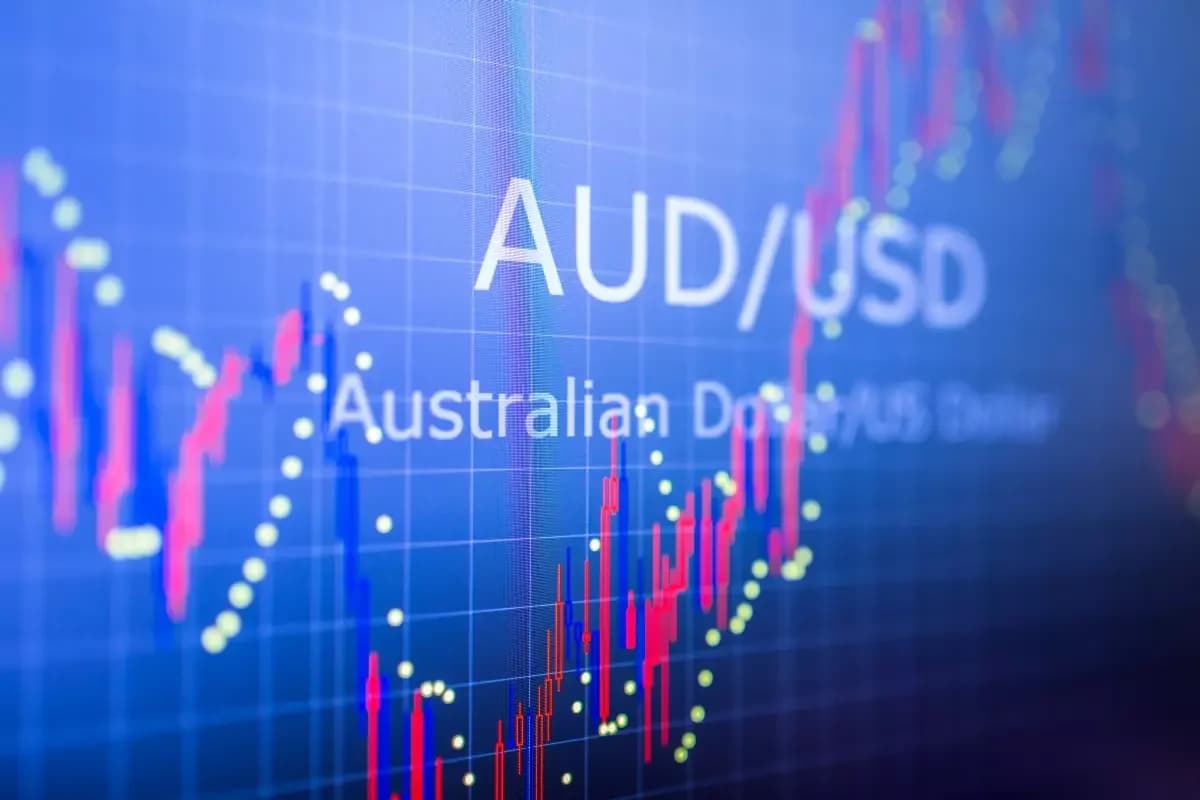
Risk-sensitive currencies have strengthened significantly following the peace deal announcement. The euro stood at $1.159, just below the 10-day high of $1.1622 it touched on Monday, while sterling strengthened 0.3% to $1.3413 in early trade on Tuesday. The Australian dollar fetched $0.7075, up 0.50%, and the kiwi was up 0.4% at $0.5854. The AUD/USD exchange rate has undergone a correction downwards from above 0.7200 to below 0.7000 against the USD, now trading higher at 0.7050. EUR/USD has pushed above a resistance zone comprising the 23.6% Fibonacci retracement of the January-March bear move and the May 21 low at 1.1577 on the open to test the uptrend running from the March lows. The currency market reaction was constrained compared to other parts of the market as investors awaited a flurry of central bank meetings this week, with the Bank of England and the US Federal Reserve also due later in the week.