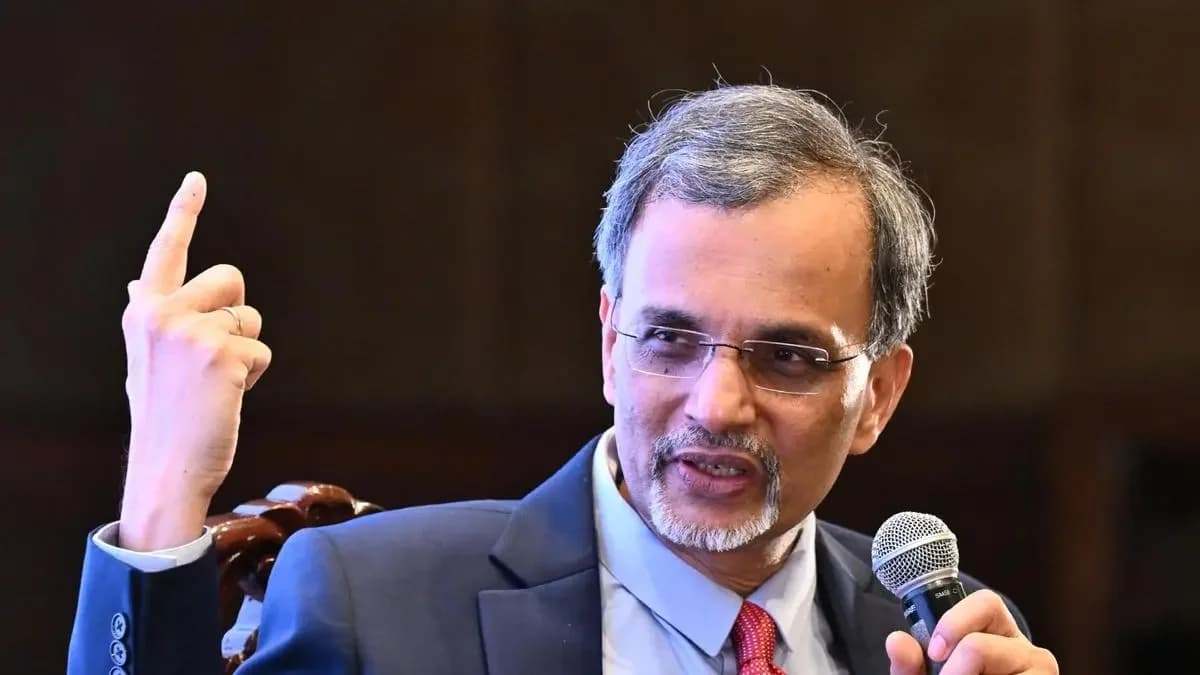
Former IMF chief economist Gita Gopinath has endorsed a flexible exchange rate approach for India, arguing that there is no argument for a wholesale approach to keeping the rupee unchanged and unmoving at this moment. Speaking to CNBC-TV18, Gopinath emphasized that exchange rates should be allowed to absorb shocks, particularly during periods of global uncertainty and external stress. She distinguished between preventing market dysfunction and trying to keep a currency fixed in the face of broader economic shocks, stating that 'My basic point is that there is no argument for a wholesale approach to keeping the rupee unchanged and unmoving at this moment.' Gopinath, who currently serves as professor at Harvard University, supports flexible exchange rates while recognizing that disorderly market conditions may occasionally justify limited intervention.
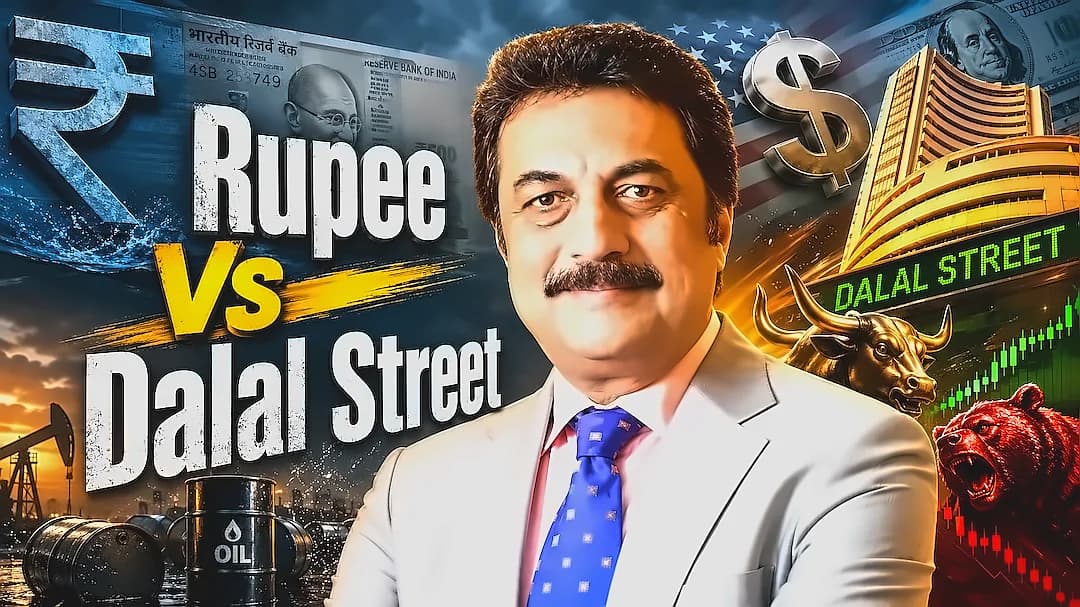
Foreign capital has been exiting India in substantial volumes over the past two fiscal years. According to a Jefferies India strategy note, total equity capital market-driven foreign outflows over FY25-26 reached $78 billion, split across FPIs, foreign private equity, and foreign promoters. FPI net equity outflows alone hit a record $21 billion in FY26 and remain negative into FY27. The consequence has been a steady hollowing out of India's capital account, with the surplus collapsing to just 0.5% of GDP over FY25-26, the lowest ever recorded and a sharp deterioration from the prior ten-year average of 2.6%.
Renowned economist Ajit Ranade highlights a paradoxical situation where the worst performing years for the rupee coincide with the best years for the RBI in terms of trading profits. As reported by The Wire, the RBI has been making record high profits from dollar sales, with trading profits reaching ₹2.9 trillion this year, up from previous record highs. These profits are being transferred to the Union government, creating what Ranade calls a perverse incentive for becoming a fiscal stabiliser. The RBI maintains it operates within an economic capital framework established by the Bimal Jalan committee in 2019, requiring it to keep only 6-7% of its balance sheet surplus above that threshold.
Gopinath's remarks come at a time when India faces pressure from higher oil prices and volatility linked to tensions in West Asia, raising questions over whether policymakers should use interest rates or direct intervention to support the rupee. According to CNBC-TV18, Gopinath warned that artificially supporting the currency could eventually discourage investors if they believe depreciation is unavoidable. She argued that 'If you artificially prop the currency up, then actually it can be self-defeating.' Instead, she advocated for letting the exchange rate play its role as a shock absorber, stating that 'Letting the exchange rate play its natural stabilising role is helpful.'
Gopinath rejected the idea that the RBI should raise interest rates solely to defend the currency, stating that 'At this moment, I don't think there's a reason to raise interest rates to protect the exchange rate.' She argued that higher borrowing costs could further weaken economic activity at a time when external shocks are already weighing on production and demand. According to CNBC-TV18, Gopinath said 'I don't think there's an argument for the RBI to raise interest rates right now, because that would slow the economy even further.' She emphasized that policy tightening should be considered only if inflation risks intensify significantly or inflation expectations become unanchored, adding that 'As of now, the RBI can very much wait and see over time.'
Looking ahead, the Jefferies note projects the FY27 balance-of-payments deficit at $70 billion with the rupee already down sharply against the dollar. Gopinath's approach aligns with veteran investor Shankar Sharma's assessment that 'Sensible forex policy is predictive and proactive. Otherwise, it is just hopeful astrology.' Her framework suggests that India faces a fundamental choice between allowing a stock market correction or accepting a currency crisis, with the current situation requiring 'a wholesale approach to keeping the rupee unchanged and unmoving at this moment' to be avoided. The policy implication is that India cannot afford to offer foreign capital fully convertible currency exits amid a massive balance of payments deficit.