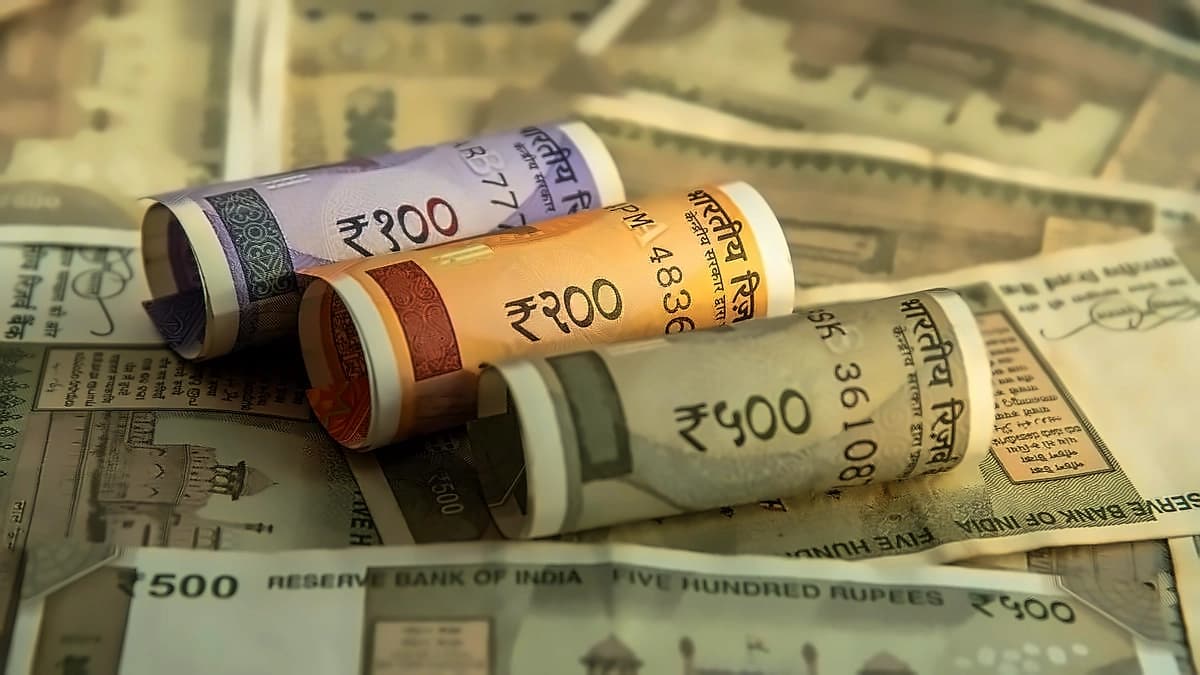
The Indian rupee held steady at 94.67 per dollar on Tuesday, nearly unchanged from its previous close of 94.6775, as retreating oil prices provided some relief while traders remained cautious about anticipated US Federal Reserve rate hikes. According to The Economic Times, the rupee has recovered from record low levels and steadied since policymakers rolled out measures to draw dollar inflows and oil prices cooled on signs of progress in US-Iran peace talks. However, the prospect of a hawkish Fed has injected fresh uncertainty into currency markets. Bank of America and Deutsche Bank now expect the Fed to raise rates this year on strength in the labour market and elevated inflation concerns, marking a departure from their prior forecasts of steady rates after the central bank kept rates unchanged in June.
Fed fund futures are pricing in a more than 70% chance of a 25-basis-point hike by September, creating headwinds for emerging market currencies like the rupee. As per The Economic Times, the prospect of higher interest rates in the world's largest economy poses challenges for the South Asian currency. However, traders and analysts are also closely watching for the scale of inflows that materialise out of policy measures to support the currency. DBS expects the next leg of gains in INR bonds and currency on a pickup in non-resident deposit and offshore borrowings, spurred by the concessional swap facilities. Nomura expects the measures to draw about $55 billion, while Axis Bank sees scope for around $100 billion in inflows.
Union Commerce and Industry Minister Piyush Goyal on Friday attributed the rupee's recent volatility to global developments rather than government intervention. Speaking in Mumbai while highlighting the Narendra Modi government's 12-year journey, Goyal said "The recent volatility at the international level, particularly over the last three to four months, has had an impact, which led to some depreciation of the rupee. However, if you look at the last few days, since talks of a ceasefire began, the rupee has started to strengthen again." According to IANS, Goyal emphasized that improving international conditions have helped restore confidence in financial markets, contributing to the rupee's recent gains. The minister highlighted that India's economy expanded by 7.7% at constant prices last year, placing it among the fastest-growing major economies globally, crediting the government's focus on infrastructure development, economic reforms and welfare initiatives for helping sustain growth despite global uncertainty.
The rupee's recovery was primarily driven by optimism surrounding trade negotiations between India and the United States. As reported by PTI, Indian Foreign Secretary Vikram Misri stated that trade was a major subject of discussion between Prime Minister Narendra Modi and US President Donald Trump, with both leaders directing their negotiators to finalise the proposed trade pact at the earliest. Misri noted significant progress has been achieved on the interim trade pact, with US Trade Representative Jamieson Greer scheduled to visit India next week to advance the discussions. Misri's comments came following high-level talks between Modi and Trump on the sidelines of the G7 Summit, marking their first wide-range discussions in 16 months aimed at rebuilding strained bilateral ties. Market participants said expectations of a breakthrough in trade discussions between New Delhi and Washington have provided fresh support to the rupee.
Asian stocks were under pressure on Tuesday, with Korean stocks slumping nearly 10% and dragging MSCI's gauge of regional stocks lower by over 3%. According to The Economic Times, Indian equities were down a more modest 0.3%. The majority of Asian currencies traded lower against the US dollar, reflecting cautious risk sentiment across the region. The Philippine Peso emerged as the worst performer, slipping 0.315 percent, followed by the Indonesian Rupiah, which declined 0.219 percent. The Chinese Renminbi also weakened by 0.117 percent, while the South Korean Won and Thai Baht fell 0.075 percent and 0.055 percent, respectively. Among the relatively stable currencies, the Japanese Yen was nearly unchanged with a marginal decline of 0.006 percent.