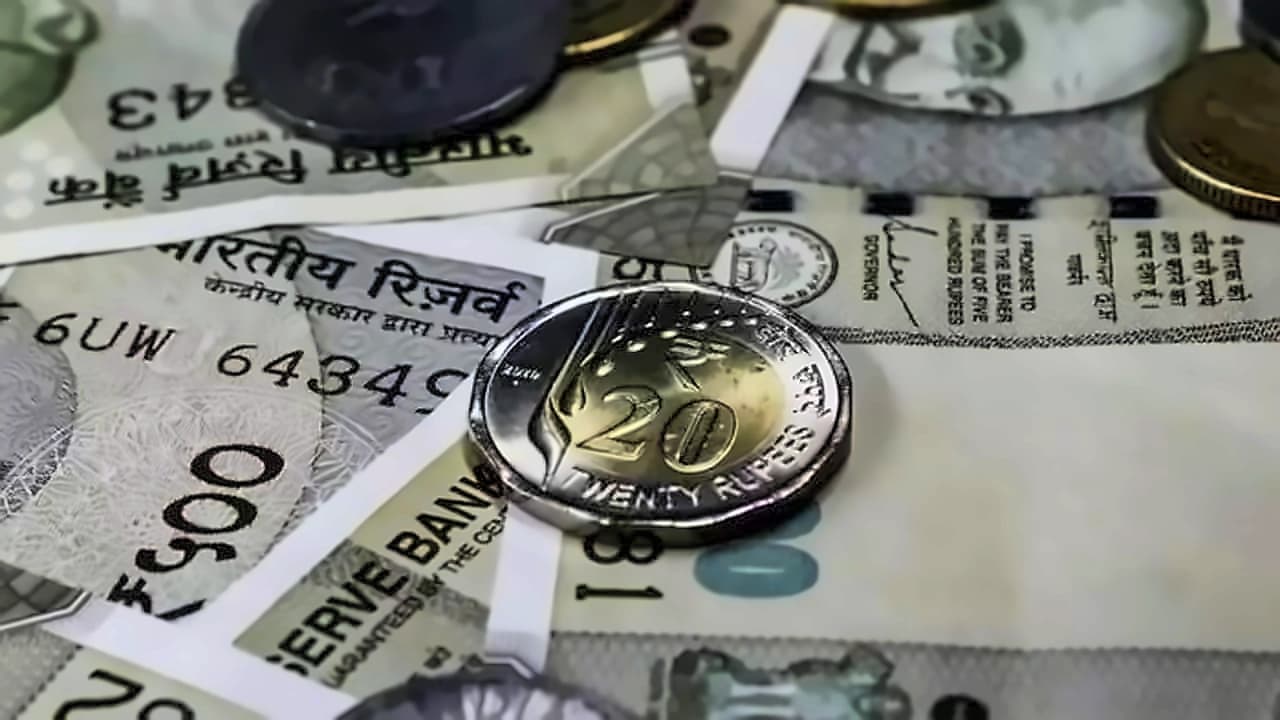
The Indian Rupee is expected to weaken towards 98 against the US dollar over the next few months as higher oil prices, sticky inflation and rising US bond yields continue to pressure emerging market currencies. According to BofA Securities Head of Global EM Fixed Income Strategy David Hauner, the near-term environment remains difficult for emerging markets despite a positive long-term outlook. Elevated energy prices are likely to keep inflation pressures high for longer, even if geopolitical tensions ease quickly, as rebuilding global energy inventories and easing supply chain disruptions will take time. Hauner noted that in the short term, meaning for the next several months, there will be higher rate volatility and expects the short end of the US yield curve to move higher, which could keep the dollar strong globally.
The Reserve Bank of India is approaching its June meeting with a 'dilemma of whether to respond to market pressures or incoming data', as noted by BofA Global Research chief India economist Rahul Bajoria. Nearly 80% of 56 economists in a Reuters poll expect the central bank to keep the repo rate unchanged at 5.25%, while the remaining respondents forecast either a 25 basis-point hike or a larger 50 basis-point increase. The central bank's key policy rate has remained unchanged since December, following 125 basis points of rate cuts last year. However, interest rate swaps are pricing in nearly 100 basis points of tightening over the next 12 months, with the one-year OIS rate moving higher by 65 basis points since March, according to Business Standard.
The Reserve Bank of India confirmed in its annual report released on Friday that the Indian rupee weakened nearly 10% in FY26 due to multiple economic pressures. According to The Economic Times, the RBI noted that trade-related uncertainties, a widening merchandise trade deficit, the outbreak of the Iran–US conflict, and persistent FII outflows weighed on the currency. The central bank's annual report highlighted that in the first half of FY2025-26, the rupee initially strengthened amid a softening US Dollar Index and the suspension of reciprocal tariffs by the US, hitting a yearly high of ₹83.75 against the dollar on May 2, 2025. However, the currency soon came under pressure as border tensions flared, tariff concerns resurfaced, and FPI outflows intensified in the equity segment, with the rupee declining 3.8% to close at 88.79 against the US dollar by the end of H1 FY26. The sharp decline worsened in the second half amid multiple headwinds, with the rupee dropping over 6% to close at 94.83 against the US dollar.

The Reserve Bank of India is expected to keep policy rates unchanged at its upcoming Monetary Policy Committee meeting, but economists believe policymakers may adopt a more cautious tone due to rising oil prices and a weaker rupee. According to HSBC's chief India economist Pranjul Bhandari, the RBI's communication may turn more hawkish as rising oil prices and a weaker rupee complicate the inflation outlook. At its previous review, the central bank used a baseline oil assumption of about $85 a barrel and an alternative scenario of $95. Bhandari now believes that the higher oil assumption will be the RBI's base case, which would push inflation projections higher closer to 5% from the earlier projection of 4.6%. She warned that elevated oil prices and a possible El Nino could act as headwinds for growth, inflation control, the fiscal deficit and the current account. A recent report from CareEdge Ratings said inflationary concerns have intensified due to projected below-normal monsoon and recent retail fuel price hikes.
The central bank is expected to revise its consumer inflation and growth projections at the upcoming meeting, which it had pegged in April at 4.6% and 6.9% respectively for the fiscal year to March 2027. According to Business Standard, many economists predict higher inflation and lower growth, with Citi tipping inflation to accelerate towards 4.9% and growth to slow to 6.6%. This revision is attributed to both higher oil prices and a weaker monsoon, with forecasts for the lowest rainfall in 11 years raising concerns about sharply higher food costs. As per CareEdge Ratings, a sharp rise in WPI inflation also raises the risk of a faster second-round pass-through to consumer prices, with the current uptick being a supply shock and not demand driven. The report projects FY27 GDP growth at 6.7% assuming crude oil averaging USD 90/bbl, but warns that prolonged conflict and oil prices around $110/bbl could lower growth closer to 6%. Confronted with an unusually high degree of uncertainty and a wide range of possible inflation outcomes, the RBI may have limited scope to deliver a preemptive rate hike, said Citi's chief India economist Samiran Chakraborty.