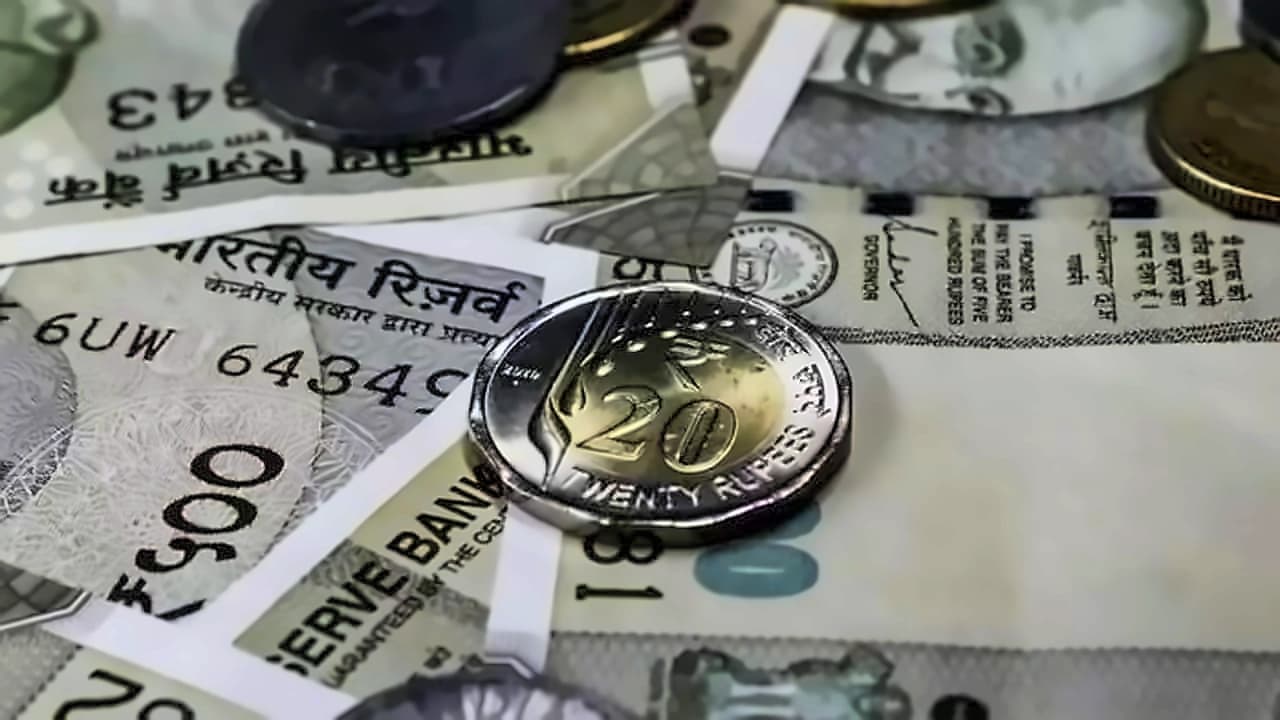
The Indian rupee opened lower at ₹95.71 per dollar on Wednesday, August 19, compared with Tuesday's close of ₹95.68, marking a decline of 3 paise as reported by CNBC TV18. The currency is showing reasonable resilience despite the oil shock, largely because of suspected continued RBI intervention, according to Finrex. The Reserve Bank of India is expected to protect a certain level possibly for the whole day at say ₹95.80, with traders noting that the intervention anchored the currency even as its Asian peers slipped. The rupee, rupiah and peso triplet is seen as among the most vulnerable to energy price shocks due to sizeable energy imports, making the RBI's intervention particularly crucial. The currency had already lost 19 paise in the previous session, with the rupee opening lower as oil prices rose with the US and Iran remaining at odds over the Strait of Hormuz and there was no progress on a peace deal, with Brent crude rising above $90 per barrel and the reopening of the Strait of Hormuz remaining unresolved. The currency market was also affected by concerns over dollar inflows after the Reserve Bank closed the concessional FCN (B) forex-swap facility earlier than expected, with traders noting that there are some jitters since the central bank in the first week of August had said there is no proposal to curtail the scheme, but has since done the same. A currency trader at a private-sector bank said the rupee is facing pressure from multiple fronts, with underlying dollar demand remaining very high, as reported by CNBC TV18.
Rising bond yields emerged as a significant pain point as the 30-year US Treasury yield climbed to its highest level since 2007, with analysts at ING noting that "a big sell-off in the long-end of the Treasury market is typically bad news for emerging market currencies and risk in general. We are not quite at that point yet, but a further rise in yields may increase the pressure on the U.S. Federal Reserve to act." Indian government bond yields also rose, with the yield on the 10-year note up 2 basis points at 6.827%, while local stocks slipped about 0.3%, tracking weakness in regional equities. The focus will now be on the release of the minutes of the Indian central bank's August policy meeting, due on Wednesday, adding to market uncertainty. The US 10-year Treasury yield remained elevated, contributing to the overall pressure on emerging market currencies. Higher crude prices are also fuelling inflation concerns and pushing US Treasury yields higher, with the combination of high crude prices, elevated US yields and strong dollar demand remaining a key near-term risk for the rupee.
Brent crude oil futures were trading higher by 0.01% at $92 per barrel in futures trade, with investors monitoring fading expectations of a U.S.-Iran peace breakthrough and slower tanker traffic through the Strait of Hormuz, a key global energy artery, as reported by CNBC TV18. Oil prices rose for a fourth straight session amid continued uncertainty over the Strait of Hormuz, a key route for global oil shipments. US President Donald Trump said on Tuesday (August 18) that no talks were taking place with Iran and maintained that the strait was open, while Iran said the critical waterway remained closed to shipping, according to Reuters. Forex traders said the higher crude prices were increasing demand for dollars linked to oil payments, as reported by The Times of India. With Brent crude rising above $90 per barrel and the reopening of the Strait of Hormuz remaining unresolved, oil prices will remain a key monitorable for the rupee, inflation and foreign flows, said Siddhartha Khemka – Head of Research, Wealth Management, Motilal Oswal Financial Services Ltd. The rise in crude, in turn, contributed to the increase in US Treasury yields, with the 30-year US Treasury yield rising to its highest level in more than two decades, as reported by Reuters. Oil prices are facing slight selling pressure in the past two days after posting a fresh weekly high at ₹8,075 on Tuesday, as reported by TD Securities. However, the restricted energy supply due to the closure of the Strait of Hormuz and the Bab al-Mandab Strait, which together account for almost 27% of global energy supply, could result in a resumption of the oil price rally.
The rupee's decline to ₹95.71 comes amid rising crude oil prices and US bond yields adding pressure on the currency, as noted by LiveMint. On the domestic equity market front, Sensex tanked 492.70 points to settle at 77,235.46, while the Nifty fell 132.75 points to close at 24,154.90, according to Business Standard. Foreign institutional investors offloaded equities worth ₹2,535.10 crore on a net basis on Monday, their highest selling in three weeks, according to exchange data reported by Business Standard. The currency came under additional pressure after the RBI advanced by a month the deadline for its discounted foreign-currency swap facility for deposits raised from non-resident Indians, with the move having weighed on near-term sentiment towards the currency. The weaker rupee at ₹95.71 raises the landed cost of every barrel of crude, directly feeding into fuel bills for importers and oil marketing companies, according to EcoNiti Daily Brief. Meanwhile, exporters benefit from a softer rupee on dollar-earned revenue, though this benefit is muted when input costs are rising. The dollar index, which gauges the greenback's strength against a basket of six currencies, was trading at 99.60, down 0.04%, providing some relief to emerging market currencies. State-run banks were seen offering dollars on Wednesday (August 19) morning, which traders said was likely on behalf of the RBI, with the central bank's intervention helping limit the rupee's fall and contain volatility, allowing the currency to adjust to the pressure in a more orderly manner.
Asian currencies traded mixed against the US dollar on Wednesday, with the Indonesian rupiah declining 0.358%, followed by the Philippine peso, which slipped 0.30%, while the Thai baht fell 0.193%, as reported by Moneycontrol. The Malaysian ringgit weakened 0.16%, while the Taiwan dollar, Singapore dollar and Chinese renminbi eased 0.075%, 0.055% and 0.05% respectively. On the positive side, the South Korean won gained 0.218%, while the Japanese yen edged up 0.082% against the previous close. The U.S. dollar drifted near multi-month lows against major peers on Wednesday as Treasury yields eased from recent highs, with investors awaiting minutes of the Federal Reserve's latest policy meeting for clues on the path of interest rates, according to Moneycontrol. The rupee's resilience despite the oil shock is largely attributed to suspected continued RBI intervention, with the central bank expected to protect certain levels possibly for the whole day at say ₹95.80, as noted by Finrex.
BMI Research expects the Indian rupee to weaken to ₹97 per US dollar by the end of FY2026-27 (April 2026 to March 2027) and to ₹99 per dollar by FY2027-28, representing a substantial decline from the current level of ₹95.61, as reported by The Hindu BusinessLine. The research firm attributes this outlook to elevated energy prices, global risk aversion and less favourable interest-rate differentials, while noting that government measures to attract foreign capital should help contain the pace of depreciation. The currency has already weakened by about 4 per cent since the start of the US-Iran conflict, with higher energy prices and a broader risk-off environment weighing on the rupee. BMI expects a lasting resolution to the US-Iran conflict, which should ease some pressure later in the fiscal year. The firm's global team assigns a 35 per cent probability to a US-Iran escalation scenario, which could push oil prices higher and intensify global risk aversion. Currency traders noted that the rupee looks vulnerable to rising oil prices which have remained close to $92 and have now risen above $91 per barrel, with the RBI potentially protecting near 95.61 levels on Monday and potentially 95.75 today but allowing depreciation to continue in view of rising oil prices and consistent demand from oil companies, as per Anil Kumar Bhansali, Head of Treasury and Executive Director, Finrex Treasury Advisors LLP.