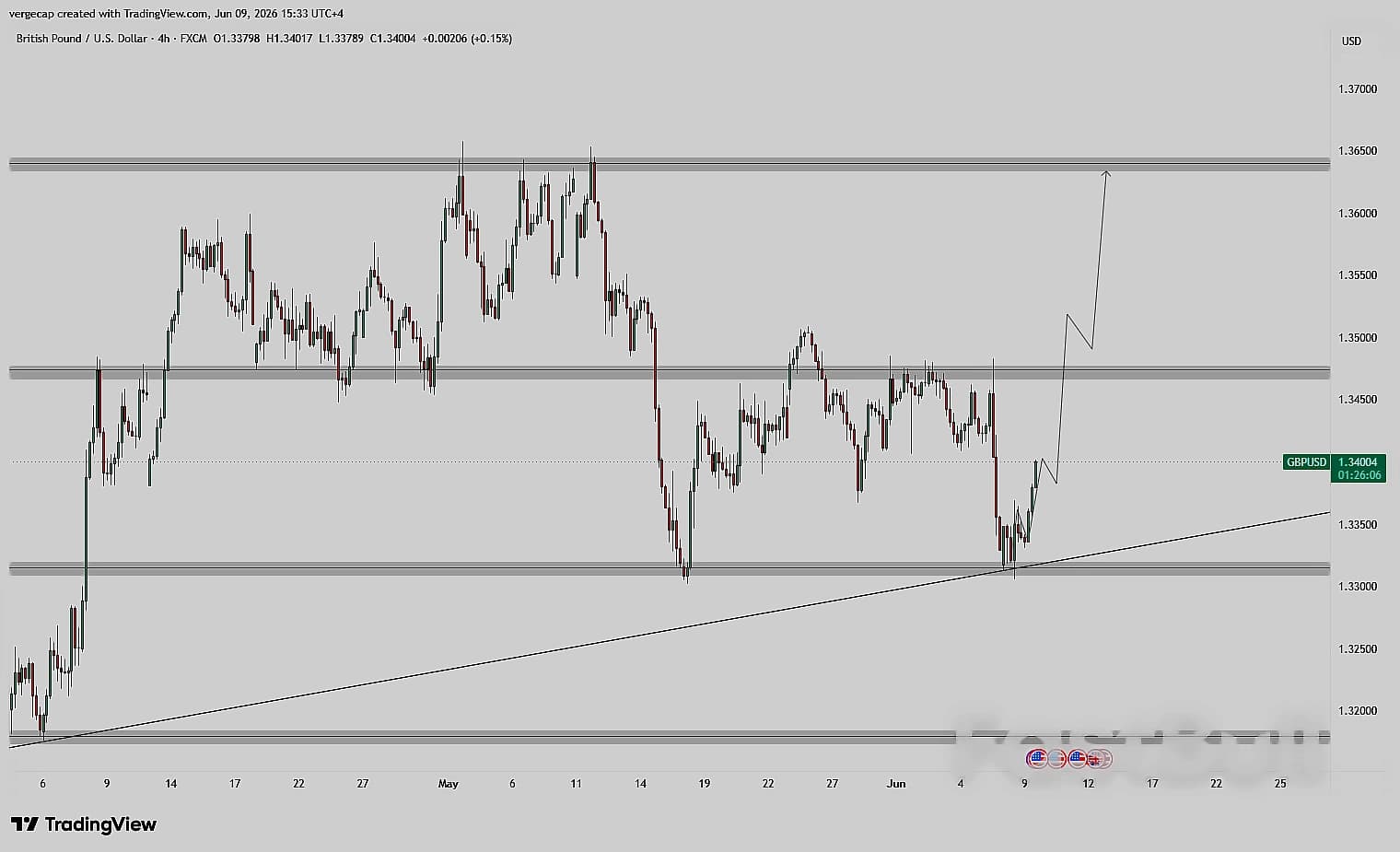
The British Pound has shifted from pressure-building to confirmed downside after last week's fall, with negative momentum still intact according to latest technical analysis. The currency has gained ground from the 1.3365-1.3370 levels as markets position ahead of key economic data releases, but sterling has shifted from pressure-building to confirmed downside with technical indicators showing bearish signals. The 1.3483 100-DMA and 1.3499 30-DMA have flipped into overhead supply, while 1.3322/23 marked the key lower technical area that was probed during recent sessions. Recovery needs a move back through 1.3390/1.3400 before the breakdown looks less secure, with technical analysts preferring to fade failed rebounds rather than chase the session low. However, if GBP/USD breaks below 1.33, the recent pullback starts to look less like a simple post-jobs-report reset and more like a deeper slide. The 1.32—the bottom of the broader six-month range—would likely become the next area traders watch in such a scenario.
The Confederation of British Industry made significant revisions to its economic outlook on Tuesday, as reported by Business Standard. The organization trimmed its UK growth forecasts while sharply revising inflation expectations upwards due to ongoing war conditions in the Middle East. The CBI now expects GDP to grow by 1.1% in 2026 and 0.9% in 2027, representing a downward revision from its previous December predictions of 1.3% growth for 2026 and 1.5% for 2027. The Bank of England's interest rate path has reversed significantly since the US-Iran war began, with markets now projecting a 25 basis point rate hike before December, a dramatic shift from earlier expectations of two rate cuts to 3.25%. However, UK Prime Minister Keir Starmer's authority remains severely shaken following the resignations of junior ministers, creating additional headwinds for the currency despite expectations for at least one 25-basis-point rate hike by the Bank of England by year-end 2026.
Market participants are now factoring in expectations of a Fed rate increase by the end of this year, amid concerns that war-related increases in energy prices could re-ignite inflation pressures. The USD bulls seem hesitant ahead of the US Consumer Price Index (CPI) report, due later today, which will play a key role in influencing market expectations about the US Federal Reserve's future policy path. The US CPI inflation report will be closely watched as it could give some hints about the US interest rate path. If the reports show hotter-than-expected outcomes, this could lead traders to price in a higher probability of the Federal Reserve raising interest rates, which would provide some support to the USD against the GBP. The Fed is expected to hold, but the decision itself is likely to matter less than the tone around it. May's strong jobs report gives policymakers less reason to sound dovish, especially with inflation still sticky. If the Fed signals that a near-term rate hike is on the table, the dollar could remain supported for more than just safe-haven reasons.
The latest developments have intensified geopolitical tensions as US military launched strikes against Iran, as ordered by President Trump, in retaliation for the shooting down of an American helicopter gunship near the Strait of Hormuz. Iran's Foreign Minister Abbas Araghchi warned the US to leave the region or face consequences, and said that Iran's armed forces would not leave any attack or threat unanswered. Iran's Foreign Minister Abbas Araghchi on Wednesday warned that its neighbors in the Gulf have a "legal and moral responsibility" to prevent American and Israeli strikes. This escalation adds to the existing geopolitical uncertainties that are acting as headwinds for the GBP/USD pair, with the potential upside for the British Pound being limited as renewed tensions in the Middle East weigh on the riskier assets. The dollar move is cross-pair, but EUR/USD is close to option-supported lows, with analysts preferring to sell failed rebounds below 1.1640/65 rather than chasing dips into 1.1600.
From a technical perspective, the pair's overnight failure near the 1.3400 mark, ahead of a technically significant 200-day Simple Moving Average, is prompting caution among traders. The failure near this resistance band is discouraging aggressive positioning for further upside in GBP/USD at this stage. Support is being watched around 1.3285/90 and 1.3250, with resistance clustered around 1.3350/60 and 1.3390/1.3400. The retail exposure is tilted long, which can add downside pressure if rebounds keep failing below 1.3400. The sterling-negative story has already paid, but longs remain exposed if cable cannot reclaim 1.3390/1.3400, with the broader dollar strength, risk aversion, and UK political concerns continuing to weigh on the currency. Reclaiming 1.3400 would be the first sign that sterling is trying to steady itself after the recent slide, but the more important test may come closer to 1.35, where a move back above would do more to suggest the pound is rebuilding momentum.