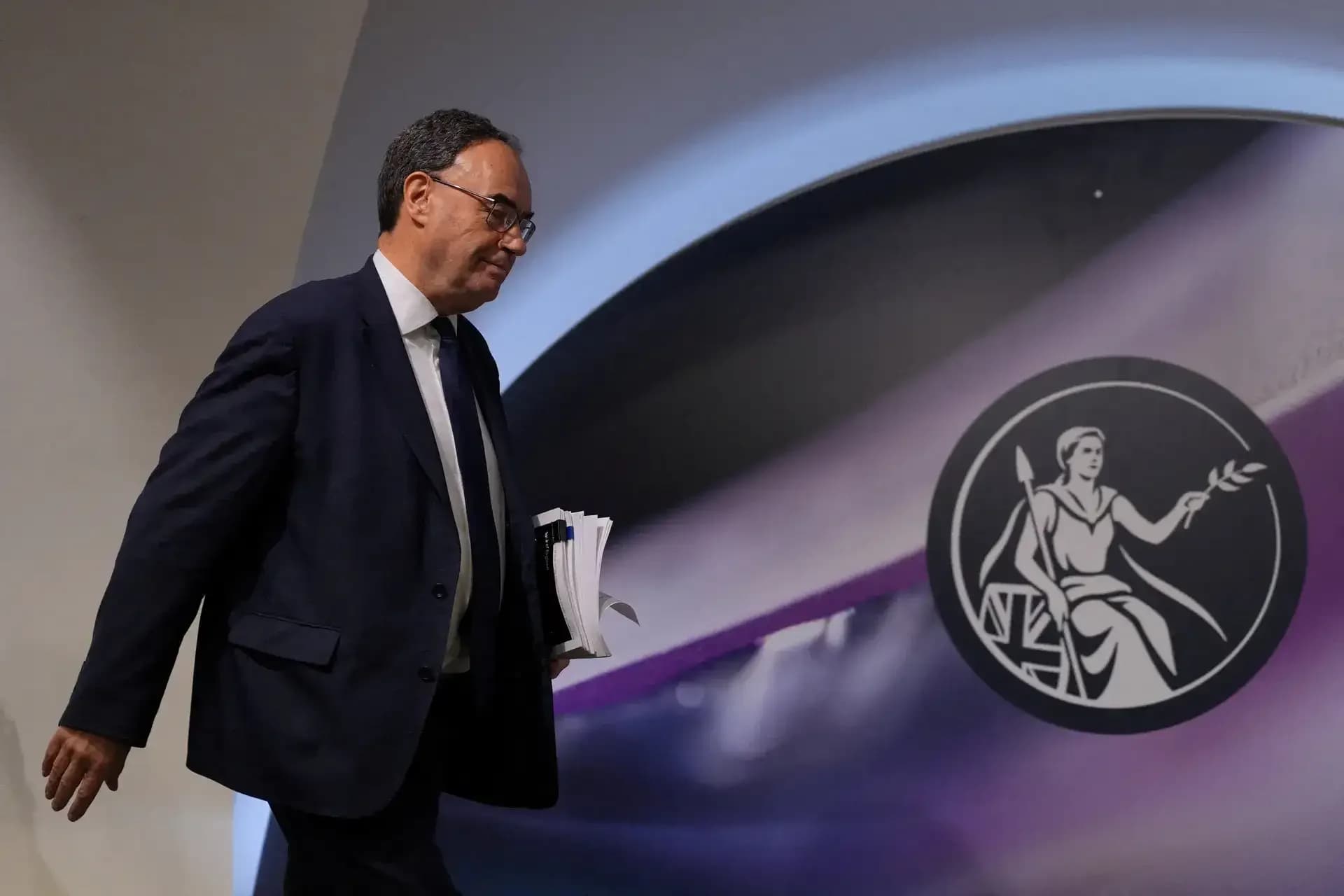
GBP/USD has fallen to a two-month low following the Bank of England's decision to hold interest rates at 3.75%, as reported by Investing.com India. The currency decline was compounded by Andy Burnham's victory in the Makerfield by-election, which could strengthen his position ahead of any future Labour leadership contest. The BoE's cautious stance contrasts with recent rate hikes by the ECB and BOJ, while the Federal Reserve maintained its hawkish tilt earlier this week. According to Investing.com Australia, GBP/USD has broken below its symmetrical triangle pattern, falling to support at 1.3200, a key 2026 low, with sellers looking for a break below this level to expose 1.3000.

According to Investing.com India, the Bank of England cited uncertainty surrounding the inflation outlook as justification for maintaining current rates. Inflation data was softer than expected, with CPI unchanged at 2.8% year-on-year in May, while the BoE lowered its 2026 inflation forecast to 3.2% from 3.6%. This development raises doubts over whether policymakers will need to raise rates at all this year, creating additional pressure on sterling investors who had been pricing in potential rate hikes. The BoE's Monetary Policy Committee stated Thursday that "monetary policy cannot affect global energy prices" and emphasized their role to "make sure that higher inflation does not persist and have long-lasting effects on the economy."
As reported by Investing.com India, markets have expressed concerns that a Burnham-led government could favour higher public spending at a time when the UK's fiscal position is already under scrutiny. Public sector net borrowing rose to £23.3 billion in May, above expectations of £18.9 billion and around £7 billion ahead of the OBR's forecast for the year to date. Gilt yields moved higher following the borrowing data and election results, though the reaction has been relatively contained after Burnham reiterated his commitment to the government's fiscal rules. Further clarity around spending plans and growth policies could help reassure bond markets in the weeks ahead.
According to Investing.com India, crude oil is rising back above $77 per barrel on Friday amid growing concerns over the durability of the U.S.-Iran peace process. Planned talks between the U.S. and Iran in Switzerland were cancelled, while Israel continued strikes against Hezbollah targets in Lebanon. However, oil prices sank on Thursday after President Trump and his Iranian counterpart signed a memorandum of understanding overnight, accelerating the previously planned Friday timing. Brent crude futures fell to trade just barely above $78 per barrel, while US WTI crude held at $74. Despite recent price recovery, oil remains on track for weekly losses of around 9% as investors continue to price in the reopening of the Strait of Hormuz and improving supply conditions.
As reported by Investing.com India, GBP/USD has broken below its symmetrical triangle pattern, falling to support at 1.3200, a key 2026 low. For oil, the commodity has broken below its symmetrical triangle pattern and fallen to support at the 200-day SMA. Looking ahead, attention will turn to next week's U.S. core PCE inflation data for further clues over whether the Federal Reserve could raise rates later this year, while markets continue monitoring developments surrounding the U.S.-Iran truce and the 60-day window for negotiations over Iran's nuclear programme. For GBP/USD, any recovery would need to reclaim 1.3330 before bringing the 200-day SMA at 1.3410 into focus.