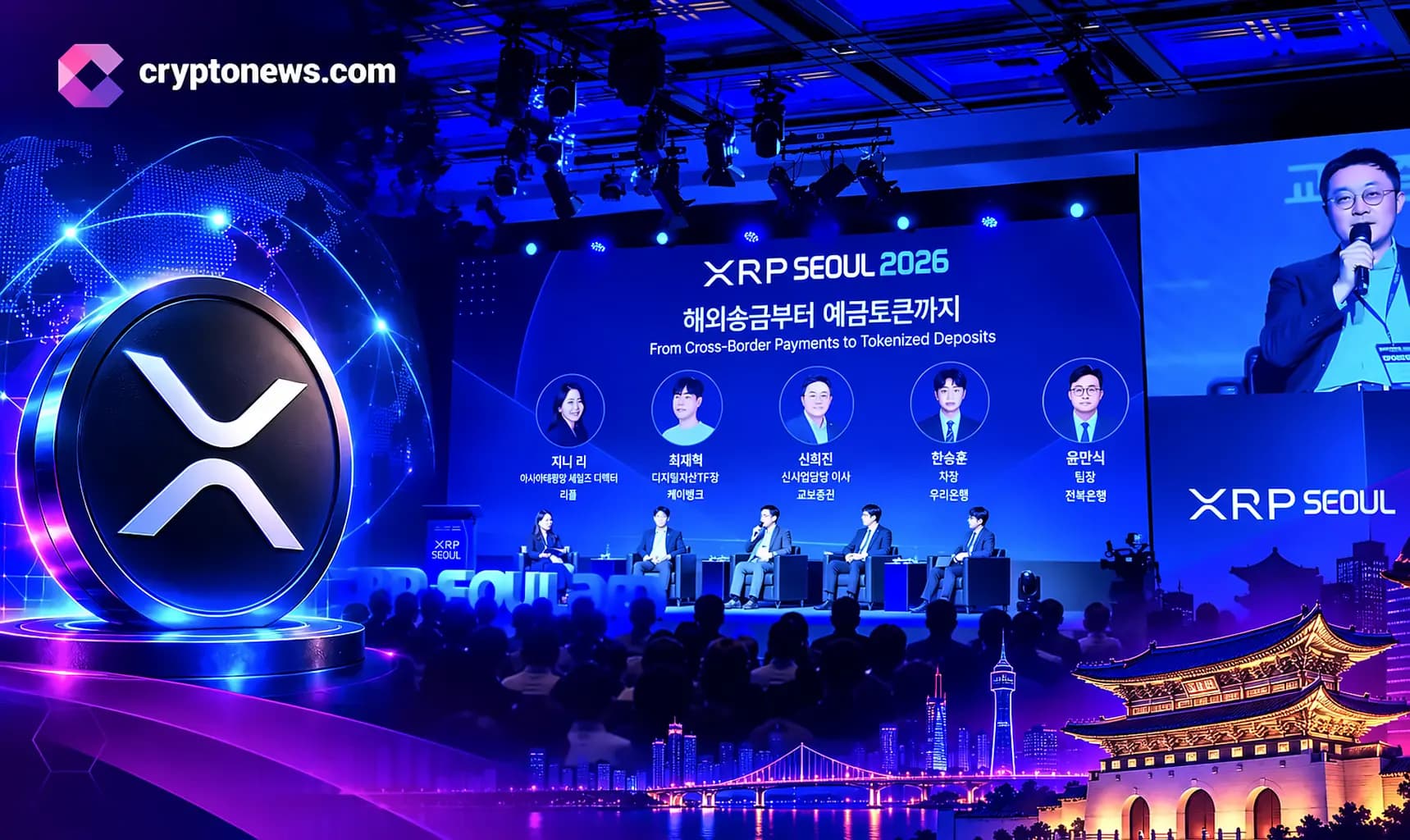
On May 13, 2026, XRP achieved a remarkable milestone on South Korean exchanges, out-trading both Bitcoin and Ethereum by combined margins. According to reports from Crypto.news, Upbit, South Korea's largest exchange, printed approximately $110.9 million in 24-hour XRP volume against Bitcoin's $88.6 million and Ethereum's $67 million, making the XRP/KRW pair the single busiest market on the platform. This dominance extends beyond single days, with Dunamu (operator of Upbit) listing XRP as the platform's most traded asset for the full year, ranking it ahead of Bitcoin and Ethereum across twelve months of order flow. During volume surges, Upbit alone printed $269 million of XRP in 24 hours during July 2025, with $161 million compressed into a single hour, while in March 2025, Upbit's $452 million led every venue globally when global XRP spot volume doubled to $1.84 billion in a day.
The Korean market's preference for XRP stems from South Korea's prohibition of domestic crypto derivatives for retail traders, which includes no futures, no options, and no leveraged tokens on local venues. As reported by Crypto.news, this regulation forces Korean traders seeking amplified exposure to rely on volatility itself, making XRP the closest thing to a leveraged Bitcoin position available under the Korean rulebook. The market structure explains why altcoins comprise 70% to 80% of volume on Korean domestic exchanges against a global average near 50%, with capital rotating from one mid-cap name to another in days based on trading community trends. The Korean trading mechanism was demonstrated during the May surge when XRP's rise to the top of Korean books coincided with the KOSPI index slump, with middle-aged retail traders rotating out of weak equities into the most familiar high-beta crypto asset available.
Korean crypto markets carry a famous quirk with real consequences for XRP pricing: prices on won pairs regularly detach from global levels, trading at premiums during manic phases and occasionally at discounts during fearful ones. According to Crypto.news, this premium exists because Korean liquidity is partially sealed off due to capital controls and strict banking rules, making arbitrage between won markets and global markets slow and legally fraught. During Korean demand surges, prices on Upbit can run several percentage points above Binance for hours or days before the gap closes. The kimchi premium works as a feedback amplifier, with global upticks drawing Korean momentum buying, won prices running ahead, and premium-watching traders worldwide front-running arbitrage, causing the global price to chase the Korean one upward. Conversely, Korean capitulation drags won pairs to discounts that read as death signals globally.
Japan holds one of the world's oldest and deepest XRP retail bases but trades differently from Korea, as reported by Crypto.news. Japanese crypto operates through exchanges licensed by the Financial Services Agency under strict consumer rules including segregated customer assets, cold storage mandates, and listing reviews that can take years. SBI Holdings, one of Japan's largest financial groups, has been Ripple's most committed corporate ally for nearly a decade, running a joint venture for Asian payments, holding XRP on its balance sheet, and championing the token through public statements of CEO Yoshitaka Kitao. Japanese policy reinforces holding culture with crypto gains taxed as miscellaneous income at progressive rates approaching 50% for high earners, which punishes active trading and rewards sitting still. This results in a holder base with opposite metabolism to Korea's, showing less day-to-day movement and acting as a stabilizing floor rather than a momentum engine.
The analysis reveals that XRP's price formation relies heavily on Korean and Japanese order books rather than Western ETF flows or Ripple headlines. According to Crypto.news, this structure explains the token's violent drawdowns, rapid squeezes, and resistance to news that should move it while erupting on news that should not. The concentration risk is evident in Upbit's dominance of Korean trading, which handles the overwhelming majority of Korean crypto volume through a real-name banking partnership. Two regulatory tracks could redraw the XRP map: Korean liberalization toward institutional participation and derivatives access, and American CLARITY Act implementation affecting ETF flows. The analysis suggests that while Korean volume can be bullish for liquidity and bearish for price simultaneously, understanding the true marginal buyers through volume share, netflows, premium behavior, and ETF persistence provides a more accurate dashboard than traditional analysis tools.