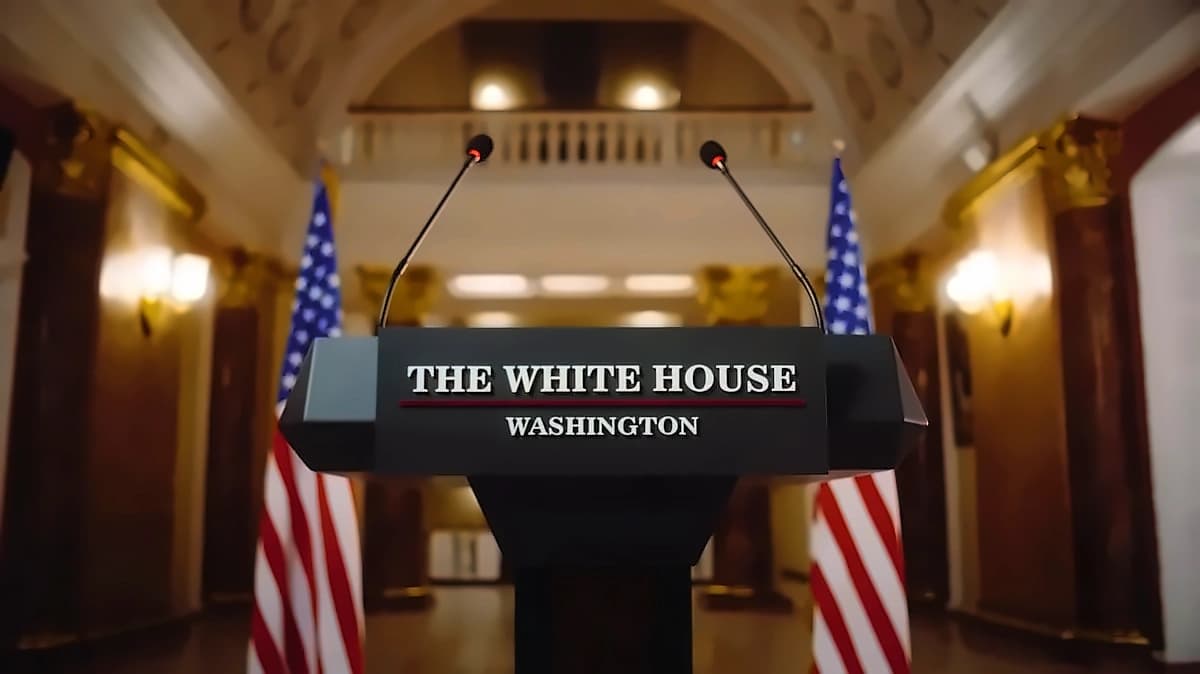
The Senate Banking Committee announced it will hold its long-awaited markup hearing for the Digital Asset Market Clarity (CLARITY) Act on Thursday, May 14 at 10:30 a.m.—the first full committee vote on comprehensive crypto market structure legislation in US history. This development comes as the White House has officially set a July 4, 2026 deadline for the CLARITY Act to be signed, marking America's 250th birthday as the target date for regulatory clarity. As reported by CoinDesk, White House crypto adviser Patrick Witt made the case at Consensus Miami in early May, emphasizing that if the U.S. doesn't write the rules now, China will, and the rest of the world will follow whoever moves first. The bill faces significant political hurdles, with Polymarket traders now giving the bill a 67% chance of becoming law by year-end—up from 47% three weeks ago.
Cryptocurrency analysts suggest that the next bull run for XRP is less a question of "if" it will happen, and more a question of "when," as reported by AMBCrypto. Currently, the market has already begun to show early signs of capital inflows, with XRP trading at $1.39 and showing resistance at the $1.45 supply wall that has $3 billion in sell orders parked above it. If the CLARITY Act passes and institutions gain legal clarity, XRP could push into the $5-$10 range with $4-8 billion in ETF inflows, according to latest price predictions. The realistic 60-to-90-day outlook suggests breaking the $1.45 supply wall first, then targeting the 200-day moving average at $1.80, followed by potential aims for $2.50-$3 by August and $4-$5 by year-end. However, if the markup happens but the final vote slips to "first week of August if we're lucky," the realistic ceiling becomes Standard Chartered's revised prediction of $2.80.
Bitcoin's Market Value to Realized Value (MVRV) ratio is on the cusp of crossing above its 200-day exponential moving average for the first time since 2023—a so-called "golden cross" that has preceded two of the past cycle's largest rallies. According to CryptoQuant analyst CW8900, "A golden cross between the $BTC MVRV Ratio and the 200D EMA line is imminent," describing the signal as "a representative trend reversal signal and a bullish indicator." Short-term holder (STH) cost basis bands show the "heated" band sitting at $92,000 and the "overheated" band at $104,000—levels representing roughly 13% and 28% upside respectively before historically reliable profit-taking pressure intensifies. The bullish chorus has produced specific price targets, with several analysts now pointing to a "supercycle" trajectory toward $180,000–$250,000 within the year. The immediate test sits at bitcoin's 200-day moving average at $82,500, with a clean break invalidating the multi-month downtrend and rejection potentially opening the door to a retest of $50,000.
Institutional players are showing strong positioning ahead of potential regulatory clarity, with Goldman Sachs now the largest disclosed institutional XRP ETF holder with a $153.8 million position. As reported by CoinDesk, total holdings across all spot XRP ETFs have crossed $1.3 billion, while Evernorth, a Ripple-backed company holding 473 million XRP, is preparing to go public on Nasdaq via a SPAC merger. On Binance, 91.4% of XRP outflows are now driven by whale-sized transactions, with the figure around 90.5% across all centralized exchanges, representing the highest reading since 2024. Meanwhile, retail outflow share has collapsed to just 8.4%, a dramatic shift from July 2025 when retail piled in while whales sold at the top. 42 new wallets holding 1 million+ XRP have appeared since January, indicating large holders are positioning for regulatory clarity.
As the regulatory landscape gradually gains clarity and market liquidity continues to recover, XRP and the broader digital asset market may be entering a new window of opportunity for growth, according to AMBCrypto. For investors, the question of how to generate long-term returns through smarter, more stable methods is emerging as a key area of focus, with SHRMiner's XRP smart contract service offering users a new avenue with low barriers to entry for passive income generation from digital assets. However, if the bill fails to pass or is delayed, XRP could slip below $1.30 with the next major support at $1.28, and below that, $1.20 is the psychological floor, and the February crash low at $1.11 is the worst case under macro stress. The token has been trading between $1 and $2 since January, fading at the same resistance every time it rallies, with the bulls catching every dip to prevent it from going below a dollar. Without the CLARITY Act catalyst, XRP would go back to moving with Bitcoin until Congress decides to revisit the bill—likely 2027 at earliest, possibly 2030 if a new Congress has to restart the process.