According to AMBCrypto, Uniswap has opened community voting on a proposal that could introduce the protocol's first sustained UNI burn mechanism, with 74% support at press time. The initiative spans three governance votes including protocol fee activation on Robinhood Chain, v4 deployment, and bridge infrastructure across all other chains. Under the proposed mechanism, users can acquire an amount of UNI sufficient to burn it completely and in turn collect their UNI from the TokenJar account. The proposal will link the supply of UNI with actual protocol usage rather than just providing incentives through governance, creating a lasting connection between protocol usage and token scarcity.
According to AMBCrypto, Uniswap has officially activated its $5 million daily fee mechanism, positioning the protocol behind only Tether and Circle in fee generation. Founder Hayden Adams confirmed that the protocol is now generating these substantial daily revenues, with UNI trading near $3.51 as markets begin assessing the implications of this fee switch. The mechanism ties protocol revenue directly to token burns, eliminating the need for separate governance votes, as fees now accumulate onchain and can only be claimed by burning UNI tokens. Recent reports from crypto.news confirm that Robinhood Chain supplied roughly 4.38 million dollars of that daily total, dwarfing Ethereum mainnet at 296,000 dollars and Base at 288,000 dollars, with the chain recording 500 million dollars in daily Uniswap trading volume within eight days of its July 1 launch.
According to reports from AMBCrypto, Uniswap has proposed a reduction of up to 33% in V4 liquidity provider fee incentives, marking a clear departure from previous models. The protocol believes that lower cost of trading, tighter spreads, and better capital usage will result in sufficient volume increase to offset reduced LP returns. This strategy represents a significant shift from the V3 model, which used much higher percentages of each trade to incentivize early liquidity providers. The new fee structure across v2 and selected v3 pools on 11 chains allocates 0.25% to LPs and 0.05% to the protocol, with the latter automatically funding UNI buybacks and burns. Recent developments show that more than 1,500 builders are working with v4 hooks, with institutional-scale flow already arriving, as Sky's Spark pushed 1.5 billion dollars in stablecoin volume through v4 in the past month.
As reported by crypto.news, Robinhood Chain's launch has delivered unprecedented volume growth that has fundamentally transformed Uniswap's revenue profile. The brokerage's new Ethereum layer 2, built on Arbitrum's stack with 100-millisecond blocks and full EVM compatibility, shipped with Uniswap v2, v3, v4, and UniswapX deployed from day one as the default liquidity layer. The flagship product is Stock Tokens: tokenized versions of more than 90 US equities and ETFs, tradable around the clock by eligible retail users in more than 120 countries. Daily active Uniswap traders surged to roughly 220,000, more than ten times the prior week, with cumulative swap volume crossing 1 billion dollars by July 10. The network's total value locked (TVL) reached above 106 million dollars, up 159 percent in a day, driven by Ethena moving 50 million dollars into a Morpho vault in a single transaction. The momentum suggests Uniswap's ecosystem is reaching users beyond its traditional base, with rising wallet interactions and swap activity indicating participation extends beyond speculative interest.
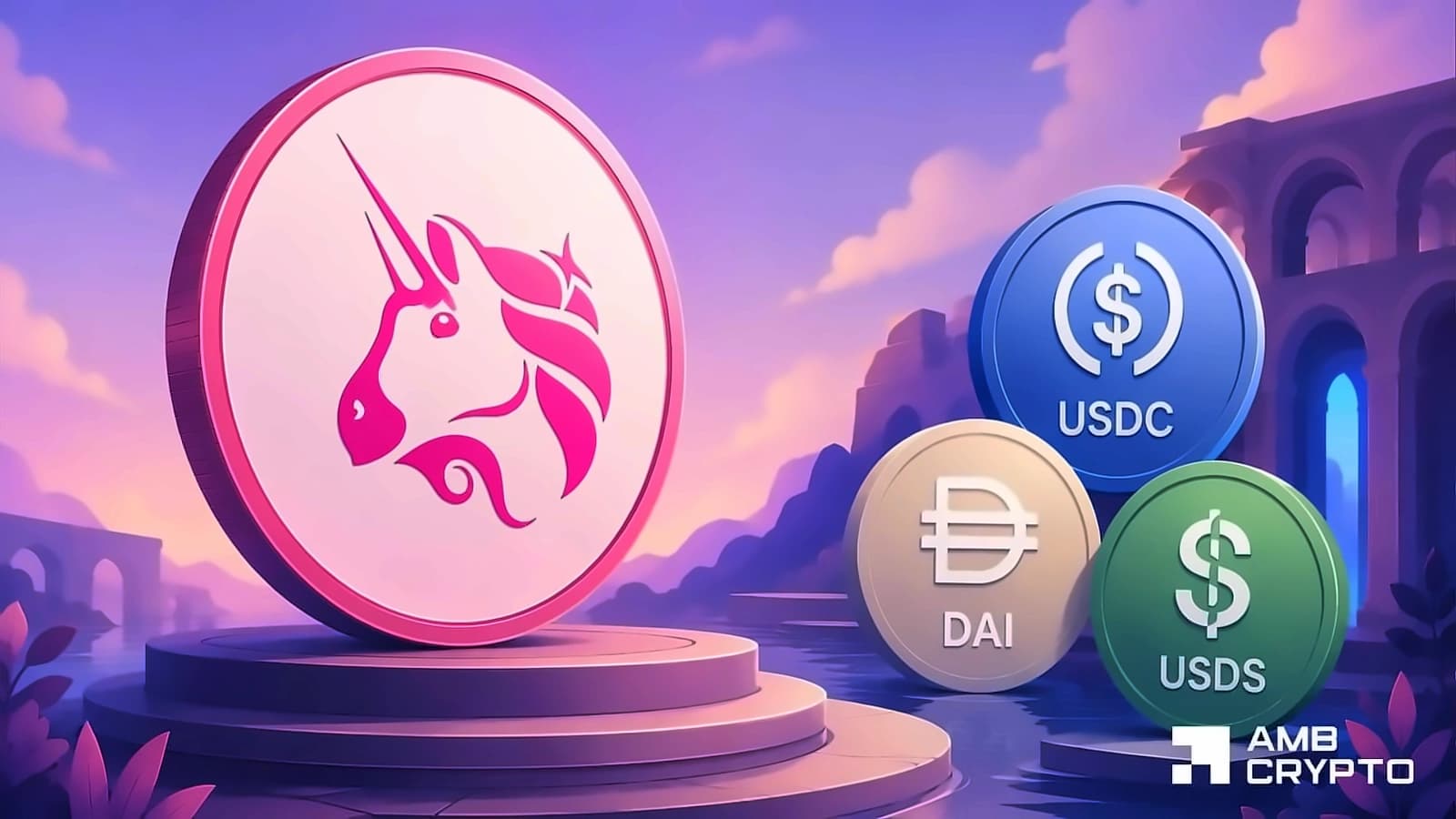
According to AMBCrypto, Uniswap's strategy is already being implemented through integration of Sky's LitePSM. The peg stability module enables zero-slippage routing between USDS, DAI, and USDC, deepening liquidity, reducing execution costs, and allowing larger trades to settle with minimal price impact. This enhancement also strengthens Sky's FX Layer by converting parity-based stablecoin routing into operational infrastructure. The UNIFication model introduced this new reward structure alongside a one-time burn of 100 million UNI from the crypto treasury, addressing fees accumulated before token holders shared protocol revenue. Recent developments show that Protocol Fee Discount Auctions were rolled out for the first time in early July, allowing sophisticated participants to bid for reduced protocol fees on specific flow, converting adverse selection losses into priced privileges and capturing value that MEV bots previously kept entirely.
As reported by AMBCrypto, the proposal carries meaningful risk because liquidity providers can easily move capital to competing protocols offering stronger yields. However, the new fee mechanism provides tangible market incentives, as every strong trading day adds more fees to the system and more burns can follow without waiting for governance votes. The next milestone is extending protocol fees to v4 pools through governance approval, which could further accelerate UNI burn rates if trading activity remains healthy. Success will depend on whether stronger execution and higher trading volumes offset lower liquidity provider rewards, with UNI's supply expected to shrink over time if trading volumes remain robust. Recent analysis suggests that the tokenization trade rewards networks that convert launch attention into recurring activity, with the September subsidy cliff becoming the first genuine stress test of the entire thesis, as Robinhood is waiving gas fees on the chain for the first 90 days.